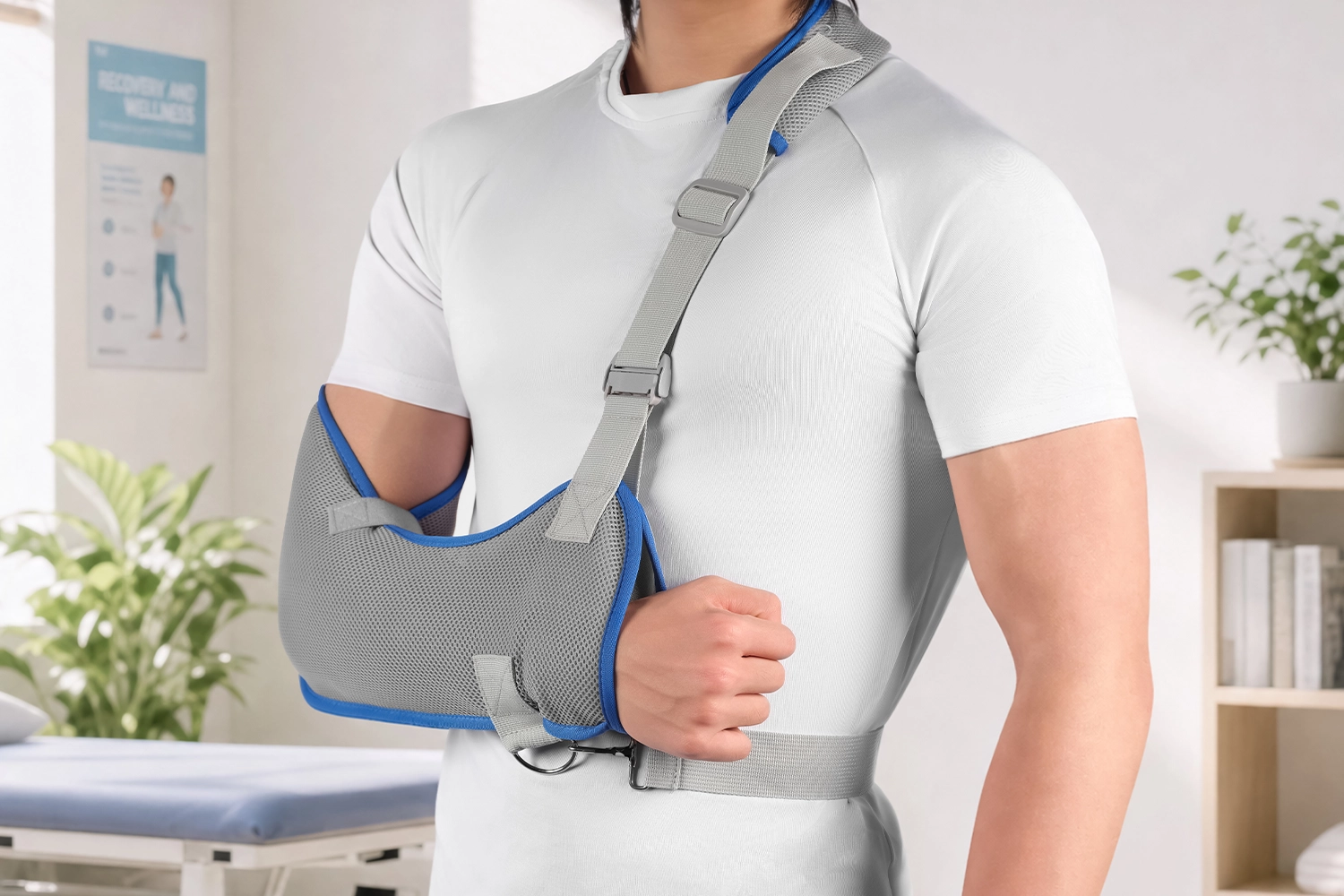
Controlled Ankle Movement (CAM) walker boots are standard orthopedic interventions used to immobilize fractures, severe sprains, tendon ruptures, and post-surgical repairs. While highly effective at safeguarding injured tissues, the structural rigidity and altered profile of a CAM boot force the human body to adopt severe compensatory mechanisms.
Understanding these physiological and biomechanical side effects of wearing a walking boot allows patients and healthcare providers to implement targeted strategies to protect secondary joints and maintain systemic health during recovery.
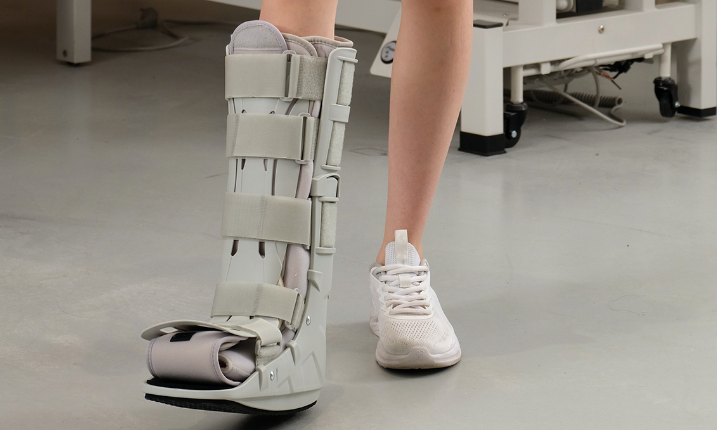
Common Side Effects of Wearing a Walking Boot
Three things happen to almost everyone in a walking boot, and none of them get mentioned at the follow-up appointment.
Skin Irritation, Chafing, and Sores Is the First Thing You’ll Notice
Because CAM boots are constructed of rigid plastic, dense foam, and heavy Velcro strapping, they create an enclosed microclimate.
The Mechanism (Causes)
Perspiration is trapped, leading to skin maceration (softening and breaking down of the skin due to moisture).
Furthermore, constant frictional forces, shear stress, and targeted pressure from the rigid plastic edges against bony prominences (like the lateral malleolus or fibular head) can cause severe blisters, friction burns, and deep pressure sores.
Evidence-Based Solutions
- Advanced Textile Barriers: Patients should never wear a CAM boot against bare skin. Utilize tall, seamless, moisture-wicking orthopedic socks. Cotton should be avoided as it retains sweat; synthetic blends or merino wool are superior choices for moisture management.
- Daily Interface Inspections: The boot should be carefully opened daily (if approved by the physician) to inspect the skin for “hot spots”—localized areas of redness, warmth, or indents.
- Targeted Pressure Offloading: If a rigid portion of the boot rubs against a bone, a small piece of open-cell foam or specialized silicone gel padding can be placed around (not directly on top of) the area to redistribute the localized pressure.
- Regularly Cleaning of a Walking Boot
Swelling Build Over Time
The human calf muscle functions essentially as a “peripheral heart.” Every time a person takes a natural step, the contraction of the calf compresses deep veins, pumping deoxygenated blood back up toward the heart.
The Mechanism (Causes)
When a CAM boot locks the ankle, this calf muscle pump is effectively paralyzed. Blood velocity drops, leading to venous stasis and localized swelling (edema) in the foot and ankle. In severe cases, this stagnant blood flow drastically heightens the risk of developing a Deep Vein Thrombosis (DVT)—a life-threatening blood clot.
You’re at higher risk if you have:
- A personal or family history of DVT or pulmonary embolism
- Recent surgery, hospitalization, or trauma, especially to your leg, hip, or abdomen
- Long stretches of bed rest or limited mobility
- Long flights or car rides combined with a restricted ankle
- Pregnancy, the six weeks postpartum, hormonal birth control, obesity, cancer, or clotting disorders
Evidence-Based Solutions
- Continuous Micro-Movements: Patients should frequently wiggle their toes inside the boot. This micro-activation engages the intrinsic muscles of the foot, assisting minimally with venous return.
- Strict Elevation Protocols: When sedentary, the injured limb should be elevated above heart level (“toes above the nose”). Gravity naturally drains pooled interstitial fluid back into central circulation.
- Medical Compression Therapy: If permitted by the underlying injury and approved by the orthopedic surgeon, wearing a graduated compression stocking underneath the boot liner provides external counter-pressure to reduce swelling.
- Inflatable walker boots
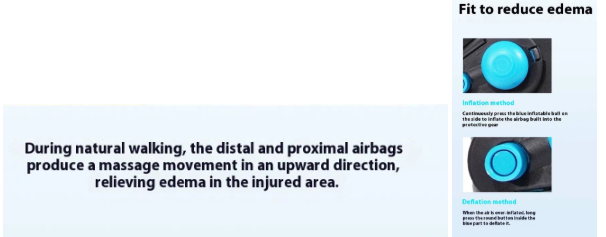
Normal Swelling vs. Dangerous Signs
Not all swelling means trouble. Normal swelling is usually both legs, mild, and eases up after you rest.
DVT looks different. Watch for:
- One-sided swelling or pain, often starting in the calf
- Redness, warmth, or skin that’s turned purple or dark
- Tightness or pain that worsens with walking or standing
- Pain in your thigh or groin – this suggests the clot sits deeper
Sometimes DVT hides with almost no symptoms at all. Swelling alone isn’t enough to rule it out.
Call emergency services immediately if leg swelling comes with chest pain, shortness of breath, coughing blood, or a racing heart. That combination signals a possible pulmonary embolism.
Muscle Atrophy Starts Faster Than You’d Think
True immobilization prevents the calf muscles (gastrocnemius and soleus) and anterior tibialis from contracting naturally. Within just 48 to 72 hours of strict immobilization, skeletal muscle protein synthesis drops, initiating muscle atrophy.
The Mechanism (Causes)
Beyond mass loss, the brain reduces its neural drive to these immobilized muscles—a phenomenon known as arthrogenic muscle inhibition. When the boot is finally removed, patients frequently suffer from persistent ankle instability, a significant loss of proprioception (the brain’s balance awareness), and a significantly altered gait pattern.
Evidence-Based Solutions
- Proximal Kinetic Chain Conditioning: While the ankle is locked, the hip flexors, glutes, and quadriceps on the injured side can—and should—still be safely conditioned. Straight-leg raises, glute bridges, and seated quad sets preserve proximal strength.
- Non-Weight-Bearing Towel Stretches: If medically cleared to remove the boot while resting, patients can use a strap or towel around the ball of the foot to perform gentle, passive dorsiflexion stretches. This maintains Achilles tendon length and minimizes stiffness.
- Early Retraining of Proprioception: Once transitioning out of the boot begins, working with a physical therapist on single-leg balancing, foam pad standing, and wobble board exercises is crucial to restore neural pathways.
Gait Changes and Musculoskeletal Pain (Back, Hip, Knee)
The most common secondary complication of CAM boot usage is pain localized to the contralateral hip, ipsilateral knee, and lumbar spine. This stems entirely from an induced leg-length discrepancy.
The Mechanism (Causes)
CAM boots feature a thick, elevated rocker-sole designed to allow the foot to roll forward without moving the ankle joint. This elevates the injured leg anywhere from 0.5 to 1.5 inches above the uninjured side. To walk, the patient must either hike their pelvic rim up on the boot side or swing the leg outward in an unnatural circle (circumduction). This asymmetric movement forces the spine into lateral flexion and overworks the gluteal and lower back muscles, leading to rapid kinetic strain.
Evidence-Based Solutions
- Contralateral Pelvic Leveling (The “Even Up” Device): The single most effective mitigation strategy is applying a commercial shoe lift (such as an Even-Up device) or a dense orthopedic insert to the shoe of the uninjured foot. Bringing both hips back to equal height immediately restores pelvic symmetry and eliminates up to 80% of compensatory lower back and hip strain.
- Core and Pelvic Stabilization: Actively engaging the transverse abdominis and stabilizing muscles during gait helps keep the pelvis level.
- Assistive Device Optimization: If a limp persists despite leveling the shoes, using a single cane or crutch on the opposite side of the boot can redistribute up to 15% of body weight, drastically lowering joint stress.
- Side-specific walker boots
Reduced Ankle Range of Motion and Joint Stiffness
Your ankle joint doesn’t like being told to sit still. Lock it in a boot for weeks, and it responds by tightening up—sometimes more than you’d expect.
One study tracking ankle mobility after immobilization found that four weeks in a walking boot dropped dorsiflexion from 11° down to 4°. That’s a measurable, significant loss of motion. A separate study on ankle sprains saw a similar drop. After four weeks of treatment, the injured ankle had 4 inches less active range of motion compared to the healthy side.
The pattern holds across clinical guidelines. 4 to 6 weeks of immobilization consistently correlates with stiffer joints and slower functional recovery.
What Recovery Looks Like After the Boot Comes Off
Once the boot’s off, expect a 4 to 8 week window to rebuild normal ankle function—gradual weight-bearing, calf raises, balance drills. If you want speed, physical therapy is necessary. Clinical case series on ankle fracture recovery show real functional improvement after four weeks of targeted PT. UK orthopedic rehab guidance is direct. Start ROM, strength, and proprioception work early. Don’t wait for pain to vanish first.
Movements You Can Do While Still Wearing the Boot
With your doctor’s okay, these exercises keep stiffness at bay. Do ankle pumps, flexing up and down within a pain-free range. Ankle circles move clockwise, then counterclockwise. Toe curls flex each toe individually. The ankle alphabet has you “writing” A through Z using only ankle motion. Towel exercises use gentle grip and slide for mobility. Aim for 10 to 20 reps, several times daily. Some hospitals recommend moving unimmobilized joints once every hour.
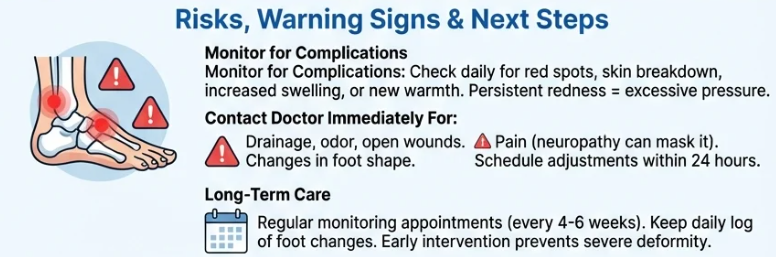
Problem-Solving Matrix of Side Effects Of Wearing A Walking Boot
| Side Effect | Primary Cause | Key Solution |
| Back, Hip, & Knee Pain | Leg-length discrepancy; asymmetrical gait | Use an even-up shoe lift on the uninjured side |
| Muscle Atrophy & Weakness | Absence of joint movement and muscle firing | Proximal leg exercises; early post-boot physical therapy |
| Skin Breakdowns & Blisters | Trapped moisture; rigid plastic friction | Moisture-wicking socks; daily skin inspections |
| Swelling & Fluid Pooling | Loss of the calf muscle venous pump mechanism | Elevation above heart level; active toe wiggling |
| Joint Stiffness | Reduced Ankle Range of Motion; 4 to 6 weeks of immobilization | Start ROM, strength, and proprioception work early |
Conclusion
Wearing a walking boot is rarely comfortable, and yes, it comes with real side effects—muscle atrophy, gait changes, back pain, even circulation issues if you’re not careful. Almost every one of these side effects is manageable, and most are preventable.
The difference between a rough recovery and a smooth one often comes down to small, consistent habits: shifting your weight, doing your prescribed exercises, checking your skin daily, and never ignoring swelling or numbness that feels “off.”
You don’t have to just tough this out. If something feels wrong (persistent pain, unusual swelling, skin breakdown), call your doctor. That’s smart self-advocacy.
If you are looking for a custom walker boot with fewer side effects for your patients. You are in the right place. AOFIT is an experienced medical grade brace manufacturer who can design through scientific gait changes and airbag controls and make products with skin-friendly materials.