Watching your dog hesitate before climbing the stairs, or wince when rising from a nap, stays with you long after they’ve settled back down. Maybe your vet mentioned hip dysplasia, your senior pup’s back legs aren’t what they used to be, or you’re managing post-surgery recovery and feeling out of your depth. A hip brace can help, but sorting through dozens of options that promise the same relief is exhausting.
We did the legwork for you. We tested and compared eight popular Hip Brace For Dogs on the market—from true-to-size fits for broad-chested Labs to breathable neoprene for dogs who overheat in seconds—to show who each one is built for, and who should skip it. You’ll also find a five-minute sizing trick from vets and trainers to help you get the fit right on the first try.
Ortho Dog Hip Hound Brace
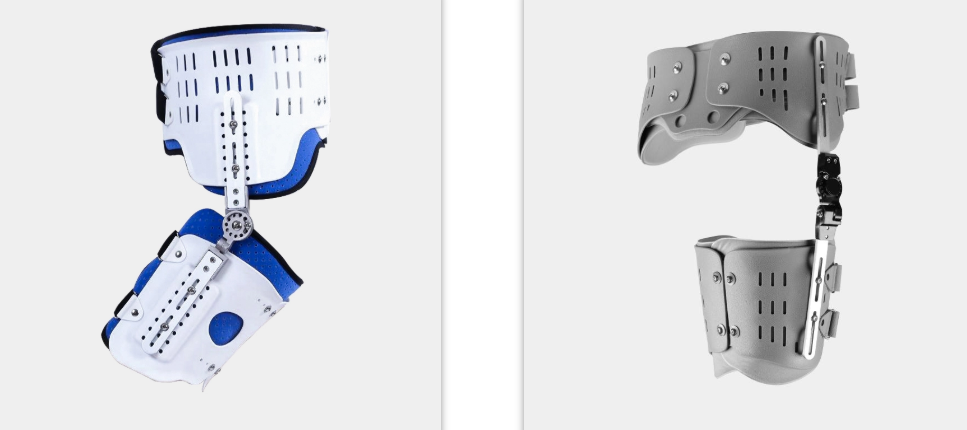
At $195, the Ortho Dog Hip Hound Brace sits on the pricier end of hip supports, built for dogs that need targeted mechanical stability. The system pairs a chest harness with left and right leg panels to provide compression across the hips and lower back. Its design creates a gentle upward-and-forward pull to help seat the femoral heads securely in the hip sockets, aiding dogs managing hip dysplasia, hind-end weakness, arthritis flare-ups, or surgical recovery.
Materials and build
Ortho Dog makes the brace from breathable spacer mesh, heavy-weight nylon webbing, commercial-grade Velcro, and stainless-steel hardware with nylon side-squeeze buckles. Everything is handmade in the USA, right down to the sewn-on emblem.
Sizing truth
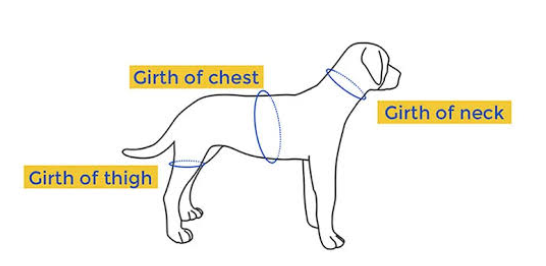
Getting the right fit takes three measurements: chest circumference for the harness, height from rear paw to hip, and thigh circumference halfway between the knee and groin. Dogs must be at least 11 inches tall with a minimum 12-inch chest. Take every measurement carefully, as skipping the thigh measurement usually leads to a return.
Who it’s for: Dogs with irregular proportions or serious hip-tracking issues where targeted alignment matters more than basic compression. Who should skip it: Owners looking for an inexpensive hip wrap for mild stiffness. This brace provides specialized support, and the price reflects that.
Medical
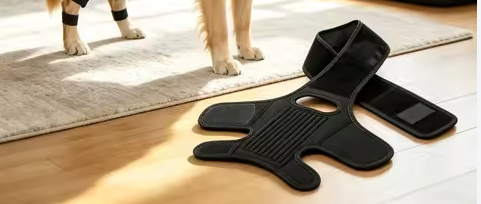
The best dog hip braces borrow quality standards straight from the medical device world. An orthopedic brace from a serious manufacturer follows production disciplines similar to ISO 13485 quality management—the same framework hospitals demand from suppliers of catheters, infusion sets, and surgical tools.
This matters because a joint support device sits against skin, fur, and healing tissue for hours every day. Reputable brands document material sourcing, test for skin irritation, and track batch quality the way medical suppliers verify sterilization and shelf life. When comparing hip braces for arthritic dogs, ask whether the company can show its manufacturing location, material composition, and quality testing records. Vague answers are a red flag.
What to check before buying:
– Traceability — Can the seller confirm where fabric and hardware are sourced?
– Material safety — Is there documentation showing the neoprene or mesh won’t cause rashes?
– Consistency — Do buyers report the same fit across batches, or does sizing vary unit to unit?
Brands applying this level of rigor produce safer, longer-lasting braces that give a healing hip real support.
Walkabout Hip Hound Dog Hip Support
Rehab professionals reach for this brace for good reason. The Walkabout Hip Hound wraps the full hindquarters using neoprene, foam hip padding, and a removable liner, earning an 8.2/10 in independent reviews. It fits like a well-tailored hug—snug enough to provide real support, yet soft enough that your dog won’t fight wearing it.
What it’s for
It shines as a post-surgery brace, particularly during those first wobbly days after a total hip replacement when your dog needs physical walking assistance. It also works well for managing arthritis, hip dysplasia, spinal trauma recovery, and the hind-end fatigue common in senior dogs.
Sizing and price
Take measurements carefully, because proper fit depends on your dog’s specific proportions rather than their breed. Pricing is reasonable compared to many orthopedic options, typically running 35–65 depending on configuration (the brand’s Hoistabout Lifting Aid costs $34.95 for lighter lifting needs).
Who it’s for: Dogs needing intermittent rear-end support during recovery or flare-ups. Who should skip it: Owners looking for permanent, rigid correction for hip dysplasia, since this wrap provides temporary physical assistance rather than continuous mechanical stabilization.
Agon Dog Hip Brace
Budget matters as much as biomechanics when shopping for a dog hip support wrap, and Agon proves you don’t need to spend $150+ to help a dog with mild stiffness. You’ll find this brace sold under a few different names, including the Agon Rear Leg Dog Brace and Agon Rear Hock Long Leg Dog Brace. Both share the same formula, giving you a neoprene compression wrap built for hip and joint support with no assembly required.
Price and sizing
- Rear Leg Dog Brace: $19.99 (XS–L), $17.99 (XL) at Chewy
- Rear Hock Long Leg Brace, XS: $24.99
- Hinged XL hip-support model: $39.99
Sizes run XS through XL, and the wrap is machine washable with bilateral hip compression.
The catch
Agon sizes by weight rather than hindquarter or waist circumference, so fit can vary more than it does with measurement-based braces. The simpler leg-loop design also tends to slide during active movement.
Who it’s for: Dogs with mild hip arthritis or general stiffness, or owners testing the waters before committing to a pricier orthopedic brace. Who should skip it: Large, active dogs needing a secure, post-surgery dog hip brace with minimal slippage.
Labra Dog Hip Support Brace
Labra markets this as a hip support wrap, but it is a dog hock brace built for the rear leg joint. That distinction matters for dogs with hip dysplasia. The soft neoprene compression wrap helps with mild stiffness and age-related discomfort, but it will not provide surgical-grade stabilization.
Two models, two support levels
- Lightweight Dog Hock Brace with Flex Straps — $17.95, suited for shorter-legged dogs needing minimal support
- Extra Supportive Dog Hock Brace with Flex Straps — 22.95–27.95 at Chewy, offering firmer rear-leg stabilization
Both models use neoprene for warmth and compression, paired with flexible Velcro straps for an adjustable fit that slips on and off easily. Retailers list the brace as veterinarian-recommended, and it is machine washable.
Sizing by weight (Extra Supportive)
| Size | Weight |
| Small | 5–30 lb |
| Medium | 30–75 lb |
| Large | 75–100 lb |
| XL | 100+ lb |
Small sizes require at least 15 inches from paw to hip. For shorter legs, choose the Lightweight version instead.
Who it’s for: Small-to-medium dogs with mild hock or rear-leg stiffness. Who should skip it: Dogs needing hip-joint stabilization or post-surgery support.
Adjustable Neoprene Hip and Knee Brace for Large Dogs
Big dogs often need more than hip support alone. Their knees take a beating too, especially with CCL/ACL tears or a luxating patella. This brace stabilizes both joints at once, using 3mm neoprene for flexible compression and warmth, with two wide hook-and-loop straps crossing the back to keep it anchored.
Built for size, not guesswork
- Large: 12.5–14 in knee circumference, roughly 10 in brace height; fits dogs around 75–100 lb
- X-Large: 14–15.5 in knee circumference, roughly 11 in height; built for 100+ lb dogs
Reinforced versions with thermoplastic side panels push support up to 120 lb—ideal for German Shepherds, Rottweilers, and Great Danes whose thick coats need extra strap length.
Measuring without the rabbit holes
Stand your dog with the hip bent at about 90 degrees. Measure the upper thigh, around the kneecap, and about an inch above the hock rather than over the ankle joint. Record the thigh-to-knee and knee-to-hock lengths too, so the brace won’t ride high or snag the hock.
Who it’s for: Large-breed dogs with combined hip and knee instability that need one brace instead of two. Who should skip it: Small dogs or those needing only hip support, since this brace is overkill. Prices range 20–90 depending on the reinforcement level.
AGON Professional Adjustable-Hinge Dog Brace
Sometimes a hip problem forces the knee to pull double duty, and that is where this brace earns its keep. The Agon® Dog Knee Brace with Adjustable Hinge (model DS007Y) is priced at $49.99, down from $79.99. It features a hinge stabilizer you can set for flexion and extension, guiding your dog’s movement rather than locking the joint still.
What’s in it
- Breathable, stretchy, lightweight premium neoprene
- Hook-and-loop fasteners with 360-degree support
- Hinge adjustability for controlled range of motion
- Eases discomfort, calms inflammation, and supports joint stability during recovery
Sizing and fit
You’ll find it in Small through XX-Large, and you can order it for either the left or right leg if your dog’s issue is one-sided. The listing does not publish exact circumference measurements, so check the current size chart with Agon USA before you order.
Who it’s for: dogs managing combined knee-and-hip instability who need adjustable, hinge-based support. Who should skip it: anyone needing hip-specific compression without knee involvement. Look toward a dedicated hip brace instead.
Ortocanis Hip Support for Dogs
Spain-based Ortocanis built its reputation on treating hip dysplasia, arthrosis, and postsurgical recovery as distinct conditions requiring dedicated engineering. This hip brace wraps ARD neoprene around the upper leg and hip, anchored by a Roman-style pectoral harness that spreads pressure without digging into healing tissue.
Who it helps
It fits dogs with mild-to-moderate hip dysplasia, localized arthritis, lumbar weakness, hind-leg limping, or lower-back pain from an old injury. Dogs that tire quickly on walks or need steady stabilization while recovering from surgery do well with it too.
Sizing and price
Measure your dog’s chest circumference right behind the front legs while they are standing. Chest measurement matters more than weight, since Ortocanis’ weight ranges overlap between sizes. XXS starts at 13–18 inches for dogs under 2kg; L tops out around 27–37.5 inches for dogs up to 46kg. Pricing runs €74.30 to €89.90 depending on storefront.
It works best for owners wanting daytime support they can remove at night during adjustment. Dogs that need rigid, round-the-clock mechanical correction should skip it.
How To Measure Your Hip Brace For Dogs And Get The Right Fit In Five Minutes
A tape measure and sixty seconds of patience will save you from the return-label shuffle. Grab a soft fabric tape, or loop a piece of string around your dog and measure it against a ruler. Have your dog stand square on all four paws, and ask a second person to steady their chest or hold a treat so they stay still. The tape should sit snug without digging into the skin. As a rule of thumb, you should be able to slide one finger underneath.
The three measurements that matter most:
- Chest girth: Wrap the tape around the widest part of the chest, right behind the front legs. Many harness-style braces rely on this number alone.
- Rear leg height: Measure straight up from the bottom of the back paw to the highest point of the hip. Keep the tape vertical rather than following the curve of the spine.
- Thigh circumference: Loop the tape midway between the knee joint and the groin. This single number decides the fit on braces like the Ortho Dog Hip Hound.
If your brace uses a waist panel or belly strap, measure the hip/waist girth just in front of the hind legs, or measure around the hip bones for back-length models.
Reading the size charts
Sizing varies across brands. Ortocanis is sized by chest girth (an S fits 48–63cm, roughly 4.5 — 11kg), while Balto Life uses thigh circumference (an S covers 25–30cm). If your dog falls between sizes, follow the manufacturer’s core measurement; loose is safer than tight for a hip wrap. If the chest measurement calls for a medium but the thigh needs a small, do not split the difference. Contact the seller or look for an adjustable model instead.
Before you commit to all-day wear
Try the brace on for 5–10 minutes first. Watch how your dog walks, sits, and urinates. Check the skin for redness, chafing, or cold hind paws, and loosen the straps right away if you notice any issues. If your dog is recovering from surgery or has trouble standing, have a vet or rehab specialist check the fit before regular use.
Conclusion
Watching your dog struggle up the stairs or wince after a walk is heartbreaking, but the right support can change their daily life. Across these eight options, three factors stand out. Fit matters more than fancy features (measure twice, buy once), neoprene breathability makes or breaks long-term comfort, and the best hip brace depends on your dog’s size, diagnosis, and routine.
If your senior Lab is recovering post-surgery, lean toward hinged, structured support. For a French Bulldog that needs gentle everyday stability, a lightweight wrap will serve them better. Either way, grab that measuring tape today, revisit our sizing guide, and choose with confidence rather than guesswork.