You wake up, swing your legs over the side of the bed, and for those first few steps to the bathroom, your hip feels like it’s full of sand. By the time you stand at the kitchen counter making coffee, it’s throbbing again. If that sounds familiar, you’ve likely researched the usual options—ibuprofen, physical therapy, maybe surgery timelines—wondering whether a hip brace helps with arthritis or if it’s wishful thinking with a price tag. It’s a fair question to ask before spending money on a glorified ace bandage. Below, we cover what the research shows about hip joint pain relief, how compression and support braces work biomechanically, and where they fall short, so you can decide based on evidence.
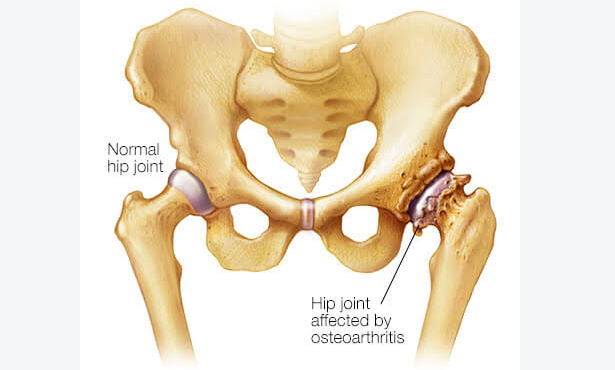
Do Hip Braces Actually Help Hip Arthritis, or Is the Relief Mostly Placebo?
Clinical data on hip braces gives a mixed picture. One gait study followed 14 people with hip osteoarthritis in one hip, having them walk with and without an Össur Hip Unloader brace. Nine felt immediate pain relief. Five felt worse. That split shows the brace is not a guaranteed fix, and your hip arthritis symptoms might respond differently than your neighbor’s.
Researchers tracked hip mechanics alongside patient feedback. The brace reduced peak hip abduction moment and cut down on adduction and internal-rotation angles during walking, which reduces stress moving through the joint with each step. That mechanical change is measurable and real.
However, the study lacked a sham brace for a blinded comparison. Part of the relief could come from joint unloading, but gait confidence, proprioceptive feedback from compression, or straightforward expectation could contribute as well. A systematic review backs this caution up, rating hip brace evidence as low-quality overall and noting that many people find braces uncomfortable enough to stop wearing them.
The benefit depends on the person and likely involves both mechanics and perception. The physical adjustments to joint load can be measured, and the placebo response plays a role as well.
How Could a Hip Brace Reduce Pain During Walking or Standing?
Your hip abductors act as stabilizers working overtime whenever you stand on one leg, even for a split second mid-stride. A brace provides backup support, stabilizing the pelvis so those muscles do not have to work as hard to keep you level. That helps ease pain during long periods on your feet, weight shifting, and those stiff first steps after getting up from a chair.
The numbers back this up. In a 21-person study of mild-to-moderate hip arthritis, walking pain dropped from 25.7 mm to 18.4 mm on a 100-point scale after one week of bracing—about a 28% reduction. Eighteen of the 21 participants felt better. Step length, walking speed, and overall function improved alongside those pain scores.
There is also a sensory side to this. Firm contact around your pelvis and thigh increases your brain’s awareness of hip position, nudging you away from habits like letting your hip collapse inward. A compression brace for hip pain works best for mild-to-moderate arthritis, pain tied to weight-bearing, or shortened steps. It offers less relief if your pain is nerve-related rather than mechanical.
What Degree of Relief Can Someone Realistically Expect From a Hip Arthritis Brace?
Nobody can give you a tidy percentage and promise it will hold true for your hip. Most studies track whether pain improved at all, rather than measuring a consistent number you can rely on. If you are hoping to cut your pain in half, that figure does not exist in the research yet.
One older study on a WISH-type S-form brace tracked 14 people with painful hip osteoarthritis. Every participant reported immediate relief while walking, and roughly three-quarters stopped taking pain medication entirely. Treat this as an upper limit rather than an average outcome. The trial was small, had no comparison group, and required daily walking exercises alongside brace use.
Longer-term results are less clear. Over four to six weeks, one trial showed improvements in pain, function, and quality of life, while another found no real difference compared to standard care. A brace can help you through a flare-up, but it rarely acts as a permanent fix.
You’re more likely to benefit if:
– Your arthritis is mild to moderate
– Pain flares with walking, turning, or pivoting
– Only one hip is affected, as bilateral arthritis responded worse in one study
– You can wear the brace daily alongside walking exercises
Relief often starts during activity, and mobility can improve over one to four weeks. Resting pain rarely changes. Comfort is another hurdle; one follow-up found brace use dropped steeply within a year, and about a third of users still wore theirs seven years later.
Which Three Signs Suggest You May Be a Good Candidate for a Hip Brace?
Orthopedic guidance points to three situations where a hip brace is worth trying.
Sign one: turning and pivoting cause the pain. If mild-to-moderate hip osteoarthritis makes rotation feel sharp or unstable—such as getting out of a car or twisting to reach a shelf—a brace targets that movement. This applies when physical therapy and exercise have not resolved the issue, especially with bilateral hip involvement. A brace is not your first move here; it steps in after conservative treatment falls short.
Sign two: you are in a structured recovery window. Surgeons sometimes prescribe braces after hip arthroscopy, labral repair, or hip replacement to limit flexion and extension while tissue heals. Protocols vary from surgeon to surgeon, so follow their specific instructions rather than generic advice.
Sign three: you have had a hip dislocation or face a documented risk of one. An abduction brace limits provocative positions, holding the leg in a safer range while the joint stabilizes.
This list excludes isolated lower-back pain and suspected labral tears without surgery. Clinical evidence for those uses remains thin, and some insurers classify them as investigational.
Is Compression, Support, or Traction the Right Type of Hip Brace for Arthritis?
Walk into any pharmacy aisle and you’ll find three very different products all labeled “hip brace.” That gets confusing quickly, especially since they do not all work the same way, or even work at all.
Compression sleeves feel good. They are warm, snug, and hold the joint firmly enough to provide reassurance. Beyond that, clinical evidence is thin; sleeves do not demonstrably take load off the hip joint or reduce arthritis pain. They serve as a comfort layer rather than medical treatment.
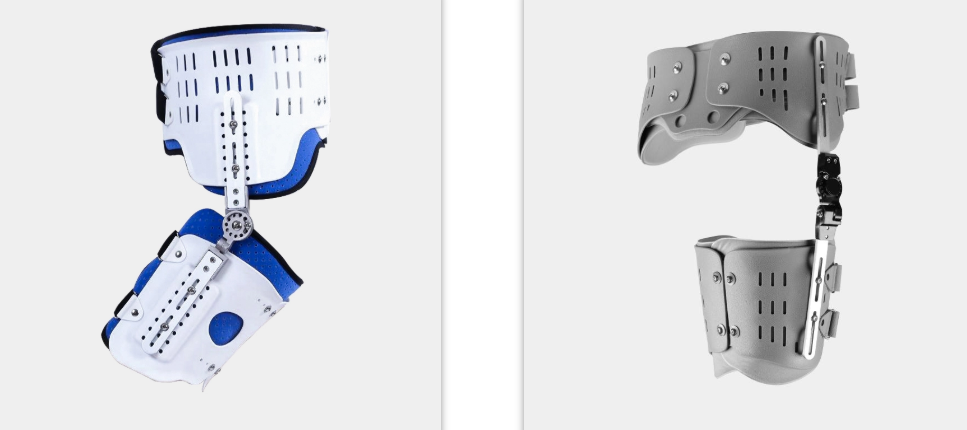
Support or functional unloading braces are the real option here. They redistribute weight away from the hip joint and stabilize your gait. In that 14-person gait study mentioned earlier, the brace significantly reduced peak hip abduction moment (p=0.017) and improved painful stance mechanics enough that 9 participants felt relief while walking. This category has genuine mechanical data behind it.
Traction braces lack research support for hip osteoarthritis. Pulling the joint apart to relieve pressure sounds logical, yet no data shows it helps, and it cannot reverse joint-space narrowing. Skip these unless a specialist prescribes one for a specific reason.
A 2025 physical therapy guideline points out that bracing is never a first-line treatment. Try it only if exercise or manual therapy fails to relieve pain during turning or pivoting, particularly in bilateral hip OA.
What to Look for When Choosing One
- Labeled for unloading, load redistribution, or functional support
- Adjustable straps at the pelvis and thigh
- Wearable over regular clothes
- Allows hip flexion, sitting, and stair climbing
- Fitted by a PT, orthotist, or orthopedic clinician
- A clear return policy, since discomfort leads many people to stop wearing them
Test it during activities that trigger your pain, like walking, stairs, or pivoting, for about 1–2 weeks. Stop immediately if you notice numbness, groin pressure, skin irritation, or a change in your gait.
What Can a Hip Brace Not Fix as Arthritis Progresses?
A hip brace shifts how force moves through your joint, but it cannot change what happens inside the bone.
It cannot:
– Regrow cartilage or restore joint space. Once that cushioning wears down, a brace only alters external loads; it cannot rebuild lost tissue.
– Reverse advanced bone changes. Bone spurs, subchondral damage, and a collapsed femoral head from avascular necrosis will remain unchanged, with or without a brace.
– Slow the disease itself. Bracing offers mechanical support, but a 2025 clinical update found no evidence that it slows arthritis progression.
– Replace a hip joint. When imaging shows severe arthritis and nonsurgical care hasn’t helped after three months, it is time to discuss surgery.
– Fix every kind of pain. Bursitis, nerve irritation, referred back pain, and inflammatory flares often persist regardless of what you wear.
– Rebuild weak hip muscles. Restoring joint strength requires consistent, targeted exercise.
If you notice worsening night pain, shorter walking distance, falls, or stiffness despite three months of consistent care, schedule an evaluation with an orthopedic specialist.
When Should You Try a Brace, and When Should You See a Doctor Instead?
A brace makes sense when hip pain is manageable, predictable, and tied to specific movements like walking or turning.
Try a brace first if:
– Pain is annoying but tolerable, and you can still bear weight
– There is no visible swelling, deformity, or skin discoloration
– You can move your hip through its normal range, even if it feels uncomfortable
Give it 3–4 days. Symptoms should start to ease. If they do improve, keep going and wear the brace less as your strength returns.
Call a doctor if:
– Pain is severe or doesn’t respond to over-the-counter meds
– Swelling gets worse
– You struggle to walk more than a few steps
– Nothing changes after a week of consistent brace use
Seek care immediately if you hear a pop, notice numbness or tingling, or your leg looks misshapen. Bracing alone cannot fix those issues.
If you are still relying on the brace for ordinary tasks after 5–8 weeks, get your hip evaluated.
How Should You Test a Hip Brace Without Making Hip Pain Worse?
A proper fit comes first. Have an orthotist or clinician fit the brace so the hinge lines up with your hip joint, the pelvic section sits around your hips rather than your waist, and the thigh strap stays secure without pinching your knee.
Start small. Wear it during the day for 15–30 minutes of easy walking or light chores. Take it off and check your pain right away, again after 30–60 minutes, and once more the next morning. If nothing flares up, add time slowly.
A consistent test route helps you compare results:
– Walk the same 5–10 minutes, with and without the brace
– Rate pain from 0–10 before and after
– Watch for limping or stiffness
– Check again that evening and the next morning
– Look for skin irritation, numbness, or pressure marks
Loosen or remove the brace if pain jumps by 2 points, turns sharp, or lingers past a few hours. In one small study, five participants got worse, with their pain climbing from 2.3 to 5.6 out of 10. Skip stairs, pivoting, and deep squats while testing it, and call your clinician if numbness, swelling, or pressure marks last past 30 minutes.
Daily Walking vs. Active Support: Which Hip Brace Fits Your Routine?
Different hip braces handle different jobs. A soft, flexible wrap works well for grocery runs and dog walks, but it will not give you much support when you pivot on a trail or climb a ladder.
For daily walking, errands, and standing, keep it simple. ODOFIT’s 5-in-1 brace uses three hook-and-loop straps and breathable neoprene, fits a 32–40-inch waist (with plus sizes up to 48 inches), and costs 29.98–31.99. CopperJoint’s reversible wrap covers up to a 43-inch waist and 24-inch thigh with copper-nylon compression, which works well for commuting or light movement.
For pivoting, hiking, or higher-load activity, you need structure. A brace with a pelvis belt, thigh band, and trochanter pad, like the Össur Hip Unloader, gave 9 of 14 users relief by reducing abduction stress. Walking pain dropped from 25.7mm to 18.4mm after a week of use, while stair pain fell from 24.9 to 17.9.
| Routine | Design | What to Look For |
| Daily walking | Soft wrap | Low-profile, adjustable straps |
| Hiking/pivoting | Structured unloading brace | Pelvic belt, joint pad |
| Post-activity recovery | Moisture-wicking brace | Left/right fit, thigh sizing |
Practical rule: Start with a 30–40 soft wrap for routine walking. Save structured unloading braces for diagnosed hip osteoarthritis or pivoting-heavy days.
Conclusion
A hip brace can reduce joint pain by 20% to 30% during walking and standing by stabilizing the joint and redistributing weight. It will not rebuild worn cartilage, and it cannot replace medical care if your pain is severe, constant, or keeps you awake at night.
If your morning stiffness eases once you move, or pain flares after you stand for long stretches, a brace is worth trying. Wear a supportive brace with moderate compression during your most painful activities, track how your hip responds over a week, and see an orthopedist if you do not notice any improvement.