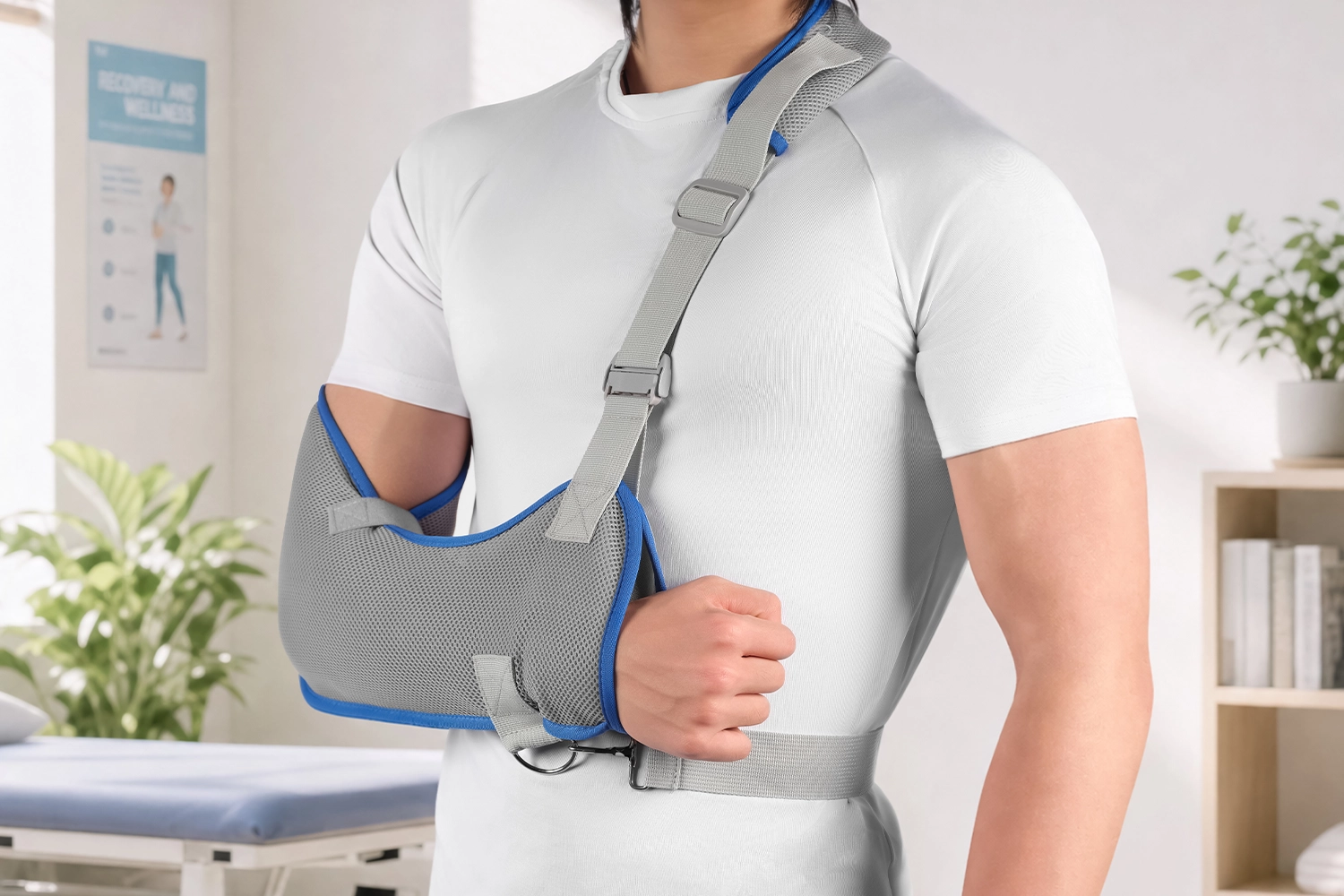
Being handed a rigid brace after spinal surgery or a fresh scoliosis diagnosis can feel like being handed instructions in a language nobody bothered to teach you. What exactly are TLSO back braces supposed to do? Getting them wrong can mean discomfort, skin breakdown, or a brace that doesn’t hold your spine stable while it heals.
We’ll walk through exactly how a thoracic lumbar sacral orthosis works, who actually needs one, and how it stacks up against other spinal orthosis options like the LSO. You’ll get practical guidance on choosing the best one—the kind of detail that turns an intimidating medical device into something you can manage with confidence.
What are TLSO Back Braces and How Does It Work
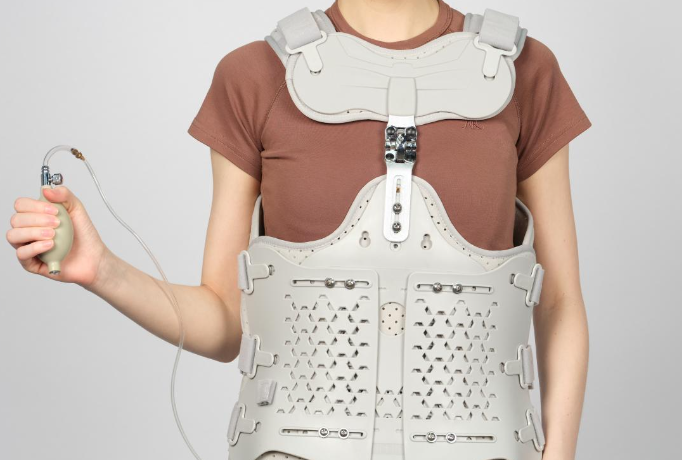
A TLSO stands for thoracolumbosacral orthosis. That’s a mouthful, so let’s break it into something useful.
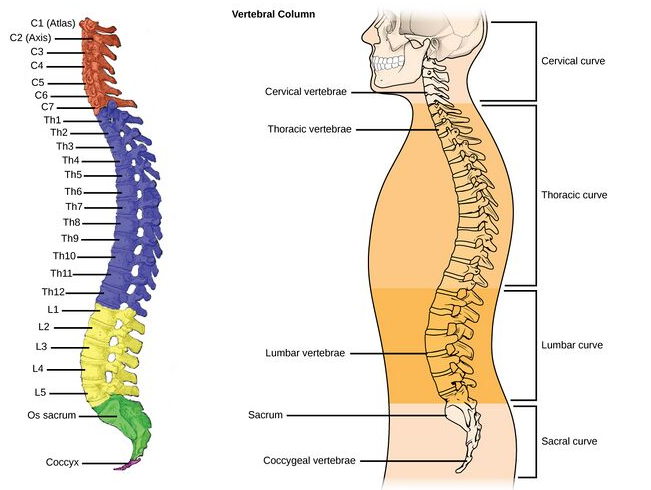
This spinal orthosis covers three regions of your spine: the thoracic (mid-back), lumbar (lower back), and sacral (pelvis) areas. It starts at your pelvis or sacrum and extends up to your mid-chest, typically around T4 to T6, sometimes higher, near the bottom of your shoulder blades. Think of it as a rigid shell wrapping most of your torso.
The mechanism that matters is a three-point pressure system combined with total contact compression. In plain terms, the brace applies force at multiple points around your torso at once. This limits four types of spinal movement:
- Flexion (bending forward)
- Extension (bending backward)
- Lateral bending (side-to-side)
- Rotation (twisting)
By restricting these movements, the brace reduces stress on individual spinal segments while they heal.
Understand TLSO Further: LSO vs TLSO vs CTLSO
| Feature | LSO | TLSO | CTLSO |
| Spinal Region | Lower back (Lumbar & Sacral) | Mid-back to lower back (Thoracic to Sacral) | Neck to lower spine (Cervical to Sacral) |
| Common Build | Soft fabric corsets, elastic belts, or rigid plastic panels | Rigid or semi-rigid custom-molded plastic body jackets (e.g., Boston brace) | Rigid plastic pelvic girdle with metal vertical bars and a neck ring (e.g., Milwaukee brace) |
| Main Goal | Relieve lower back pain via abdominal compression and limit lower movement | Control spinal alignment across mid and lower regions; prevent twisting/bending | Maximum immobilization and alignment across all three planes from the neck down |
| Usage | for lumbar degenerative disc disease, spondylolisthesis, stable L1–L5 fractures, or post-fusion support after surgeries like L4–S1. If your problem stays below L1, an LSO is usually enough. | for thoracolumbar junction fractures (especially T12–L1), mid-thoracic breaks (T6–T10), scoliosis, kyphosis, or fusion above L1. Anything involving your ribcage or upper trunk needs the extra reach. | Severe scoliosis with high thoracic curves requiring neck/upper control Multi-level trauma or unstable injuries spanning the upper and lower spineSevere kyphosis needing gross range-of-motion reduction from the neck down |
The Abdominal Pressure Trick
One clever piece of engineering: the brace compresses your abdomen, which raises intra-abdominal pressure. That pressure shift transfers some of your spine’s axial load onto surrounding soft tissue instead of your vertebrae and discs. Less load on the bone and discs means less pain and a better healing environment. It also reduces lumbar lordosis (that natural inward curve in your lower back) and limits movement between joints.
For someone recovering from a spine fracture, this “locked extension” positioning is exactly what promotes bone healing—it keeps load off the front of the spine while limiting segment-by-segment motion.
Who Needs a TLSO Brace: Common Medical Indications
Four conditions send most people into a TLSO. Here’s the breakdown.
Post-spinal fusion. This is the most common reason. After thoracic or thoracolumbar fusion surgery, a spinal fusion brace protects the hardware while bone fuses. Expect 6–12 weeks of wear, often full-time during upright activity for the first stretch. A T10–L2 fusion usually means a rigid TLSO extending to T6, worn 8–12 weeks. Fuse higher, from T1–T10, and you’ll likely need a CTLSO or rigid TLSO reaching T1, also 8–12 weeks.
Compression fractures. A back brace matters most for fractures at T12–L1, T6–T10, and osteoporosis-related thoracic fractures (T6–T12). Standard protocol calls for full-time wear of 6–12 weeks; some custom clam-shell designs stretch to 3 months.
Kyphosis. For an excessive forward curve, a Jewett hyperextension orthosis, a rigid TLSO variant, delivers stronger sagittal correction.
Scoliosis. Among scoliosis brace types, a TLSO prevents curve progression in the 20–45° range before skeletal maturity. Curves apexing at T6 or higher usually need a CTLSO instead. Wear time runs 16–23 hours daily, sometimes night-only for a year or more.
Custom molded back braces get reserved for deformity cases or when prefabricated options fail.
Types of TLSO Braces: Which One Fits Your Condition
Not every TLSO looks or works the same. Back brace manufacturers build different designs for different jobs, and picking the wrong one can mean weeks of unnecessary discomfort—or worse, inadequate support.
Rigid TLSOs: Structural Support for Structural Issues
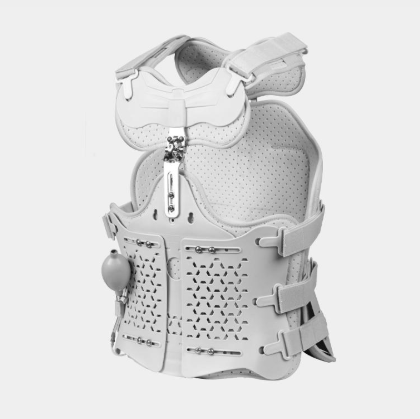
A rigid TLSO is either custom-made or prefabricated, featuring a stiff polypropylene or thermoplastic shell that is typically split into two halves (anterior and posterior) and held together with straps or buckles. It achieves motion control through:
- Three-point force systems: Pads positioned at strategic points generate corrective pressure vectors against the spine in both flexion/extension and lateral planes.
- End-range restriction: The rigid structure physically stops the wearer from reaching end-range spinal positions that could stress structures still healing.
- Load redistribution: In cases of compression fractures, the anterior abdominal section raises intraabdominal pressure, which reduces compressive forces on the anterior vertebral body.
Indications for rigid TLSOs:
- Stable thoracic or thoracolumbar compression fractures (T6–L1)
- Protection following thoracolumbar fusion surgery (6–12 weeks)
- Adolescent idiopathic scoliosis (Boston brace, Rigo Chêneau)
- Thoracic kyphosis correction involving structural bone changes
- Traumatic burst fractures (in neurologically intact patients chosen for conservative treatment)
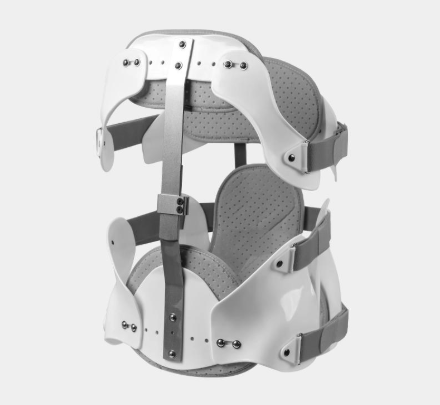
Hyperextension Braces
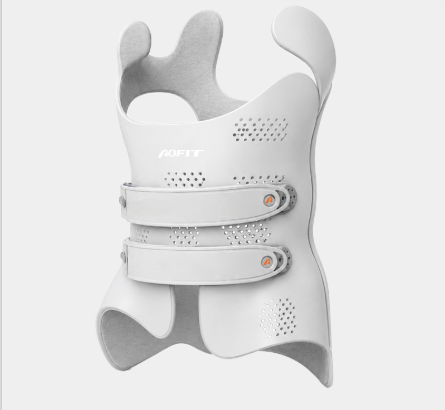
These hyperextension braces rely on metal frames and pads positioned against the sternum and pelvis. They restrict forward bending (flexion) and are commonly prescribed for compression fractures.
- Mechanical control: Rigid bars or adjustable hinge stops physically block unwanted range of motion.
- Pressure alignment: Stress is relieved from damaged vertebrae or overstretched knee ligaments.
- Comfort and fit: Padded contact points and adjustable straps make daily wear more tolerable.
Applications
- Spinal compression fractures: Maintaining the spine in an extended position to allow vertebrae to heal.
- Osteoporosis: Decreasing the load placed on weakened anterior portions of the spine.
- Post-surgery recovery: Immobilizing the spine and preventing harmful forward movement after an operation.
- Postural conditions: Managing specific alignment problems such as adolescent kyphosis (rounding of the upper back).
Soft TLSOs: Comfort and Proprioception
Soft spinal orthoses — including fabric corsets, neoprene braces, and semi-rigid TLSOs with flexible posterior panels — operate through mechanisms that differ from rigid devices:
- Intraabdominal pressure: Abdominal compression raises IAP, lowering lumbar compressive load — the same principle as rigid bracing, but with less force.
- Proprioception: Stimulation of the skin and mechanoreceptors triggers muscular guarding, which reduces motion reflexively rather than mechanically.
- Warmth: Neoprene retains body heat, easing muscle spasm pain in acute strain.
- Placebo/confidence: Patients often report feeling more confident during activity while wearing a brace, which reduces fear-avoidance behavior.
Indications for soft TLSOs:
- Acute lumbar muscle strain or flare-up of degenerative disc disease
- Chronic low back pain in which proprioceptive feedback lessens pain during activity
- Post-vertebroplasty in osteoporotic patients, for comfort during recovery
- Mild scoliosis (<25° Cobb) where bracing is not structurally indicated but the patient wants support
- Patients unable to tolerate rigid shells because of claustrophobia, obesity, or skin conditions
TLSO Back Brace Cost, Insurance, and Where to Buy
Sticker shock is real here. Buying a TLSO back brace off the shelf runs roughly $180–$430. Rehabmart lists models starting at $299.97, with several between $305–$425. Braceability prices its thoracic full back brace and postural extension brace at $219.99 each. In the UK, HealthandCare’s lineup spans £119.99 to £699.99, depending on features.
Go the clinical, custom-fitted route, and the math changes fast. Prefabricated braces billed under standard orthotic codes (L0462/L0464) land around $1,240–$1,476. A custom molded back brace under L0486 starts near $1,572 and often climbs to $1,324–$2,108 once you add pads, uprights, and follow-up adjustments.
What Drives the Price
- Custom fabrication. Orthotist-molded shells cost more than universal-fit models.
- Add-ons. Liners, extra straps, and follow-up fittings stack onto the base price.
- Clinical service. Evaluation and adjustment time is built into orthotist-delivered care.
- Rigidity. Hard-shell, rigid designs sit in the higher billing tier.
Insurance Coverage: What to Expect
Medicare Part B covers qualifying spinal orthosis devices, but you pay the deductible first, then 20% coinsurance. On a $500 rigid brace, that’s roughly $100 out-of-pocket after the deductible clears.
Coverage is not automatic. You need:
- A written prescription from your physician
- Documented medical necessity (imaging for fracture cases)
- Purchase through an approved, in-network DME supplier
Skip insurance entirely, and retail purchase is often the cheaper path, assuming your condition does not require the precision of a custom fit.
Where to Buy
- DME retailers (Rehabmart, DME Direct, Braceability): best price-to-selection balance, typically $200–$400.
- Manufacturer-direct (Aspen Medical Products): direct ordering and product support.
- Marketplaces (Amazon, eBay): lowest hassle, weakest support for insurance claims.
- Orthotist services: highest cost, best for post-surgical or deformity cases needing a precise fit and reimbursement documentation.
Common Questions About TLSO Back Braces
A rigid back brace comes with a manual’s worth of unspoken rules. Here’s what patients ask.
Do I wear it over or under my clothes? Over a close-fitting T-shirt or vest, then regular clothes go on top of the brace. Skin never touches plastic directly.
Can I wear it lying down? Most post-surgery back brace protocols skip this—flat in bed usually means brace off. Some surgeons disagree and require all-day, all-night wear. Follow your prescription, not this list.
How long until skin redness worries me? If it fades within 20–30 minutes of removal, that’s normal. Past that window, with pain, blisters, or open skin, stop wearing it and call your orthotist.
How much can I lift? Cap it at 2 kg (about 4 lbs); some post-surgical guidelines allow up to 5 lbs. Check with your surgical team first.
How long per sitting session? Keep it under 30–40 minutes. Skip deep couches and low chairs entirely.
How do I clean it? Hand-wash fabric liners, wipe plastic and metal with a damp cloth. Never machine wash.
When do I call someone immediately? Persistent swelling, blisters, numbness, chest pain, leg swelling, or breathing trouble. Don’t wait it out.
Conclusion
Whether you’re recovering from spinal fusion, managing a compression fracture, or treating scoliosis, a brace works when you follow the guidance we’ve covered: correct types.
Even the best back brace won’t do its job if it’s the wrong type and design. Now update your product line with AOFIT, your reliable medical brace manufacturer. Our products are designed around patients’ frustrations. In addition, we offer complete OEM/ODM back braces based on your requirement.