You might have stood in an aisle or scrolled through a long product page wondering why one knee product looks like a snug neoprene tube while another looks like a giant elastic bandage. They are built for different jobs. A knee compression sleeve offers warmth, gentle support, and reassurance, while powerlifting knee wraps act like a spring under heavy squats. Choosing the wrong one can mean wasted money, or worse, a sore joint. Ahead, we explain Knee Wraps Vs Sleeves, how each works, who they suit, and how to wear them safely.
Knee Wraps vs Sleeves: What Are They and How Are They Built Differently?
A knee sleeve is a finished garment. A knee wrap is a tool you assemble on your leg, one turn at a time.
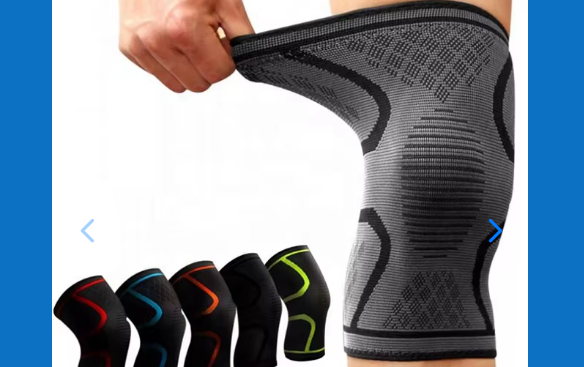
How a sleeve is built
Sleeves are knitted or laminated into a continuous tube with reinforced seams and elastic borders, extending a few inches above and below the joint. Neoprene knee sleeves add warmth and cushioning, while thinner knits made of nylon, polyester, or spandex breathe better and suit longer workouts. Because pressure stays even and moderate, a custom knee compression sleeve keeps the joint warm and supported without fighting your movement. Pick your size by measuring your thigh and calf circumference. A proper fit stays in place without rolling down, causing numbness, or changing your skin color.
How a wrap is built
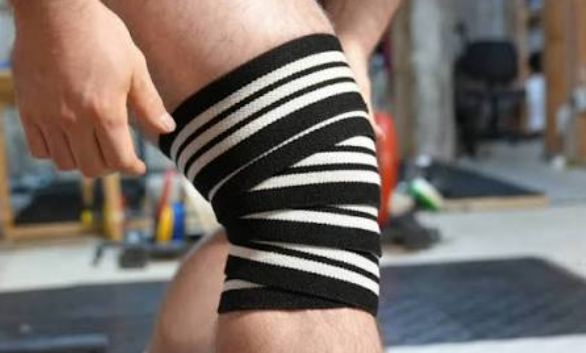
Wraps are flat strips, often 2–3 m long, made of polyester, cotton, or canvas-like webbing woven with rubber or latex. You wind them in a spiral or figure-eight pattern, so elastic knee wraps depend entirely on your technique. Pressure builds wherever the layers overlap. Wound properly, powerlifting knee wraps provide a brief rebound out of the bottom of heavy squats. Pulled too tight, they quickly limit knee flexion. The exact same wrap can feel lightly supportive or rigidly restrictive based on how hard you crank each pass.
| Sleeve | Wrap | |
| Feel | Smooth, steady, near-normal movement | Firm, localized, restrictive |
| Wears out | Stretch and seam fatigue | Lost recoil and fraying |
| Best for | Mild soreness, swelling, general exercise | Short, heavy lifting sets |
Support is not stability
Neither option replaces a hinged or unloader brace, and neither will secure knee joint stability after an ACL, MCL, or LCL injury. If your knee buckles or gives way, get it assessed before choosing either.
How Knee Sleeves Work: Warmth, Compression, and Proprioception
A sleeve changes how the joint feels rather than how much force it can produce.
Warmth. Neoprene traps heat around the joint, which usually leaves the knee feeling looser and less achy. Evidence for deep-tissue warming is thin. One review found no meaningful rise in muscle temperature before or during exercise, recording only about a 0.5°C increase afterward.
Compression. Snug, even pressure makes the knee feel supported and may help limit minor swelling. Clinicians often use sleeves as a conservative option for some knee issues, though the evidence for comfort is much stronger than the proof for real fluid reduction.
Proprioception. Pressure on the skin sends extra signals to your nervous system about where your knee is in space. Some reviews report better balance and gait. The data is inconsistent, though, and the effect fades once you take the sleeve off.
What Sleeves Do for Squat Knee Support
In a study of 15 male lifters squatting at 70% of one-rep max, both wraps and sleeves improved perceived stability, but only sleeves improved comfort. Thick, tight neoprene adds a slight rebound out of the hole. Even so, in 15 resistance-trained men and women, sleeves didn’t raise maximal weight or change frontal-plane knee mechanics. Count on them for comfort and joint feedback rather than a mechanical boost.
Know the Limits
- Choose thinner sleeves for feedback and thicker ones for warmth.
- Take it off if swelling, skin irritation, odd sensations, or instability get worse.
- A sleeve does not replace the ACL, PCL, MCL, or LCL. It is no substitute for diagnosis or rehab.
- See a sports-medicine doctor or physical therapist for locking, major instability, or sudden swelling.
How Knee Wraps Work: Elastic Rebound and Mechanical Assistance
Think of powerlifting knee wraps as a heavy rubber band stretched across your joint. As you sit into a squat, your bending knee pulls the fabric tight. When you reverse out of the bottom, that stored elastic energy recoils and drives you upward through the sticking region of the lift.
That assistance is purely mechanical.
What the Research Shows
In a controlled study at 80% of 1RM, wraps changed the squat in several measurable ways:
- Vertical impulse and peak power each rose by about 10%.
- Horizontal bar displacement dropped by about 39%.
- Lowering time shortened, from 1.57 seconds without wraps to 1.13 seconds with them.
You may have seen claims that wraps make you “20% faster” out of the hole. That figure traces back to Lake, Carden, and Shorter (Journal of Strength and Conditioning Research, 2012), but it does not apply across the board. Promises like “wraps add 20–50 lb” are just as shaky, because actual carry-over depends on your body mass, bar load, squat depth, wrap stiffness, and your experience lifting in them.
Tightness and Technique Change the Result
The elastic spring only works if the material grips your knee securely without sliding. How much rebound you get comes down to:
- Tension on each pass and the number of overlapping layers
- Wrap width and stiffness
- Where you start, and your knee angle while wrapping
Keep your leg extended while wrapping for a tighter, more secure seat. For a standard spiral, start 2–3 inches below the kneecap, overlap each pass by about half the wrap’s width, and finish 2–3 inches above the knee. A crossover (X) pattern locks the joint down harder, but it restricts flexion more as well. The spiral goes on faster and is easier to adjust between sets.
A loose wrap gives you little beyond knee warmth and compression. A tight wrap stores far more elastic tension, though it can cut depth short and alter your bar path. Because the material resists flexion on the way down, lifters often descend faster, reverse earlier, and lean harder on their knee extensors than their hips.
Loosen the wrap immediately if you feel numbness or tingling.
Knee Sleeves vs Knee Wraps: Side-by-Side Comparison Table
Here’s the full comparison on one screen so you can scan it and get on with your day.
| Comparison point | Knee sleeves | Knee wraps |
| Design | Pull-on sleeve you can keep on for your entire workout | Elastic bandage, roughly 2-3 m long, wrapped right before a set |
| Material | Neoprene or similar stretch fabric, 3-7 mm thick | Woven elastic designed to stretch and snap back |
| Compression | Consistent and moderate, determined by sleeve thickness and size | Fully adjustable based on how tightly you pull, overlap, and wrap the material |
| Main effect | Delivers warmth, compression, joint feedback, and comfort without adding spring | Stores elastic energy on the descent and releases it on the way up |
| Performance evidence | Mixed. In one study, neoprene sleeves of varying tightness improved back-squat 1RM, but had no effect on power, endurance, or other strength lifts. Other research found no increase in max weight. | Carryover depends on the wrap’s material, tension, your depth, and your squat technique. Claims of 20-40 kg or more reflect specific gear and skilled use, not an automatic guarantee. |
| Mobility | Lets you squat through your natural range of motion | Restricts knee bend, especially when cranked down, which can shift your timing and bar path |
| Comfort | Easy to wear through long training sessions | Uncomfortable when pulled tight, so lifters take them off immediately after a heavy set |
| Stability | Mild to moderate warmth and support without locking the joint | High temporary support around the joint, depending on how tightly you wrap |
| When to wear | Warm-ups through working sets, Olympic lifting, and general gym work | Heavy singles, doubles, and max attempts, primarily in powerlifting |
| Ease of use | Pick your size, pull them on, and lift | Takes practice to wrap with consistent tension and positioning every time |
| Best for | Everyday knee support, joint warmth, and full mobility | Heavy competitive squats where you want maximum rebound out of the hole |
| Key limitation | Does not protect against injury, and evidence supporting injury reduction is thin | Can mask weak joint angles or throw off mechanics. They do not replace progressive loading, solid technique, or rehab. |
Which Thickness Should You Pick?
- 5 mm: Gives most lifters the right balance of warmth, comfort, and mobility.
- 7 mm: Pick this if you want stiffer support for heavy squats.
- Wraps: Reserve these for heavy, low-rep sets. Practice with them well before competition, because tight wraps alter your depth and movement patterns.
Quick Verdict
- Best everyday option: Knee sleeves
- Best for comfort and mobility: Knee sleeves
- Best for consistent, low-skill use: Knee sleeves
- Best for maximum squat rebound: Knee wraps
- Best for competition powerlifting: Knee wraps
- Most technique-sensitive: Knee wraps
Conclusion
Think of your knees as the quiet workhorses of every squat, stair, and morning walk. Choosing between a sleeve and a wrap comes down to what you’re asking of them. Sleeves offer warmth, gentle compression, and a better sense of joint position, making them a good fit for everyday training, running, and stiff or achy days. Wraps store and release elastic energy for heavy, short-duration lifts, so keep them for competitive powerlifting.
Whichever you choose, fit and technique matter more than the label. Are you looking for a reliable knee brace manufacturer to enrich your brand or product line? Contact AOFIT now.