Two millimeters doesn’t sound like much, but under a heavy squat, it’s the difference between feeling locked in and feeling like your knees are wrapped in a wetsuit. Pick 5mm and you get the freedom to move, but you lose some warmth and support. Pick 7mm and you gain stability, but sacrifice flexibility on days you need to run, jump, or climb stairs. 5Mm Knee Sleeves Vs 7Mm: Neither is “better” across the board. The right choice depends on your lift, your joints, and your goals.
Below, you’ll find a quick answer, a side-by-side comparison, and clear picks for powerlifting, CrossFit, running, and recovery that keep you from wasting money on the wrong neoprene knee sleeves.
Quick Answer: 5mm vs 7mm Knee Sleeves, Which Should You Choose?
Choose 5mm for most training. Choose 7mm for heavy squats and powerlifting.
5mm sleeves are lighter and more flexible, which suits mixed training. 7mm sleeves are thicker, tighter, and warmer, giving you stronger support and more rebound out of the bottom of a squat.
Pick 5mm If You:
- Mix machines, leg day, and general fitness in one session
- Do CrossFit, HIIT, or functional training with lots of jumping, lunges, and running
- Train Olympic lifts and need deep knee bend in the catch
- Want light warmth and joint feedback without the bulk
Pick 7mm If You:
- Squat or deadlift heavy for low reps
- Train or compete in powerlifting, where 7mm is a common choice
- Have cold knees or train in a cold gym
| Your Goal | Best Thickness | Why |
| One pair for most workouts | 5mm | Light, flexible, moderate support |
| CrossFit or HIIT | 5mm | Fast transitions, less restriction |
| Olympic lifting | 5mm | Easier to keep depth |
| Heavy, low-rep squats | 7mm | More compression and stability |
| Powerlifting meets | 7mm | Stiffer for heavy, static lifts |
Sleeves provide warmth, compression, and a steadier feel, but they are not a treatment. If you have lasting pain, swelling, locking, or instability, get checked by a professional before upgrading to 7mm.
5mm Knee Sleeves: Flexibility, Comfort and Everyday Training Use
A 5mm sleeve is the pair you pull on for warm-ups and leave on until your final burpee. Sitting right in the middle of knee sleeve flexibility vs support, it gives you a noticeable knee sleeve compression level, reliable warmth, and an unrestricted range of motion.
What You Get With 5mm
- Support: Medium. It feels firmer than a 3mm sleeve while staying far more pliable than 7mm neoprene.
- Warmth: Clear. Neoprene traps body heat around the joint, aiding knee warmth and joint stability while improving joint awareness throughout a lift.
- Movement: Few limits. When fitted properly, the sleeve bends easily through snatches, cleans, box jumps, runs, and burpees. Four-panel or anatomical cuts prevent bunching and slipping in the bottom of a deep squat.
- Squat rebound: Light. These prioritize comfort and mobility over spring out of the hole.
Who Should Wear It
| Use | Fit | Why |
| CrossFit, HIIT | High | Handles squats, jumps, and runs in one WOD |
| HYROX | High | Moves well between sled work, lunges, wall balls, and running |
| Olympic lifting | High | Warm and stable, with deep knee bend intact |
| Beginners | High | Clear support without 7mm stiffness |
| Everyday wear | Medium-high | Softer and easier to tolerate for long hours |
| Running | Medium-high | Good for extra warmth, though 3mm feels lighter for pure speed |
Pros and Limits
5mm sleeves pull on quickly and stay comfortable through long training days, making them especially forgiving for newer lifters.
They offer less bracing as you approach your max. If you want maximum stability on heavy singles, look at 7mm options instead.
Powerlifting Rules
The IPF and USAPL both cap sleeves at 7mm thickness and 30cm length, while banning features that provide mechanical rebound or extra leverage. A plain, single-layer 5mm sleeve usually passes inspection, but you still need to check seams, closures, and federation rosters. USAPL allows only approved sleeves from 2026.
Sizing Check
Pick a size that fully covers your kneecap and joint line. A sleeve that runs too tight restricts bending and leads to calf numbness or pressure behind the knee. One that runs loose will slide down your leg during squats and sprints.
7mm Knee Sleeves: Maximum Support, Warmth and Heavy Squat Performance
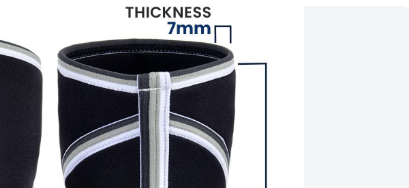
7mm is the thickest neoprene allowed in IPF competition, and you feel every millimeter. It is the go-to choice for powerlifting knee sleeves and heavy knee support for squats.
What 7mm Actually Does
- Compression and stability: The knee sleeve compression level is high. Thanks to the thick build and snug fit, you get firm pressure around the joint, clearer feedback on knee position, and less side-to-side wobble without needing hinges or straps.
- Warmth: Neoprene traps heat around the joint, which helps in cold gyms and during downtime between sets. Lifters often report that their knees feel looser and sit into the hole more easily. That is a benefit of joint sensation rather than a medical treatment.
- Rebound: The material compresses at the bottom of a squat and rebounds as you drive up, especially on heavy, fast reps. It provides a noticeable pop, though it will not give you the spring of a taped or wrapped knee.
What the Research Says
In a study of 17 healthy male CrossFit athletes, 7mm sleeves increased front squat 1RM with statistical significance (p<0.001), and the lifters felt more stable. Even with that gain, the researchers noted that the actual biomechanical changes remained small. A separate study tested 19 men at 70% of max and recorded movement shifts across the ankle, knee, and hip. Still, neither study proves that sleeves will reliably increase your back squat numbers across the board.
Best Use Cases
- Heavy squats, front squats, and leg work
- 1-5 rep sets near your max
- Cold training environments
- Lifters who want a stable feel without strapped knee wraps
They are a poor fit for long, light circuits, endurance sessions, or hot training spaces.
Competition Check
IPF rules require a single-layer neoprene tube without straps, Velcro, drawcords, or extra padding. The sleeve must sit centered over the knee and stay clear of both your socks and singlet. You can only wear approved brands and models on the platform, so check the current federation list rather than assuming any 7mm sleeve passes inspection.
Limits to Know
- Stiffer than 5mm, so hitting depth can feel restricted at first.
- Hotter and sweatier, which can irritate your skin over long sessions.
- Hard to put on. Roll the sleeve down past your calf first, then pull it up over the joint in stages.
- Different feelings. The extra bulk can shift your squat path, so spend several training blocks in them before testing a max or competing.
Stop wearing the sleeve and loosen or resize it right away if you notice numbness, tingling, skin discoloration, or calf discomfort.
When to Skip Strong Compression
Avoid 7mm sleeves without clearance from a surgeon or physical therapist if you are:
– In post-surgery recovery
– Dealing with swelling, fever, redness, or sudden loss of motion
– Suspecting a ligament, meniscus, or bone injury
A sleeve provides warmth and surface stability, but it cannot replace a medical diagnosis or a structured rehab plan.
5Mm Knee Sleeves Vs 7Mm Comparison: Support, Flexibility, Warmth and Application
Neoprene thickness changes five key factors: support, flexibility, warmth, comfort, and price. Here is how 5mm and 7mm sleeves compare side by side.
| Factor | 5mm | 7mm |
| Support and compression | Medium. Balances joint stability with natural range of motion. | High. Adds solid stability and resists side-to-side wobble. |
| Flexibility | Moves freely during runs, jumps, and fast transitions. | Stiffer and tighter, with noticeable resistance when you bend your knees. |
| Warmth | Retains plenty of heat while staying cooler over long workouts. | Warmest option available. Keeps the joint warm between heavy sets. |
| Squat help | Delivers compression and joint awareness, with minimal rebound out of the hole. | Stronger support at the bottom of a squat, though without the mechanical spring of knee wraps. |
| Putting on and taking off | Slides on easily and stays comfortable through long training sessions. | Harder to pull on, especially when sized tight. Some lifters use straps or a plastic bag. |
| Long-wear comfort | Creates less heat, friction, and pinch behind the knee. | Traps heat and pinches behind the knee over time. Best reserved for main working sets. |
| Best for | CrossFit, Hyrox, general fitness, machine work, and moderate lifting. | Powerlifting, squat-focused sessions, heavy deadlifts, and Strongman training. |
For maximum freedom of movement, 3mm sleeves prioritize flexibility for running, hiking, and long, low-intensity training.
Best Knee Sleeves for Squats, Powerlifting, CrossFit, Olympic Lifting and Running
The best sleeve is the one that matches your main lift. Here are the top picks, sorted by use.
| Scenario | Thickness | Top Pick | Why |
| Powerlifting / max squats | 7mm | Rehband RX 7mm, Rogue 7MM, Stoic 7mm | Maximum compression, warmth, and stability for low-rep work |
| General strength training | 5mm | Rehband RX 5mm, Gymshark 5mm, Rogue 5mm | Balanced support for squats, leg presses, and mixed sessions |
| CrossFit / Hyrox | 5mm | Rehband RX 5mm | Moves better through jumps, runs, lunges, and sled work |
| Olympic lifting | 5mm (7mm for heavy days) | Rehband 7084 Original or RX 5mm | Deep catch positions need knee and ankle mobility |
| Running | Usually none, or 3mm | Rehband RX 3mm | Thick neoprene knee sleeves overheat and feel stiff |
Pick by Movement
- Back squat: 5mm for general training, 7mm for maximal attempts.
- Front squat: 5mm gives you solid knee support for squats while keeping your torso upright.
- Snatch: 5mm, or thinner if the material binds in your catch position.
- Clean and jerk: 5mm is the reliable standard. 7mm can feel stiff through the catch and split jerk.
- Box jumps and burpees: 3-5mm.
- Running intervals: No sleeve or 3mm.
- Deadlifts: Optional. Stick with 5mm during mixed workouts.
The Smart Upgrade Path
Start with 5mm. If you need more joint stability under heavy squat loads, step up to 7mm. Pick 3mm if conditioning and running take up most of your training week.
Check the knee sleeve manufacturer‘s sizing guide and measure with your leg fully extended. A proper fit stays snug without slipping, cutting off circulation, or limiting your depth.
Knee Sleeves for Knee Pain, Arthritis and Recovery: Which Thickness Is Safer?
Thicker does not mean safer. A comfortable 5mm sleeve is the most practical starting point for mild knee aches or mild arthritis. No published clinical study shows that 5mm outperforms 7mm, or that any sleeve thickness cures arthritis. Thickness mainly changes joint warmth, sleeve bulk, and how much resistance you feel when bending your leg.
What the Research Actually Says
- Short-term relief: In a randomized study of 60 knee osteoarthritis patients (average age about 61), both plain elastic neoprene sleeves and hinged sleeves improved balance and eased short-term pain. These findings support temporary symptom relief rather than long-term joint repair.
- Product-specific results: One low-grade osteoarthritis study found a germanium sleeve cut pain scores by 4.1 points (about 51%). That outcome applies solely to that specific product, not to standard 5mm or 7mm sleeves.
- No clear edge: In an 8-person trial, researchers found no significant differences (p>0.05) in pain, swelling, range of motion, balance, or walking ability when comparing neoprene, spandex, copper sleeves, and wearing no sleeve at all.
A knee pain relief sleeve adds warmth, light compression, and better joint awareness. It cannot diagnose underlying joint damage or rebuild cartilage, and it will not replace strength training, weight management, or training load adjustments.
Which Thickness for Which Situation?
| Situation | Choose | Why |
| Mild soreness, mild arthritis, daily walking | About 5mm | Balanced warmth, easier knee bending, lower risk of over-compression |
| Squats or deadlifts needing more feedback | 5-7mm (try 5mm first) | Proper fit and skin response matter more than thickness alone |
| Long office or commute hours | 3-5mm | Less heat buildup, edge rolling, and sustained pressure |
| Clear swelling, joint effusion, or post-surgery | Don’t self-upgrade to 7mm | A surgeon or physical therapist should determine your compression level |
| Numbness, tingling, cold foot, pale or purple skin | Remove it and recheck the size | The sleeve is likely too tight or sitting improperly |
A Simple 5mm Test
- Pick a flat sleeve that stays in place without rolling down.
- Wear it for a short trial run. Check behind the knee and around the kneecap for pressure marks, tingling, or skin color changes.
- Bend your knee, walk up stairs, or perform light movements. If your natural range of motion drops, adjust the size or switch thickness.
- Remove the sleeve immediately if pain, swelling, or skin irritation increases.
“Tighter is better” is a myth.
Recovery and Post-Surgery Notes
Rehab guidelines recommend Tubigrip-style elastic bandages for swelling, but only when fitted directly by a physical therapist or nurse. Following arthroscopy, elevation, ice, and doctor-prescribed compression remain the standard care routine. Your surgical incision, graft, clot risk, and swelling pattern take priority over any sleeve specs.
Stay consistent with your prescribed quad, glute, and hamstring exercises. If pain or swelling flares up after physical activity, reduce your training volume and impact rather than buying a thicker sleeve.
See a professional if you have worsening pain, joint locking, obvious instability, heat and redness, or cannot bear weight.
Conclusion
The best knee sleeve matches how you train and how your knees feel.
Pick 5mm if you want flexibility, all-day comfort, and versatility for CrossFit, running, or general gym work. Go with 7mm if you’re chasing heavy squats and powerlifting numbers and want maximum warmth and joint stability. Whichever you choose, nail the sizing. A sleeve that’s too tight or too loose will undermine everything else.
Neoprene knee sleeves are built for performance and comfort. If you are looking for a reliable knee brace manufacturer to enrich your brand or product line, contact AOFIT now.