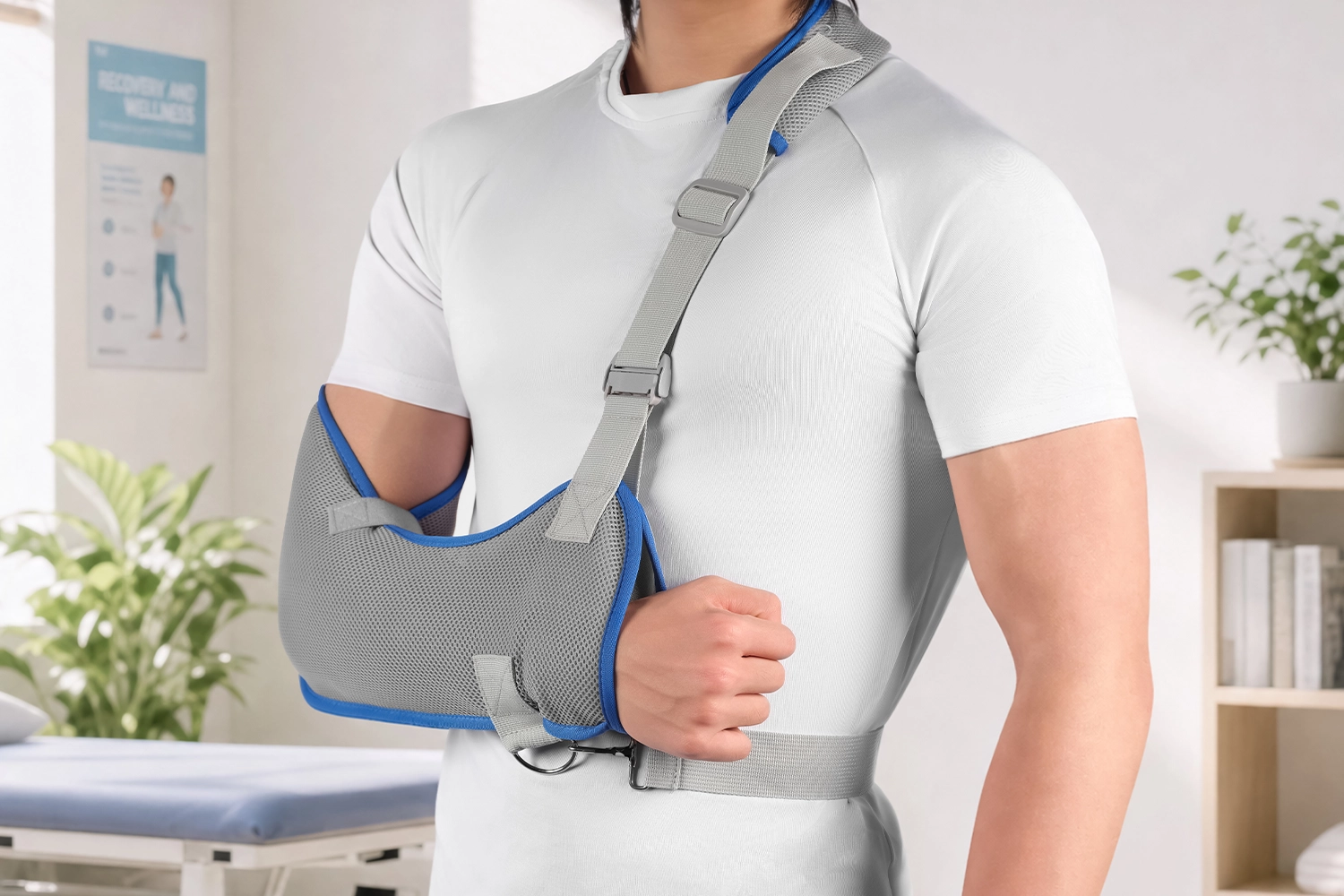
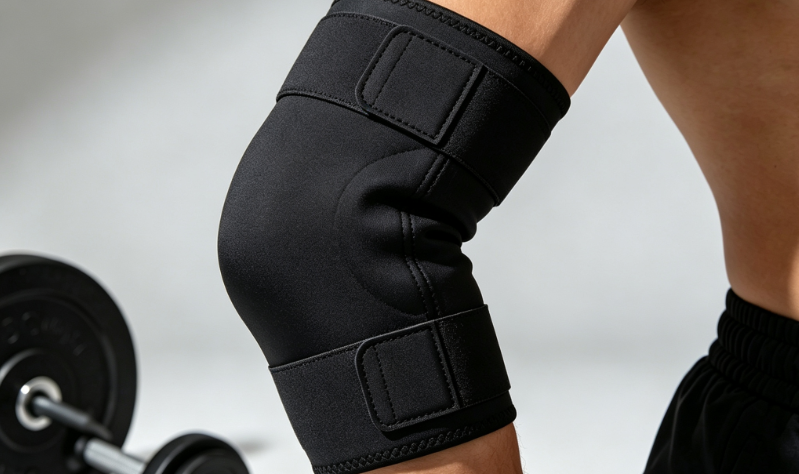
That sharp twinge in your elbow every time you rack a barbell or curl a dumbbell is your joint telling you it needs backup. Whether you’re catching early signs of tennis elbow, golfer’s elbow, or just want to protect your joints before heavy bench sessions, the right elbow brace for weightlifting can mean the difference between training through pain and training pain-free. The market is flooded with options claiming to be the fix, but not every compression sleeve or strap delivers support where you need it. We tested and researched dozens of products and came up with six standout picks, each suited to different lifting styles, injury types, and support levels. You’ll also get practical guidance on choosing between a sleeve and a hinged brace.
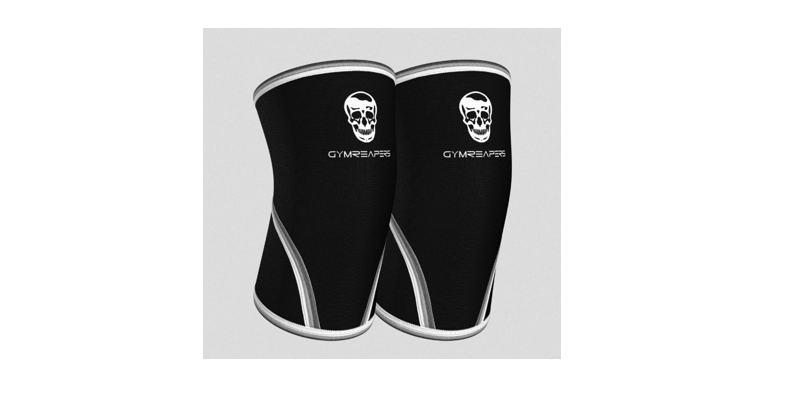
Gymreapers 5MM Elbow Sleeves (Top All-Around Support Pick for Weightlifting)
Priced at $49.99, this pair is the best all-around compression elbow sleeve for lifters who need reliable support without losing mobility. With 4.8/5.0 stars across 506-544 reviews (depending on the product page) and a 97% recommendation rate, the numbers match the reputation.
The 5mm neoprene elbow brace construction lands in what Gymreapers calls “Moderate” support—good for cross-training, bodybuilding, and high-rep sessions. Third-party testers gave it 8.5/10 overall:
- Support: 8/10
- Warmth/Compression: 8/10
- Material/Thickness: 9/10
- Comfort: 9/10
- Value: 8/10
Users keep coming back to the compression feel, warmth retention, and build quality. Those matter when you’re grinding through heavy pressing and pulling without cutting off your range of motion.
Sizing runs inconsistent. Reviews warn that “sizes mentioned are not reliable,” so measure your elbow’s widest point before ordering and skip the size chart.
Gymreapers bundles this sleeve with 7mm knee sleeves and 18″ wrist wraps, making it part of a complete strength-training kit rather than a standalone purchase. If you’re building a full support setup, that bundle-first approach adds real value beyond just elbow protection.
Nordic Lifting Elbow Compression Sleeves
Lifters in recovery need a different kind of support than lifters pushing for max weight. Nordic Lifting built a 5mm neoprene sleeve with moderate compression that works well during the healing phase. The review data backs up its reputation as the go-to elbow brace for tennis elbow and elbow brace for golfer’s elbow.
Pricing gets confusing depending on where you look. Nordic’s own site lists it from $24.99 in the compression gear collection up to $41.99 in the elbow-specific line, while third-party comparison sites peg it at $22.99. That spread usually comes down to bundling, so check what’s included before you buy.
The review numbers are massive. One 2026 roundup shows 4.5 stars across 4,573 reviews, plus a 1-year warranty. Another comparison site gives it 8.8/10 from 16,019+ reviews across 37 sources. On Amazon it gets 4.4★ from 10,780 reviews. Nordic’s own listings show 4.6/5 from 287 reviews and 4.5/5 from 86 reviews.
That’s a wide sample size, and the consensus holds steady—this is a value pick for lifters looking for elbow support for gym sessions who want warmth and joint relief.
Trustpilot gives the brand 3.2/5 overall, though individual reviews call out the 5mm thickness and customer service as standouts.
Best used for:
– Tendonitis and overuse strain recovery
– Wearing during workouts, lifting, or sports
– Daily joint warmth and comfort between sessions
Nordic frames this as session-based wear—on during training, off afterward for recovery. No source confirms an exact hour limit, so treat it as moderate compression.
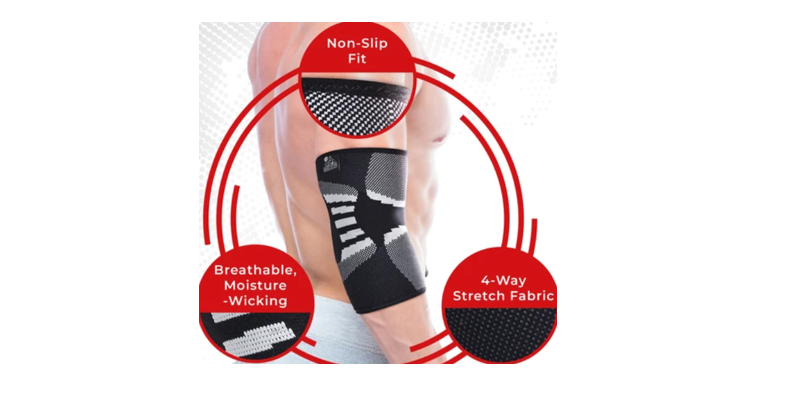
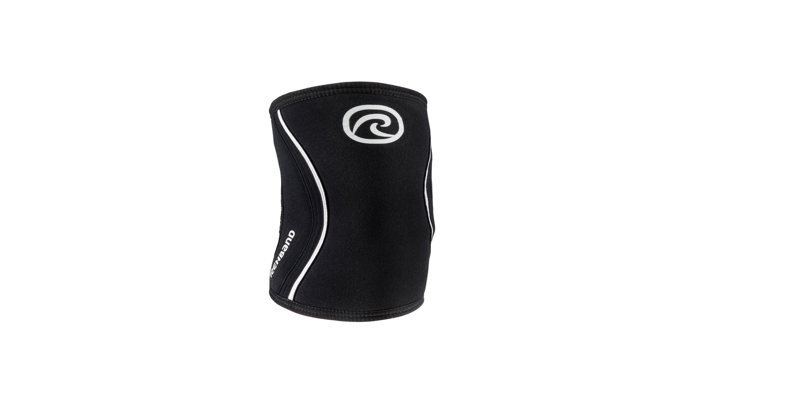
Rehband Elbow 5mm Compression Sleeve
Rehband built its reputation on one thing: dependable 5mm SBR/neoprene construction that delivers compression without sacrificing flexibility. That’s not a marketing claim—it’s baked into the 4-panel anatomical design, which contours to your elbow’s natural bend and keeps the sleeve locked in place through heavy sets. Sold as a single sleeve priced at $39.99 (verified March 7, 2026), you’ll need to grab two if you want coverage on both arms.
What the DDP Score Means
Forget star ratings alone. Rehband’s DDP score of 8.7/10 pulls from 34,574+ reviews across 34 sources, blending:
- Amazon: 4.6★ from 453 reviews
- 11 expert review sites
- 14 forum threads
That’s a composite metric—popularity, expert validation, and community discussion rolled into one number. It’s a more honest signal than a single retailer’s star count.
Real users back this up. Recurring feedback includes “Good for elbow pain,” “Good support for bicep/elbow injury,” and “Well made, worth the money.” A separate aggregator (Harvard Apparatus Regen) shows 4.4/5 from 96 reviews, with 66% five-star.
Sizing matters here. Measure your elbow at roughly 30° flexion—XS starts at 22-24cm, scaling up to XXL at 32-34cm. Order too loose, and the compression elbow sleeve loses most of its stabilizing effect during elbow brace for bicep curls work or heavy pressing.
Iron Bull Elbow Sleeves
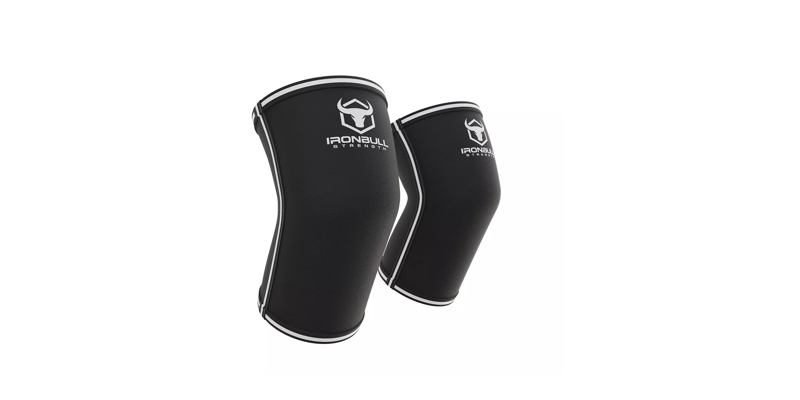
Powerlifters have specific demands, and Iron Bull Strength built this sleeve to answer them. The 5mm high-density neoprene construction sits at what the brand calls Level 1 compression—snug enough to stay put under heavy loads, flexible enough to let you grind through bench presses and overhead pressing without feeling locked up.
Iron Bull’s product page shows a 100% would-recommend rate, with 2025 reviews calling out “perfect fit,” “immediate relief,” and “good price and good quality.” One editorial review scored it 4.5/5, praising the stability it adds during pressing movements—though the reviewer flagged pricing that runs a bit higher than comparable sleeves.
Where this sleeve fits in a support lineup:
– Best for: powerlifting, weightlifting, weight training
– Support level: moderate compression, built for durability over multiple heavy sessions
– Standout feedback: comfortable, warm, pain-relieving, holds up over time
Not everything’s flawless. Some buyers report a strong smell straight out of the packaging, and the Velcro on certain versions wears faster than expected. Sizing feedback is mixed too—measure carefully before ordering.
Gymreapers backs its sleeves with a 1-year replacement warranty. Iron Bull’s public listings don’t spotlight warranty terms as clearly. But for lifters who want training stability over ultra-rigid compression, Iron Bull earns its spot as a genuine elbow strap for lifting contenders.
Sleeve Stars Tennis Elbow Brace with Compression Pad (Best Value Pick for Tennis Elbow/Golfer’s Elbow)
When you’re testing whether a brace works for you, budget matters. At $14.95-$16.95, the Sleeve Stars is the cheapest legitimate option on this list for anyone dealing with elbow brace for tennis elbow or elbow brace for golfer’s elbow symptoms.
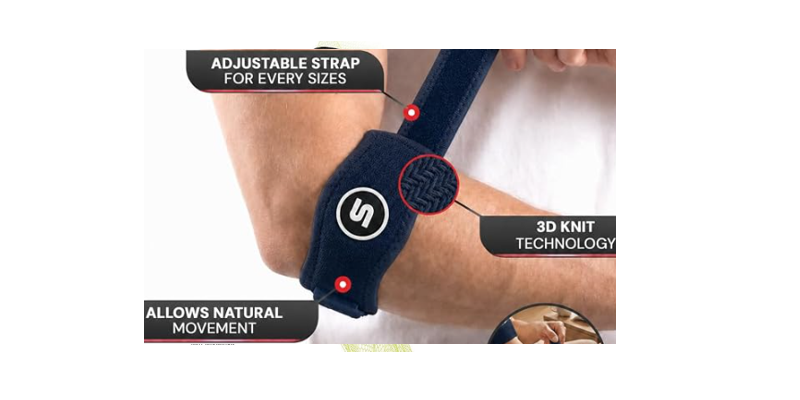
It’s a counterforce strap built from Polyester, Nylon, and Spandex, internally structured as 89% nylon and 11% polyester. The lightweight elastic fabric feels different from the thick compression of a 5mm neoprene design.
The strap ships with 3 adjustable bands of varying length, so you can dial in compression levels. It also includes a repositionable gel or compression pad that sits on the forearm muscle belly, roughly 1-2 inches below the elbow crease, away from the joint itself. That placement puts pressure near the tendon’s origin point, which spreads out the tension that builds up during repetitive gripping, swinging, or twisting motions, exactly what aggravates tennis elbow and golfer’s elbow.
Sizing is one-size-fits-most, covering forearm circumferences from 9-23 inches (22-58 cm). The official guidance says to tighten it until it feels “snug but not numb.” You should feel support during wrist flexion, but no lingering pressure at rest.
Build Quality at This Price
The strap includes double-stitched reinforcement, a moisture-wicking inner lining, and adjustable Velcro closures. As a lightweight recovery tool for daily tendonitis management, it delivers real value at this price.
Sleeve Stars targets pain management on a budget. Rehband’s neoprene lineup (5-7mm, built for joint stability and warmth during heavy lifting) targets performance support during training.
DonJoy Performance Hinged Elbow Brace
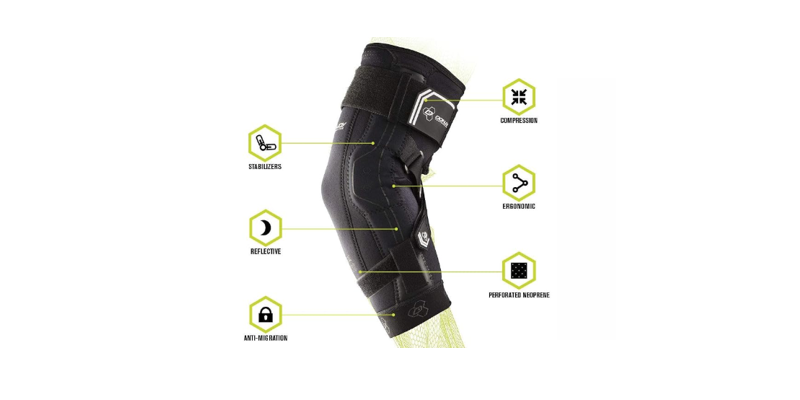
None of the sleeves above will stop your elbow from hyperextending. Compression neoprene isn’t built for that job. If you’re dealing with joint instability, ligament laxity, or easing back into training post-injury, you need a hinged structure. That’s what DonJoy Performance built into the Bionic Elbow Brace II.
Dual polycentric hinges paired with adjustable X-straps, wrapped in a neoprene compression layer for comfort. The hinges control flexion and extension mechanically. The X-straps lock in against sideways stress and block hyperextension. That combination separates a hinged brace from anything on this list—it’s built for medial/lateral ligament protection.
DonJoy markets it for mild to moderate sprains, joint instability, and recovery scenarios where you still need a range of motion but can’t risk uncontrolled movement. Think contact sports like football, rugby, or basketball, or coming back from a strain.
Sizing runs by bicep circumference:
– S: 10-11.6 in
– M: 11.5-13.1 in
– L: 13-14.6 in
– XL: 14.5-16.1 in
– 2XL: 16-17.6 in
Fits either arm, priced at $97.99 (down from $107.99). DonJoy Performance sits under Enovis, an orthopedic medical technology company, so this brace carries clinical-grade design credibility.
How to Choose Between an Elbow Brace and a Sleeve (Based on Training Type and Pain Pattern)
Not every elbow issue needs the same fix. A compression sleeve and a brace solve different problems, and picking the wrong one wastes money and delays recovery. Sleeves are built for training performance and general compression. Braces are built for targeted pain relief and joint stabilization.
Match Your Training Type to the Right Gear
- Heavy bench press, squats, overhead pressing, CrossFit: Go with a 5mm neoprene elbow sleeve. You get uniform compression, warmth, and full range of motion without locking the joint down.
- Pain that fires on one specific movement: Wearing an elbow brace with a counterforce strap or compression pad works better. It shifts tension away from the tendon’s origin point instead of compressing the whole joint.
- Ligament instability, post-fracture, or post-surgical recovery: Skip the sleeve. A hinged or rigid brace restricts motion on purpose, which is what unstable joints need.
Match Your Pain Location to the Right Gear
- Outer elbow pain after gripping or swinging (classic tennis elbow territory): Choose a brace with a forearm compression pad. It unloads the extensor tendon at its origin.
- Diffuse soreness or mild inflammation around the joint: An elbow sleeve for gym sessions works better here since it compresses evenly, not at one point.
- Twisting sensations or visible instability: A hinged brace addresses this. Sleeves won’t help.
Precautions and Risk Warnings When Wearing an Elbow Brace For Weightlifting
Stop wearing your brace immediately if you notice numbness, tingling, or skin turning white, blue, or purple—these signal nerve compression or blocked circulation. If symptoms linger a few minutes after loosening the strap, get medical help. Same goes for worsening swelling, throbbing pain, or a cold sensation in your fingers; that means the elbow strap for lifting is cinched too tight. Readjust or remove it. If pain gets worse after repositioning, or your wrist and fingers lose mobility, the brace doesn’t fit your situation—don’t force it.
Quick fix protocol: loosen the strap first, wait a few minutes, and see if sensation returns. For soft tissue or nerve-related pain, cut back on triggering movements like prolonged elbow flexion. Ice 10-20 minutes every 1-2 hours for the first three days if swelling persists.
The Hidden Cost of Wearing Your Brace All Day
Long-term dependency weakens the muscles your brace is compensating for—some data shows roughly 10% strength loss per week under prolonged immobilization. Once you take the compression elbow sleeve off, you’ll feel unstable or weak without it. Wean off gradually instead of wearing it 24/7, and pair that with rehab work to rebuild real strength.
Cleaning and Replacement Guidelines
- Removable liners: hand wash in warm water with mild soap, air dry only
- Hard shells/hinges: wipe with a damp cloth and mild disinfectant
- Cleaning frequency: every 1-3 days for regular use; after every session if you sweat heavily
- Replace when: elastic sags, compression points multiply, or odor persists after washing. Many clinical settings taper brace use within 72 hours once pain subsides—don’t treat it as permanent gear.
Conclusion
Elbow pain doesn’t fix itself, and lifting through it only makes things worse. The right gear changes everything. If you’re pushing for heavy PRs, a snug compression sleeve like the Gymreapers or Iron Bull gives you the stability you need under the bar. If nagging tendon pain is the problem, a brace built specifically for tennis or golfer’s elbow will help recovery more than any sleeve can.
The best elbow brace for weightlifting depends on what you’re dealing with. Match the support to your training style and your pain point.
Check your patients’ or consumers’ needs, and contact AOFIT to reach your custom elbow brace solution. We are a global medical-grade brace manufacturer who is ready with full OEM/ODM service.