
That tingling in your ring and pinky fingers isn’t random—it’s your ulnar nerve sending an SOS every time you bend your elbow past a certain angle, especially while you sleep. If you’ve been told you might have cubital tunnel syndrome, someone has probably already suggested an elbow brace, and you’re probably wondering if it’ll actually help or just end up gathering dust in your nightstand drawer.
An elbow brace for cubital tunnel syndrome works on a pretty straightforward mechanical principle. Understanding why it works is the key to using it correctly—most people don’t. We’ll go over how ulnar nerve compression happens, what a brace does to stop that cycle, how to wear one for real results, and when a brace alone won’t cut it and it’s time to call your doctor.
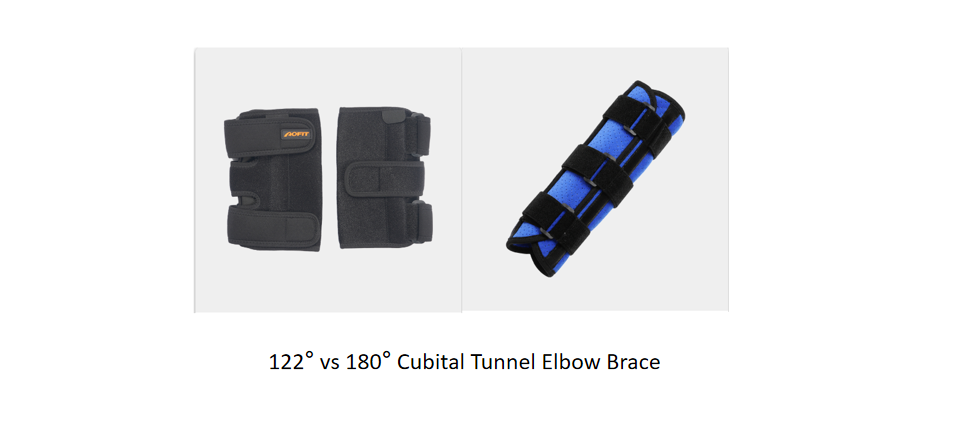
Understanding Cubital Tunnel Syndrome: Why the Ulnar Nerve Gets Compressed
Your ulnar nerve doesn’t have much wiggle room. Behind the bony bump on the inside of your elbow—the medial epicondyle—it threads through the cubital tunnel, a narrow passage built from bone, ligament, and fascia. There’s a roof over this tunnel called the Osborne ligament, and the gap it spans is tiny—about 4mm. That’s not a lot of buffer for a nerve that’s already sitting close to the surface of your skin.
Pressure inside that tunnel isn’t constant. Nerve pressure spikes hardest when your elbow bends to roughly 40-50 degrees—which happens to be almost exactly where most people’s arms land when they sleep. Bend your elbow, and the tunnel physically narrows. Hold that bend for hours, and you’re squeezing an already-tight space even tighter.
That’s why cubital tunnel syndrome symptoms almost always show up at night first. You’re not doing anything wrong—your arm just naturally curls while you sleep, and that position keeps compressing the nerve for hours without a break.
Other triggers follow the same logic: leaning on your elbow, repetitive bending at work, or resting your arm on a hard surface. Any of these can aggravate an already-sensitive nerve.
You’re not dealing with something rare. Cubital tunnel syndrome ranks as the second most common upper-extremity compression neuropathy, right behind carpal tunnel syndrome. Estimates suggest incidence around 30 cases per 100,000 person-years, with prevalence reported as high as 5.9% in some studies. If your ring and pinky fingers are tingling, you’re in good company.
How a Elbow Brace For Cubital Tunnel Syndrome Works: The Core Mechanism
A good ulnar nerve compression brace doesn’t heal anything on its own. It stops you from making the problem worse every night. The brace works by physically blocking deep elbow flexion, keeping your arm in a near-extension position—typically between 30° and 45°—so the nerve stops getting stretched, compressed, and rubbed raw inside that narrow tunnel.
Why does the angle matter? Pressure inside the cubital tunnel climbs as your elbow bends. Ultrasound studies measured this: pressure sat at 52.3 kPa at 45°, climbed to 49.5 kPa at 90°, then spiked to 127.8 kPa at maximum flexion. Past 90°, nerve conduction itself gets impaired. The nerve gets squeezed hard enough to stop firing correctly.
That’s why 45° shows up repeatedly as the benchmark angle in clinical splint studies. It’s the sweet spot for immobilizing and resting the ulnar nerve without locking your arm in a cast. An effective elbow immobilizer brace targets this angle, often using a rigid aluminum splint that can’t bend past roughly 45°.
Why Nighttime Positioning Is the Real Target
Most people don’t choose to sleep with a bent elbow—it just happens. A night splint interrupts that unconscious sleep flexion. One prospective study had patients wear a rigid nighttime orthosis at 45° for three months, combined with activity changes. At the two-year mark, 21 of 24 extremities (88%) avoided surgery, with meaningful improvement in symptoms and function.
An elbow splint for nerve pain doesn’t fix the ulnar nerve directly. It removes the repetitive tensioning and tunnel narrowing that keeps reinjuring it, giving irritated nerve tissue actual time to calm down.

An elbow brace with 4 angles that can be adjusted, namely 120°, 135°, 150°, and 180° is suggested by AOFIT’s experts. This design can be easily adjusted by inserting a screw into the hole where you need the gear to be fixed. When resting at night, it is recommended to switch to night mode (150°, 180°), which can prevent excessive bending of the elbow during rest and sleep; for daytime use, you can also adjust the elbow brace to day mode (120°, 135°, 150°) to facilitate your work.
What Symptoms Improve With Night Splint For Cubital Tunnel
Numbness in your ring and pinky fingers is the first thing to fade. The 3 a.m. wake-up call where you shake your hand to get feeling back tends to go quiet within 2-6 weeks of consistent use. Morning numbness, where you wake up and your hand feels asleep before you even move, typically improves in the 6-12 week range. So does that dull ache running along the inside of your elbow and forearm.
Track how many times you wake up at night, how bad your fingers feel the moment you open your eyes, and whether the tingling still comes and goes or has turned into something constant. Intermittent symptoms respond well to bracing. Constant numbness or hand weakness are different animals—they suggest nerve damage that has progressed past the point where a brace can reverse it on its own.
Most conservative treatment protocols run up to 3 months before deciding whether to escalate. In one study, rigid night splinting combined with activity changes led to statistically meaningful improvement within that same 3-month window, and those gains held steady at longer follow-up. If you’re not seeing any change by then, that’s your signal to loop in a doctor.
How to Wear a Cubital Tunnel Brace for Best Results
Fit matters more than most people realize no matter if it is an elbow brace for cubital tunnel syndrome or wearing a tennis elbow brace. A brace that’s technically the right type still fails if you strap it on wrong.
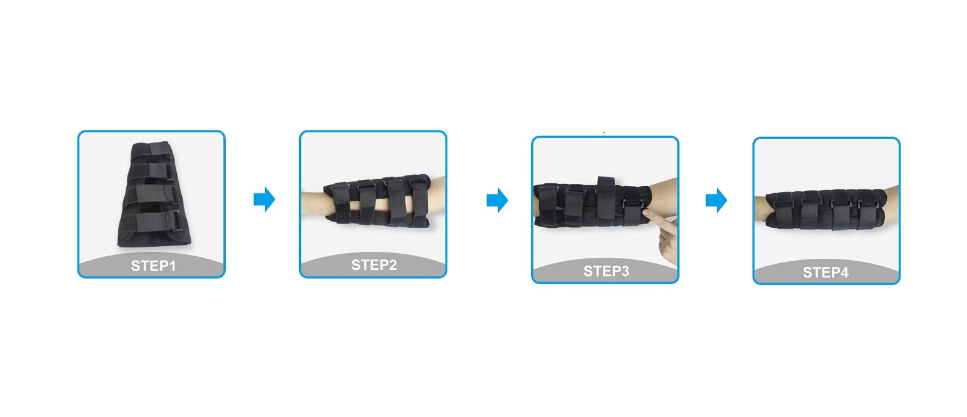
Get the positioning right first. The brace’s support point needs to sit directly over your elbow crease, not shifted up your forearm or down your bicep. Off-center placement lets the brace slide during sleep and creates new pressure points right where your ulnar nerve runs.
Tightness has one rule: snug enough to stay put, loose enough that you can slide one or two fingers underneath the strap. If your fingers feel colder, numb, or more tingly after putting it on, that’s not normal—loosen it immediately.
The angle target stays consistent: roughly 30-45° of flexion. Never locked straight, never allowed to fold deep. That’s the whole point of an ulnar nerve brace at night—blocking the deep bend, not eliminating all bend.
Fix These Common Mistakes
Strapping too tight causes the exact numbness you’re trying to prevent. If you tuck your arm under a pillow or your torso, use pillow support instead, tucked against your side while sleeping. If numbness spikes overnight, readjust before your next sleep. Don’t push through it.
Elbow Brace Alone Isn’t Enough. You Need Complementary Conservative Treatments.
Wearing a brace at night won’t cancel out eight hours of leaning on your elbow at a desk. The brace handles sleep position. Your daytime habits are a separate problem, and they need their own fix.
Adjust how you move during the day:
– Swap phone calls for headphones—ditch the crooked-elbow-holding-phone habit.
– Stop resting your elbow on desks, armrests, or car doors. Direct pressure on that inner elbow bone irritates the nerve just as much as sleep flexion does.
– Try voice-to-text for typing-heavy work, or reposition your keyboard so your elbow doesn’t stay bent for hours straight.
Nerve gliding exercises give the ulnar nerve room to move, so it doesn’t stay stuck in one stretched position. Try the A-Ok stretch: arm out to the side, elbow straight, palm up, fingers forming an “OK” sign. Slowly bend your elbow, bringing your hand toward your face until it’s near your ear. Hold 3-5 seconds. Repeat 5 times, once or twice daily.
Physical therapy adds structured gliding, gentle range-of-motion work, and posture correction. It’s useful if symptoms persist past that 3-month conservative window.
Signs You Need Medical Attention
Some signals mean stop waiting and call a doctor. Full stop.
Get evaluated right away if you notice numbness or tingling that’s spreading, not fading, especially through your ring and pinky fingers. Grip strength dropping—fumbling small objects, dropping things more often. Visible muscle wasting in your hand, that small-muscle thinning between your fingers. Pain intensifying instead of easing, or nighttime pain severe enough to wreck your sleep.
Rapidly worsening weakness, sudden severe pain, or losing the ability to button a shirt or grip a cup are red flags that skip the wait-and-see approach.
Two timelines matter. Symptoms lasting past 6 weeks with no improvement, or a night splint used consistently for 3 months without progress—both mean it’s time for a hand or nerve specialist. They’ll check nerve conduction and muscle function directly. If wasting or progressive weakness shows up, surgical decompression enters the conversation fast.
Conclusion
That tingling in your ring and pinky fingers isn’t something you have to live with. An elbow brace for cubital tunnel syndrome works because it keeps your arm from bending past the point where your ulnar nerve gets stretched and squeezed, especially while you sleep. Wear it consistently, add some nerve-gliding exercises, and give it time. Most mild-to-moderate cases improve.
But a brace is a tool, not a magic fix. If your grip weakens or numbness sticks around after a few weeks of consistent use, that’s your sign to loop in a doctor.
If you are a hospital, healthcare center, distributor or an e-commerce platform seller who are looking for advanced design or solution for your patients, contact AOFIT, your reliable medical brace factory, now. We are ready with our ODM/OEM elbow brace lines.