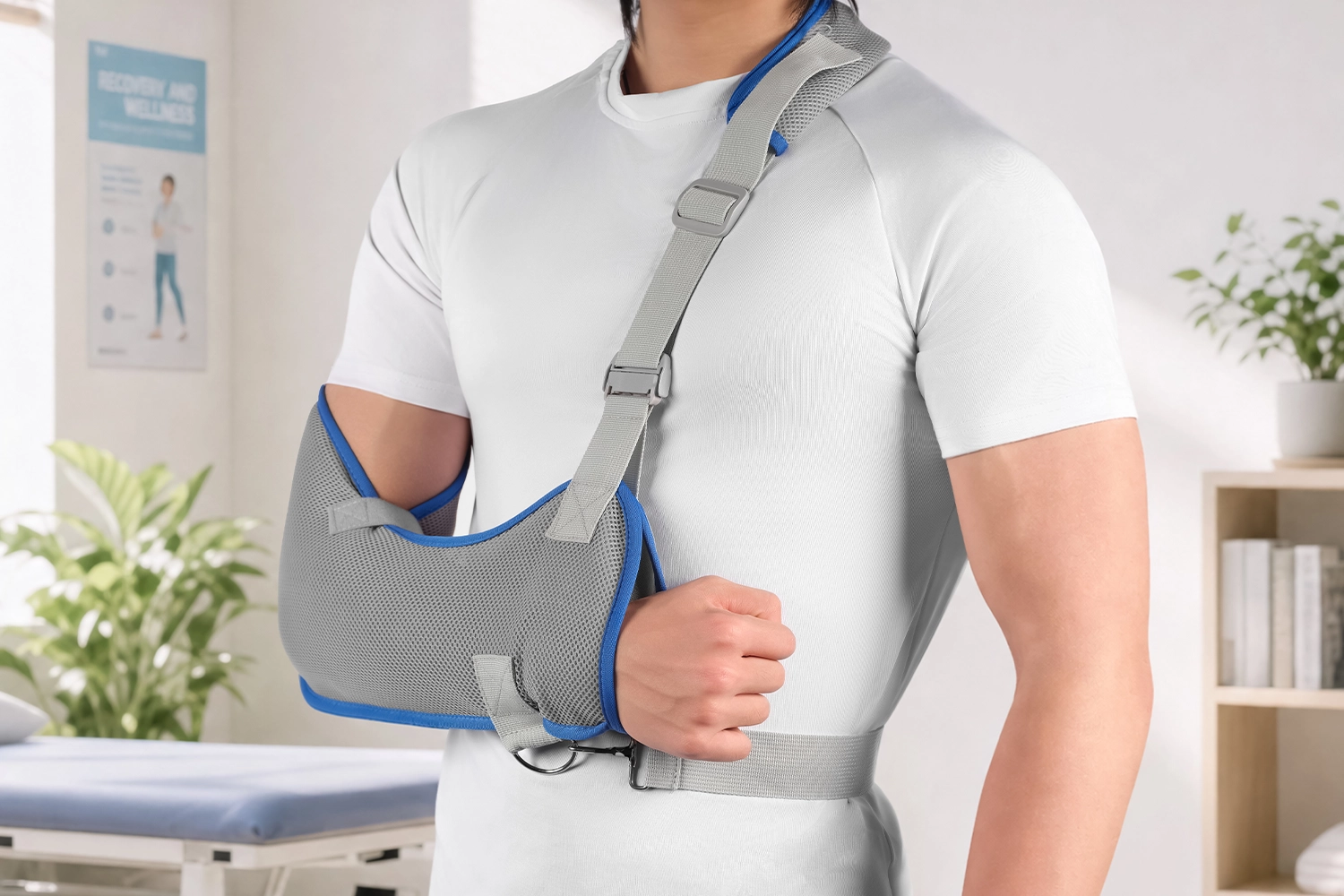
Your shoulder just popped out of place, the ER handed you a sling, and now you’re standing in your kitchen wondering: Are Slings For Shoulder Dislocation Worth It. Wear it too briefly and you risk another dislocation; wear it too long and you trade instability for stiffness that can take months to undo. The question is how to use one so it helps rather than hinders. Below, we’ll walk through what a sling can realistically accomplish, how long you should keep wearing one, and the exact point where rehab needs to take over.
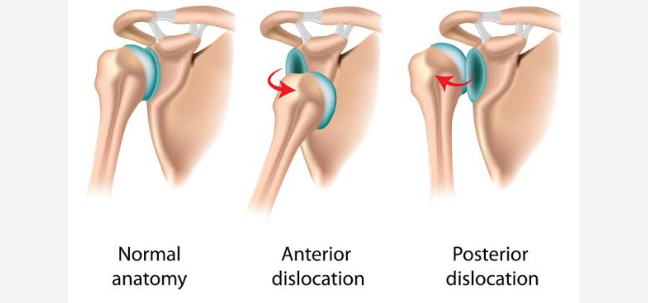
Quick Verdict: Are Slings For Shoulder Dislocation Worth It
Yes, but only for a little while with the proper applicaion. A sling is worth wearing for short-term protection and shoulder subluxation treatment support, but it does not prevent recurrence. Your age, activity level, sling positioning, and how well you follow up with rehab matter far more than keeping the sling on longer.
What a Shoulder Sling Actually Does
– Limits abduction, external rotation, and overhead lifting—the exact motions that stress the front of your joint capsule and labrum
– Cuts down acute pain by keeping your arm supported instead of hanging
– Gives injured soft tissue a short window to start healing without extra strain
Most NHS patient guides say it is for support and comfort alone. Many instructions tell you to keep wiggling your fingers, wrist, and elbow while the sling is on. The goal is protecting your shoulder while everything else stays mobile.
What a Shoulder Sling Doesn’t Do
– Guarantee you won’t dislocate again (recurrence depends far more on your age, activity level, and injury type)
– Rebuild joint stability on its own
– Replace the need for early, guided rehab
The real recovery work happens after you take it off.
Choosing the Right Sling or Shoulder Immobilizer for Your Situation
Not every sling is the same, and that surprises most people. Walk into a pharmacy and you’ll find at least three different options, each promising something slightly different.
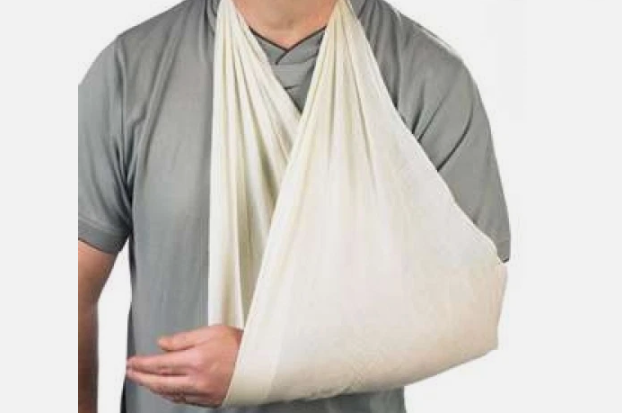
Simple triangular bandage slings cradle your arm, taking the weight off without much else. They’re easy to slip on, easy to wash, and barely interfere with your day. If you’re dealing with a mild strain or you’re a few weeks post-surgery and just need pain relief, this is usually enough. You can even make an arm sling yourself.
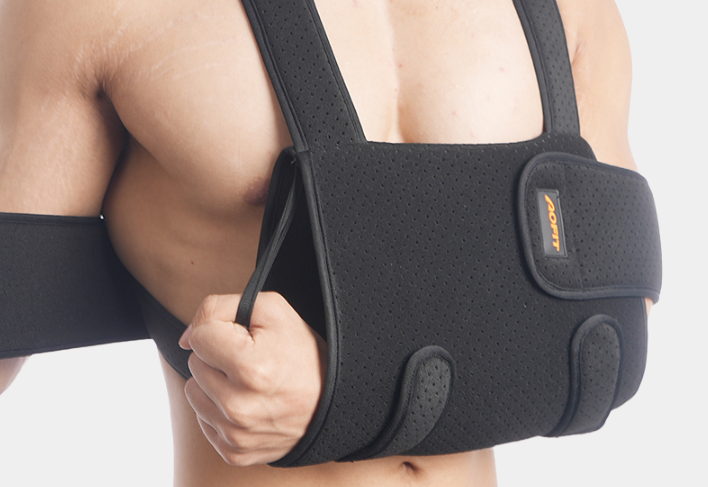
Shoulder immobilizers step things up. They add a strap across your chest that pins your upper arm close to your body, blocking abduction and rotation almost entirely. Doctors reach for these after a first-time dislocation, especially if you’re the type who forgets and reaches for something overhead anyway.
Adjustable braces let you lock your arm into a specific position—internal rotation, external rotation, or abduction with external rotation. This matters more than people realize. One meta-analysis of nine trials found external rotation bracing cut recurrence risk by roughly 44% compared to internal rotation (RR 0.56). Another review, though, found no significant difference (RR 0.69, P = .15)—so the evidence isn’t unanimous, but position still seems to matter more than strap tightness.
One study following patients for 24 months found abduction-plus-external-rotation bracing led to just 3.9% recurrence, versus 33.3% with standard internal rotation. That’s a big gap.
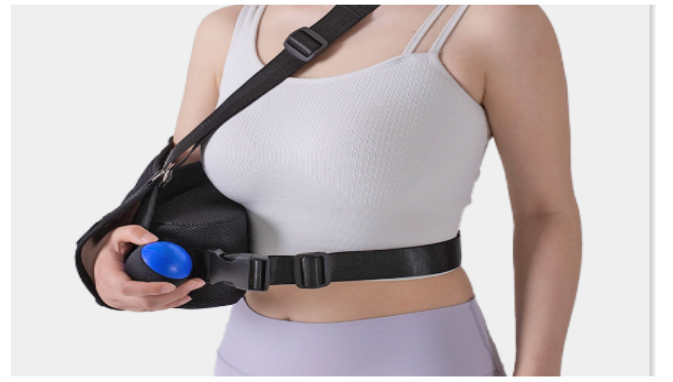
How to actually choose:
– Mild strain or post-op comfort → simple sling
– First-time dislocation, doctor wants strict protection → immobilizer or adjustable brace
– Young, athletic, or repeat dislocator → ask about external rotation bracing, or even surgical stabilization, which can lower recurrence risk by about 83% compared to sling use alone
– Need to type, drive, or move through your day → lighter sling if your injury allows it, adjustable brace if not
Stronger restriction doesn’t automatically mean fewer dislocations. What actually seems to help is arm position, your age, and whether deeper instability is part of the picture—not just how tightly your arm is strapped down.
How Long Should You Wear a Sling After Shoulder Dislocation
There’s no single magic number, but the range is pretty clear. For most people, the sweet spot is 1 to 3 weeks, with modern treatment plans leaning toward the shorter end and shifting focus to rehab as soon as possible. Past three weeks, you’re not buying extra protection—you’re just risking a stiff, cranky shoulder or even a frozen shoulder down the line.
The First Week (Days 0–7): Wear it all the time, including while you sleep. The only exceptions are showering, dressing, or doing gentle movements your doctor or PT approved.
Week Two (Days 7–14): If pain is easing and things feel stable, start scaling back daytime wear. Save the sling for outings, fatigue, or flare-ups, and begin light range-of-motion work.
Week Three (Days 14–21): Most people are ready to cut down or stop wearing it altogether, moving into functional activities and shoulder dislocation rehabilitation exercises. Older adults often finish even sooner.
How age changes the timeline:
– Under 30 / high recurrence risk: 1–3 weeks, with contact-sport athletes or repeat dislocators leaning toward the longer end.
– Over 30 / older adults: 7–14 days, capped at 2 weeks—stiffness prevention matters more here than extra immobilization.
– Athletes: Prioritize pain control and early return to training, typically 1–3 weeks, then moving quickly into scapular stability and mobility work.
One exception: if there’s an accompanying fracture (like a greater tuberosity fracture), your doctor may extend sling use to 4–6 weeks. That’s a different injury pattern than a straightforward dislocation, so don’t apply this timeline if bone involvement is part of your diagnosis.
The simplest version: wear it for week one, taper in week two, and aim to be done by week three. Older means shorter; younger and higher-risk can stretch closer to three weeks but rarely beyond it.
The Hidden Risk of Wearing a Sling Too Long
The sling that protects your shoulder today can work against you tomorrow. Keep it on too long, and your joint capsule starts tightening up. Motion that used to feel easy—reaching for a coffee mug, brushing your hair—suddenly feels stuck. In more serious cases, this stiffness develops into frozen shoulder, or adhesive capsulitis, a condition that can take months (sometimes over a year) to resolve.
Research on shoulder surgeries found stiffness rates between 8.6% and 15%, with prolonged immobilization flagged as a major contributor. Your shoulder relies on constant, coordinated movement between the joint capsule, rotator cuff, and scapular muscles. Lock it down too long, and that teamwork starts breaking down.
Signs you’ve overdone it:
– Reaching, rotating, or lifting feels tighter than it did days ago
– Pain lingers or worsens, even at rest
– Your arm feels noticeably weaker once the sling comes off
– The injured shoulder looks smaller or softer than the other side
– Your posture shifts—shoulder rolling forward, chest caving in
Protecting the joint too aggressively undermines shoulder joint stability instead of restoring it. Gentle, early movement—think pendulum swings, light stretches—almost always beats staying frozen in place.
Sling + Early Rehab: The Combination That Works
The sling works best when paired with early rehab exercises. Skip the second part, and you’re just delaying stiffness.
Early means day one. Not week three, not “once it feels ready.” Most recovery plans have you starting pendulum (Codman) exercises within the first day to first week after your dislocation. You lean forward slightly, let your injured arm hang loose, and let gravity do small front-to-back, side-to-side, or circular swings. No muscle effort required—just motion.
At the same time, keep your wrist and elbow busy while your shoulder rests. Wrist circles, elbow bends, making a fist and releasing. These small movements matter because stiffness spreads to any joint that stays still too long, not just the one that’s injured.
Most plans call for 3–4 short sessions daily. Small doses done consistently beat one long session that pushes too hard.
The golden rule: stop at a gentle stretch, never at pain. If something hurts, you’ve gone too far.
A Simple Weekly Breakdown
- Week 1: Sling stays on most of the day. Pendulum swings, wrist/elbow movement, and gentle fist clenching happen daily, with the sling off briefly for each session.
- Week 3: Sling use continues for protection, but passive shoulder motion—like light forward reaches or assisted external rotation—starts entering the routine.
- Week 6: Many plans shift from protecting and preventing stiffness to rebuilding range and function. Sling uses drops to comfort-only or stops entirely.
Recovery protocols follow a consistent pattern: protect the joint, but never let it go completely still.
When a Sling Isn’t Enough: Signs You Might Need Surgery
Sometimes the sling and exercises work, and sometimes they don’t—and that’s worth saying plainly. If your shoulder keeps slipping, subluxating, or giving you that “it’s about to pop out” feeling during ordinary movements, that’s your body telling you conservative care isn’t holding.
Age changes the math. Dislocate before 20, and recurrence runs 72–100%. Between 20–30, it’s still 70–82%. Past 50, it drops to 14–22%. Young, active, contact-sport folks face the steepest odds—up to 86.7% recurrence with non-surgical treatment alone.
Imaging matters too. Glenoid bone loss nearing 20–21%, or a large Hill-Sachs lesion, bony Bankart, or ALPSA lesion, all push the odds toward surgery. So does joint hyperlaxity or multidirectional instability.
The numbers behind surgical stabilization are hard to ignore. About 6.3% recurrence versus 46.6% with sling-and-rehab alone, with revision surgery rates of 4.0% vs. 30.8%.
If any of this sounds like you, ask your doctor directly. “Am I high-risk for recurrence? Do I need imaging for bone loss? Should I be evaluated for stabilization surgery instead of continuing conservative treatment?”
Frequently Asked Questions About Shoulder Slings for Dislocation
People searching for answers about shoulder slings usually have one very specific question at 2am, and it’s rarely the same one twice. Here are the answers we hear most.
What happens if I don’t wear the sling at all?
Skipping the sling means discomfort climbs and daily tasks get harder to manage. The sling supports your shoulder, cuts pain, and gives soft tissue room to start healing. Staying in the sling longer doesn’t lower your re-dislocation risk, so think of it as comfort, not a magic shield.
Can I sleep without the sling?
Most patient guides recommend wearing it through the night for the first week. If your protocol is shorter, two to three nights may be enough. Prop yourself up on pillows, or sleep on your uninjured side with a pillow tucked under the injured arm for support.
How often should I change or adjust the sling?
Swap it out only when it’s wet, dirty, or has lost its support. Otherwise, keep the same one on through your prescribed period.
Will taking it off early cause another dislocation?
Not necessarily. One NHS leaflet says wearing the sling longer doesn’t reduce your risk of dislocating again. Recurrence has more to do with your age, activity level, and how consistently you do your rehab exercises than with sling duration.
How long until I’m done with it completely?
Most uncomplicated first-time dislocations wrap up sling use within a week, sometimes stretching to two for comfort. If there’s a fracture involved, expect two to six weeks instead. Full recovery, regardless of sling time, usually takes twelve to sixteen weeks.
Conclusion
So, are slings for shoulder dislocation worth it? Yes, with a caveat. A sling supports the shoulder during recovery, but real healing comes from short-term immobilization (think days, not months) followed by early, guided movement. Wear your sling long enough for the stretched ligaments to calm down, but not so long that your shoulder forgets how to move. That balance is everything.
If you’re going to customize light, breathable and comfortable shoulder slings for your patients with shoulder dislocation, you are in the right place. AOFIT, as the number 1 certified brace manufacturer in China, always is ready with wide OEM/ODM solutions.