You’re standing in the medical supply aisle (or scrolling through an endless list of Amazon listings), and you’ve probably noticed something frustrating: not all knee braces are created equal, and picking the wrong one won’t just waste your money. It could slow down your recovery or fail to protect you when you need it most. That “one-size-fits-all” knee sleeve your gym buddy swears by might be completely useless if you’re rehabbing an ACL tear, while the heavy-duty hinged brace your surgeon recommended post-surgery would feel like overkill for someone just trying to prevent injury during weekend basketball games.
The good news: knee braces fall into three distinct categories—prophylactic, functional, and rehabilitative—each engineered for a specific purpose, injury stage, and level of activity. Understanding the three types of knee braces, plus knowing where unloader braces and Patellofemoral Braces fit into the picture, is the fastest way to stop guessing and start choosing a brace that actually does its job. Let’s break down what separates them.
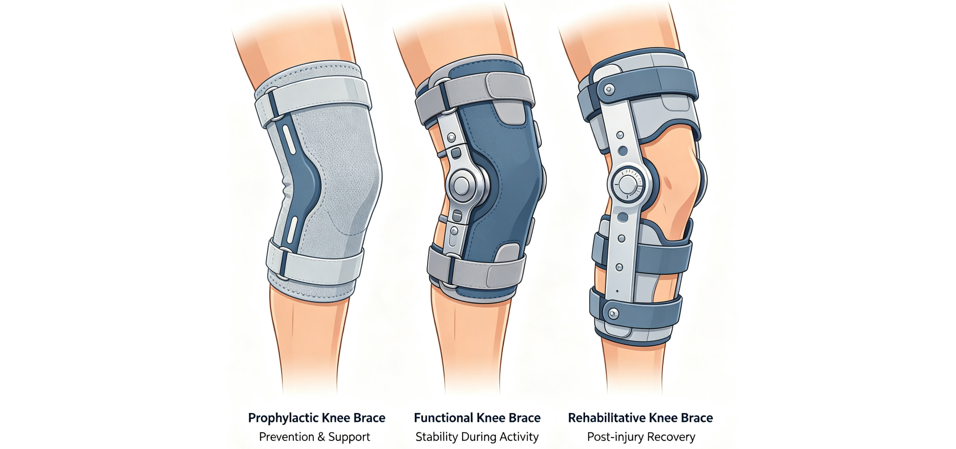
The 3 Core Types of Knee Braces at a Glance
Orthopedic literature (AAOS) recognizes four brace categories, not three. But when doctors and clinics talk about the “big three” for everyday use, they group by clinical purpose—prevention, stability, and recovery—and fold the fourth category (patellofemoral) into specialty use.
Cleveland Clinic describes functional braces as the most common type used after an injury, prophylactic braces as what athletes wear to prevent injury, and rehabilitative braces (sometimes called immobilizers) as support for post-surgery recovery. That’s your entire decision tree in one sentence.
| Type | Purpose | Best For | When You’ll Use It | Design Features | Trade-off |
| Prophylactic | Injury prevention | Contact-sport athletes | Football, rugby, high-impact training | Features compression sleeves, medial/lateral rigid stays (metal or carbon fiber) with a central hinge to limit varus/valgus motion. | Won’t stabilize an already-injured knee |
| Functional | Stabilize an unstable knee | ACL/MCL/PCL injuries | Returning to sport, daily activity | Structural support without blocking motion with dial-lock hinges, custom fit, multiple straps | Doesn’t heal the ligament itself |
| Rehabilitative | Controlled healing | Post-surgery, post-fracture patients | Early recovery, limited-motion phase | Restricts ROM to protect repair with telescoping uprights, full-length side bars, hinges, a foam liner, and nonelastic straps | Too restrictive for long-term wear |
Type 1: Prophylactic Knee Braces – Preventing Injury Before It Happens
A prophylactic knee brace is for a healthy knee you want to keep that way. This brace type is built for uninjured knees that face repeated risk of valgus stress, the sideways force when someone hits your knee from the outer side and pushes it inward. That force is exactly what damages the medial collateral ligament (MCL), and it’s the main thing this brace fights against.
This matters in contact sports. Think American football and rugby, where direct lateral blows and repeated collisions are part of the game. If you’re a football lineman taking hits to the side of your knee on every play, a prophylactic brace makes sense. If you’re jogging or lifting weights with no collision risk, it doesn’t.
The evidence is genuinely mixed
One systematic review looked at seven studies. Three showed the brace reduced injury risk by 10%, 58%, and 56%. But four other studies showed increased risk, ranging from 17% up to 114%. That’s not a typo. The research is inconsistent, which is why major orthopedic guidelines (AAOS/AAP-aligned sources) stop short of recommending routine use for football players.
There’s also a performance cost. Some athletes report leg cramping, fatigue, and reduced on-field performance while wearing one, trade-offs that matter when you’re deciding whether the protection is worth it.
One critical limitation: even with the brace on, direct lateral impact can still injure the MCL. It offers some protection, not a guarantee.
Who should actually use this type
High-risk athletes in contact sports with stable, uninjured knees, not people recovering from an ACL tear or post-surgery patients. If your knee is already unstable, skip ahead to the functional knee brace section below, which is built for you.
Type 2: Functional Knee Braces – Supporting an Already Injured Knee
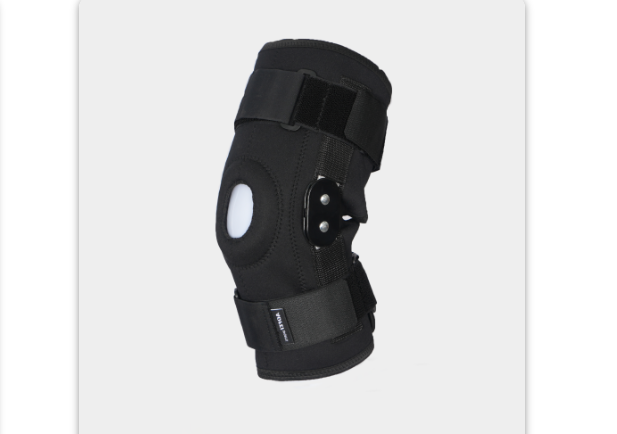
Your ACL is torn. Or maybe it’s reconstructed. Either way, your knee doesn’t move like it used to, and that’s the problem a functional knee brace solves. It’s for ACL, PCL, or MCL injuries, whether a fresh tear or a knee that’s already been surgically repaired. The goal is stabilization.
What This Brace Does
A functional brace keeps the knee from moving too far in directions it shouldn’t. It targets rotation – stopping the twisting that stresses a damaged or reconstructed ligament – and forward/backward translation – limiting how far the shinbone slides relative to the thighbone. That’s why these are often called derotational braces, and the name describes exactly what the hinge mechanism fights against.
The numbers back this up. In controlled testing, functional braces reduce anterior tibial translation by roughly 30-40% without muscle activation, and up to 70-85% when muscles are engaged. That’s a meaningful mechanical difference for someone with an ACL-deficient knee trying to walk, pivot, or return to cutting sports.
Evidence gets murkier during actual sport. Studies on whether these braces prevent ACL re-tears show conflicting results. The brace helps with stability. It doesn’t guarantee against re-injury.
Hinged Knee Braces Are the Go-To Format
Most functional braces come as hinged knee braces, either custom-made or prefabricated. One clinical study on ACL-deficient knees found that laterally hinged customized braces performed comparably to double-hinged designs, both delivering measurable stability improvements.
When You Need One
This brace fits three situations:
- ACL tear or post-ACL reconstruction
- MCL or PCL injury needing postoperative protection
- Chronic ligament instability where full immobilization isn’t the goal
Doctors typically move patients from a rehabilitative brace to a functional one after full range of motion returns post-surgery, usually right around the return-to-sport phase.
Type 3: Rehabilitative Knee Braces – Protecting the Knee During Recovery
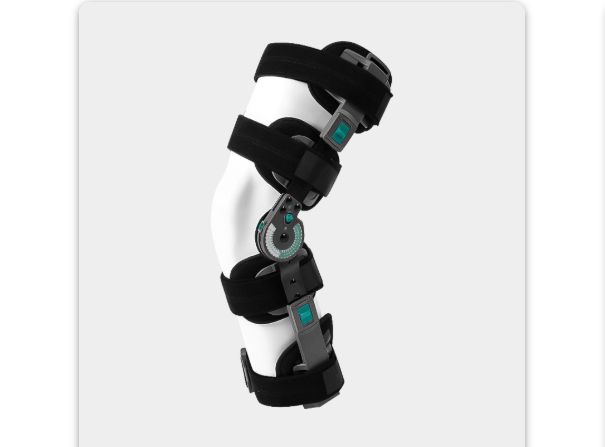
Right after ACL surgery, your knee needs protection and movement. A rehabilitative knee brace provides both. Built with full-length side bars, hinges, a foam liner, and nonelastic straps, it lets your surgeon dial in exactly how much motion your knee is allowed and lock out the rest.
This brace type permits controlled flexion and extension within a preset arc. Your surgeon sets the angle. As healing progresses, that arc opens up gradually. It protects a healing repair while still allowing early motion.
The Recovery Timeline
Most clinical protocols follow a pattern like this after ACL reconstruction, ligament repair, or meniscus surgery:
- Weeks 0-2: Brace stays tight. Motion is limited. Protection comes first.
- Weeks 2-6: Settings open gradually as swelling drops and pain improves.
- Weeks 6-12: Brace stays on during strengthening and gait training. Clinical protocols cite this window for continued use.
- After ~12 weeks: Many patients drop the brace entirely if the knee hits stability milestones. Others transition to a functional brace depending on sport or job demands.
That 0-12 week window covers the acute healing phase for most reconstructive knee procedures.
What the Hinges Prevent
The core job here is stopping hyperextension and excessive bending that could disrupt a fresh repair. It also helps maintain joint alignment so you’re not putting uneven stress on a ligament, meniscus, or cartilage that’s still knitting together.
Think of it as a temporary bridge device. It’s not meant for long-term wear like a compression knee brace or knee sleeve. Once your surgeon clears you, you move on.
Beyond the Core 3: Unloader and Patellofemoral Braces You Should Know
Two brace types don’t fit the prophylactic-functional-rehabilitative framework. They’re built for specific problems, not general injury stages. That’s the unloader knee brace and the patellofemoral brace, and both deserve their own explanation.
Unloader Knee Braces – Built for Osteoarthritis, Not Injury
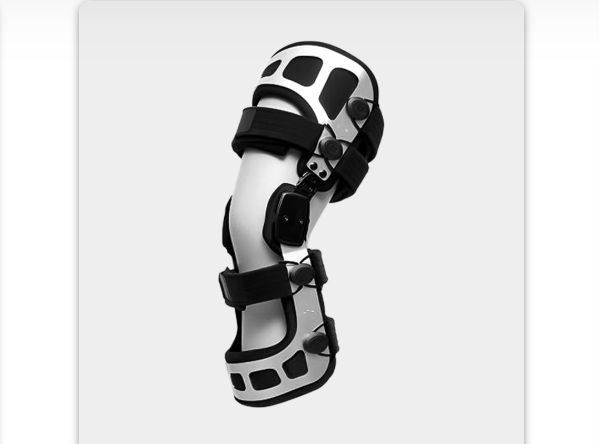
An unloader knee brace (also called an offloader) is a prescription device for unicompartment knee osteoarthritis. Translation: arthritis that’s worse on one side of your knee than the other. The mechanism is mechanical load redistribution. A rigid frame with external stems, hinges, and straps applies varus or valgus force, shifting pressure away from the damaged compartment.
The numbers are impressive. One biomechanical study on a multicompartment unloader brace found it reduced load equivalent to cutting 45 pounds of body weight. Another review found offloader braces carry a 76% recommendation strength (95% CI: 69%–83%) for reducing pain and improving stability in unstable osteoarthritic knees.
But this isn’t universal therapy. UK NHS guidance specifically says routine prescribing of certain offloading braces isn’t recommended in primary care, evidence is still catching up. Use this brace when OA is compartment-specific, not generalized.
Patellofemoral Braces – For Kneecap Tracking Problems
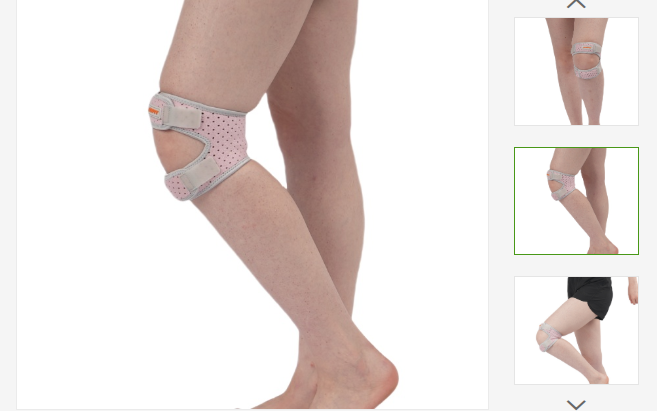
These target anterior knee pain and patellar maltracking, not tibiofemoral arthritis. Design features include a patellar buttress, cutout, or lateral stabilization strap. Evidence is genuinely mixed here too: one study showed improved patellar position and pain relief, while a cohort of 51 patients with anterior knee pain found no real difference between brace and no-brace groups.
Quick selection logic: compartment-specific OA pain, go with an unloader brace. Front-of-knee pain with tracking issues, try a patellofemoral brace. Generalized ache with no clear pattern, a simple compression knee brace or knee sleeve may be enough.
Conclusion
Your choice between a prophylactic knee brace, a functional knee brace, and a rehabilitative knee brace depends on what stage your knee is in right now. You might be protecting a healthy joint before it gets hurt, stabilizing one that’s already injured, or guarding it while it heals after surgery. Get that right, and the rest (sizing, material, hinge type) falls into place.
In addition, no matter if you are a seller from an e-commerce platform who wants to wholesale prophylactic brace and update your product line or a clinic who needs rehabilitative braces, AOFIT, your reliable medical brace manufacturer, is here. We offer full ODM/OEM knee brace solutions.