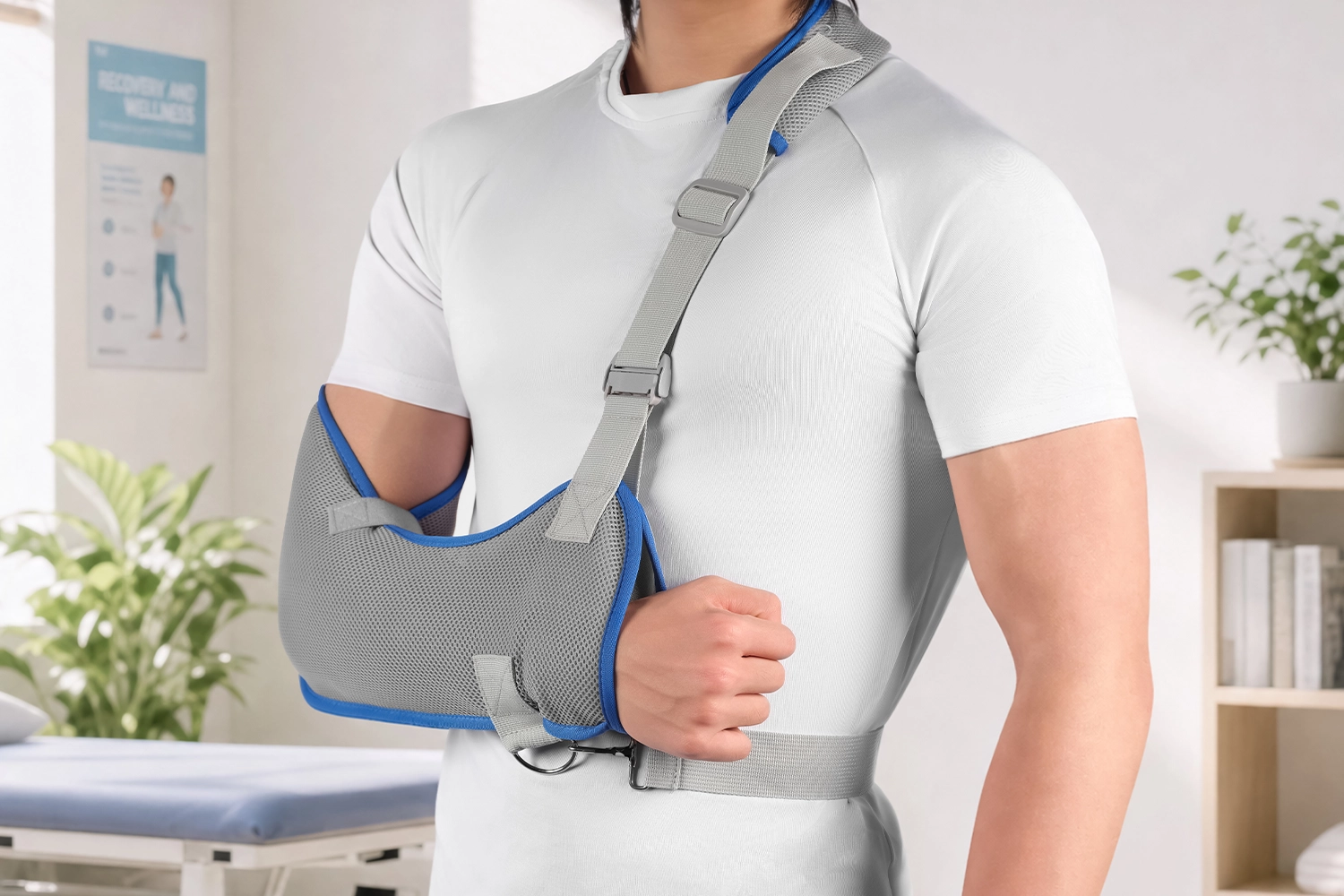
That familiar tingling in your fingers at 2 AM, the numbness that creeps up right when you’re trying to nail a deadline, the ache that makes gripping your coffee cup feel like a small victory. The right wrist support for carpal tunnel syndrome can make a genuine difference, whether you’re stabilizing your wrist through a full workday of typing or trying to keep it neutral while you sleep. We researched dozens of options against real clinical criteria: support level, breathability, adjustability, and how well they hold up against median nerve compression. That narrowed the field down to seven braces worth your money. These are the picks that deliver real relief.
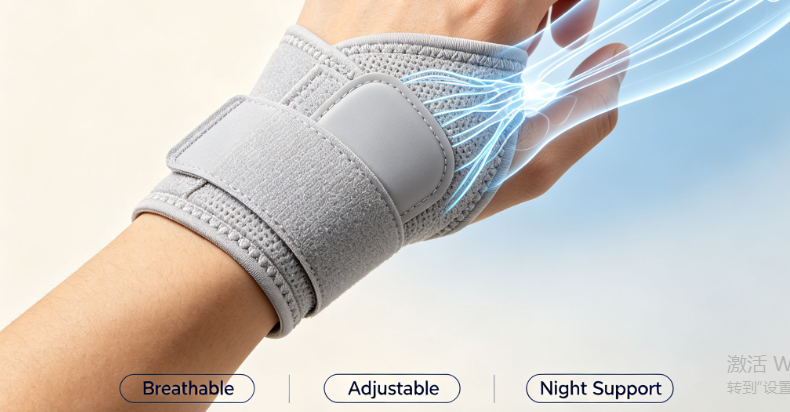
The Science Behind Carpal Tunnel Syndrome and Why Wrist Support Works
Pressure inside your carpal tunnel isn’t fixed. It swings depending on how you hold your wrist, and that swing is the reason wrist support for carpal tunnel syndrome works at all.
Repetitive wrist and finger motion, long hours on a keyboard or mouse, assembly-line or tool-based work, and sustained flexed or extended postures all keep carpal tunnel pressure parked in that high-pressure zone. For anyone already dealing with mild-to-moderate carpal tunnel symptoms, that repeated exposure triggers nighttime numbness, tingling, and functional decline.
A brace doesn’t cure the underlying cause. What it does is reduce exposure to the high-pressure postures that provoke symptoms.
How Wrist Braces Reduce Median Nerve Compression
Three mechanisms explain why these devices work:
- Neutral positioning: Locking the wrist into the lowest-pressure range prevents the tunnel-narrowing and nerve deformation caused by flexion or extension.
- Nighttime decompression: Most people flex their wrists during sleep. A neutral night splint interrupts that pattern. Randomized trials on nighttime wear show measurable improvement in symptoms, function, and nerve conduction.
- Reduced repetitive microtrauma: Limiting excessive wrist motion during work or daily tasks functions as conservative treatment and occupational protection for early-stage or nighttime-dominant symptoms.
7 Best Wrist Support For Carpal Tunnel Syndrome: tested and reviewed
Mueller Green Fitted Wrist Brace
This brace doesn’t fight your hands. The Mueller Green Fitted Wrist Brace uses an adjustable strap and slip-on design that lets you keep full range of motion in your thumb and fingers while still limiting the wrist movement that aggravates median nerve compression. Loosen the strap, slide it on, cinch it down.
This one’s built for people who can’t just stop working. Mueller markets it for day or night use, and the soft, lightweight fabric backs that up. It’s an adjustable wrist brace that dials in compression without turning your hand into a brick, which makes it a solid wrist support for typing and general desk work.
The materials matter here too. The Green series skips petroleum-based components: 35% non-petroleum neoprene, 20% POM, 17% nylon, plus recycled PET and spandex made from 73% recycled materials. It’s latex-free, made in Vietnam and China, and available in Right/Left versions.
Sizing breakdown:
– S/M: 5–8 inch wrist circumference
– L/XL: 8–10 inch wrist circumference
Reviewers consistently flag two things — real pain relief for carpal tunnel, tendinitis, and arthritis, and a supportive but not stiff feel that holds up through full workdays. Double-check your hand dominance before ordering; Right and Left are sold separately.
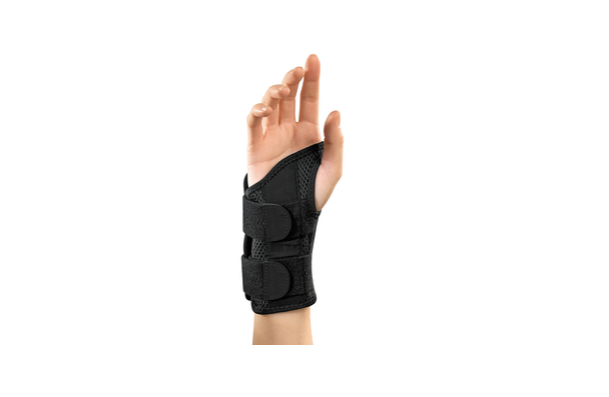
Futuro Night Wrist Sleep Support (Best for Dedicated Sleep Use)
Sleep is when carpal tunnel syndrome does its worst work. Your wrist curls while you’re unconscious, compressing the median nerve for hours at a stretch, which explains why so many people wake up with numb fingers before they’ve even opened their eyes. The Futuro Night Wrist Sleep Support was built specifically for that problem.
This is a wrist splint for sleeping, designed around moderate support rather than hard immobilization. Inside, cushioning beads spread out under your palm and finger base, holding your hand in a neutral position without digging into pressure points the way a stiff splint might at 3 AM. A removable palmar stabilizer adds structure when you need it, but you can pull it out if you want softer support on lower-symptom nights.
The material list backs up the comfort claim. It’s a moisture-wicking, brushed fabric over a blend of polyurethane foam, polyester, nylon, and spandex. It breathes. It won’t turn your wrist into a sweaty mess by morning.
Fit and sizing:
– One adjustable size fits 5.25–9.0 inch wrist circumference
– Works on either hand, so you don’t need left/right versions
– The sleeve-style design lets you slide your hand in, secure the center strap first, then the side straps, until it feels firm yet comfortable
This works best for mild-to-moderate nighttime numbness, tingling, or discomfort from sleep posture, plus post-cast or post-injury wrist protection. If your carpal tunnel symptoms persist all day or involve real weakness, this moderate-support design likely won’t cut it. You’ll want a rigid medical-grade brace instead.
Pricing runs around $24.99–$32.95 for a single unit, with double-packs closer to $55.99.

FEATOL Wrist Brace (Day/Night Removable Metal Splint)
Most wrist braces make you pick between rigid support and daytime flexibility. The FEATOL skips that trade-off. It has a removable aluminum splint, plus two or three fixed plastic support strips depending on the model. Keep the metal splint in at night, and your wrist stays locked in a neutral position while you sleep. Take it out during the day, and you still get enough structure for typing or light activity, without feeling trapped.
Three adjustable straps with hook-and-loop closures wrap the forearm and wrist. They give you multi-point stability that cuts down rotation and slippage, which is a step up from braces that only use one or two anchor points. The material blend leans soft: 75% foam, 15% polyester, 5% plastic, 5% metal. That way the splint reinforces without making the whole brace stiff.
Sizing and options:
– S/M, M/L, and L/XL fits
– Left and right hand versions
– Single or 2-pack sets
FEATOL is for carpal tunnel syndrome, tendonitis, arthritis, sprains, and general wrist swelling. It’s not a premium medical device, and it doesn’t pretend to be. Pricing runs $18.01 to $23.99, often marked down from $30.99 to $39.99. Some listings show $19.99 against a $32.99 strike-through, about 39% off. On the brand’s own site it’s $25.99, down from $29.99.
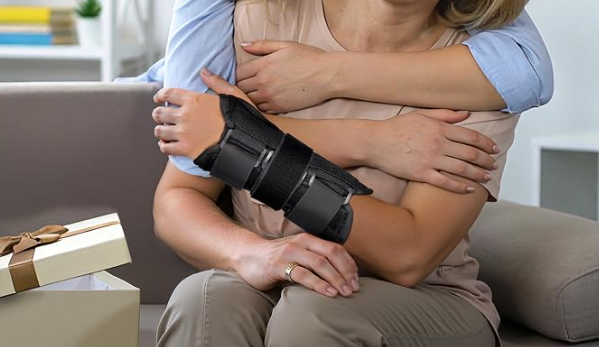
ACE Carpal Tunnel Wrist Stabilizer (Firm Support Type)
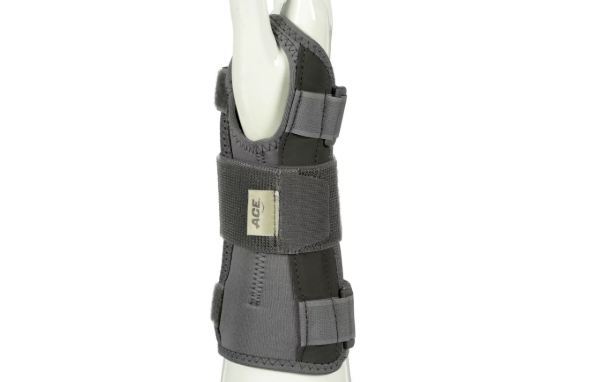
Three stabilizers and one extended forearm panel form the engineering logic behind the ACE Carpal Tunnel Wrist Stabilizer. You feel that firmness as soon as you strap it on. 3M/ACE built this brace with three internal supports and a longer forearm length for firm stabilization.
This is a firm support brace rated for day or night use. That distinction matters. If you have active symptom flares, sharp nighttime numbness, or daytime tasks that need real restriction on wrist flexion, this level of rigidity is exactly what the median nerve needs to calm down. It’s a wrist immobilizer for people past the “mild discomfort” stage.
The brace stays comfortable despite the structure. Soft, breathable materials wrap the frame, and memory-foam cushioning sits right under the palm, softening what would otherwise feel stiff and clinical.
Wrist circumference ranges from 5.5 to 9 inches, roughly 14 to 22.9 centimeters. The brace is sold specifically as a right wrist brace, so check compatibility before buying. It sits closer to Mueller’s rigid-splint category than Futuro’s soft sleep support.
Copper Compression Advanced Wrist Brace
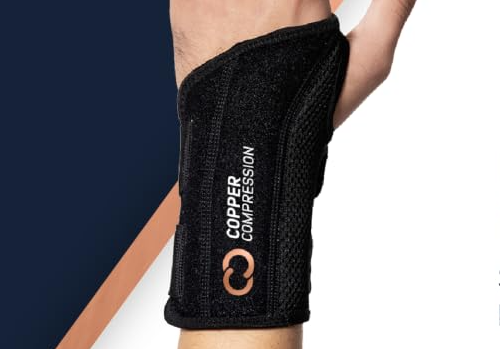
Copper doesn’t wash out of this one. That’s the whole pitch. Instead of coating the fabric surface, copper gets woven directly into the nylon fibers. Run it through the laundry a hundred times, and the copper stays put. The brace keeps its shape too, resisting the stretch and sag that ruins cheaper wraps within weeks.
This is the brace for people who don’t take it off. Copper Compression built it as an adjustable orthopedic wrist wrap meant for round-the-clock wear—work, driving, sleep, workouts. The moisture-wicking fabric breathes enough to make that realistic. No swampy, itchy wrist by hour six.
Where it earns its price:
- Covers carpal tunnel syndrome, arthritis, tendonitis, sprains, RSI, and ganglion cysts
- Carries a “Dr. Milica Approved” endorsement, adding a clinical layer most competitors skip
- Scores 9.1/10 on stability, pain management, and lightweight feel; comfort lands at 8.9/10
- Backed by 26,022 reviews, with 91% of reviewers saying they’d recommend it
- Named “best overall choice” on multiple third-party review sites, holding a 4.5-star average across 15,000+ reviews
BestBuy reviewers specifically call out office and driving comfort. They can wear it for extended stretches without irritation. That’s the copper-infused durability paying off in real, everyday use.
BraceUP Carpal Tunnel Wrist Brace (Symptom Relief)
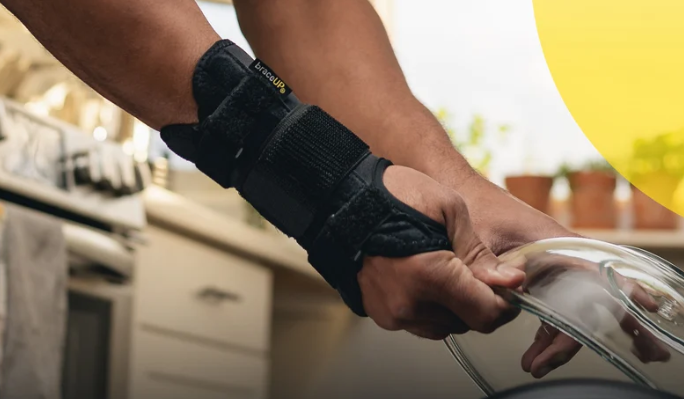
Numbness that fades by morning is the whole point of this brace. BraceUP built it around a lightweight aluminum splint and three adjustable straps. They lock the wrist into a stable position, so it can’t drift into the flexed angles that trigger pain, tingling, and that low-grade inflamed feeling most carpal tunnel sufferers know too well. The company also markets it for tendonitis and arthritis pain, so the design isn’t a one-symptom fix.
The splint targets the wrist, leaving fingers free enough for typing, gripping, or gaming without feeling boxed in. That’s the “Full Finger Movement” claim, and it’s a real advantage over bulkier wrist immobilizer designs that stiffen the whole hand.
Sizing:
– S/M: 5.5–7.5 inch wrist circumference
– L/XL: 7.5–9.1 inch wrist circumference
Left and right versions exist, some reversible by flipping the splint pocket. Healthline’s review says it’s comfortable enough for overnight wear and works as a genuine wrist splint for sleeping. Amazon reviewers back that up, saying their hands and fingers no longer feel “tingling, numb or cramped” by morning. At roughly 0.2 kg and priced between $13.49 and $15.99, it’s an affordable way to get consistent carpal tunnel syndrome relief.
ComfyBrace Night Wrist Sleep Support (Best Value for Nighttime Use)
Fifteen dollars buys you a functional wrist splint for sleeping. That’s the entire pitch behind the ComfyBrace Night Wrist Sleep Support, and it’s not a bad one.
Model CB-001 sticks to the basics: cushioning beads under the palm, adjustable self-adhesive straps, a one-size-fits-all design that works on either hand. No left/right guessing, no sizing charts to squint at. You strap it on, the beads settle under your palm, and your wrist sits in a neutral position through the night — the same mechanism Futuro uses, just without the removable palmar splint or the branded fabric tech.
It weighs 4.2 oz. Light enough that you forget it’s there by hour three of sleep, which matters more than most people realize for nighttime median nerve compression.
Where it fits:
- Mild nighttime numbness or tingling
- Budget-conscious buyers who don’t need moderate-support engineering
- Anyone who wants “good enough” over “clinically optimized”
Pricing runs $14.99–$15.00, roughly half of what Futuro charges per unit. You’re not getting premium materials or a removable splint. You’re getting the core carpal tunnel treatment basics — neutral positioning, adjustable fit, all-night wearability — at a price that doesn’t sting if it turns out to be a trial run.
How to Choose the Right Wrist Support For Carpal Tunnel Syndrome
Based on Symptom Severity
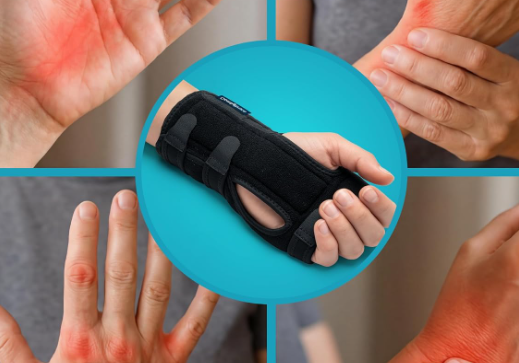
Not every case of carpal tunnel syndrome needs the same level of support. Pick a brace that matches your symptoms, or you’ll end up with discomfort instead of relief.
Mild symptoms — nighttime tingling, no weakness — respond best to a soft-to-semi-rigid night splint. A 6-week trial of neutral-position wear improves mild-to-moderate symptoms, with little extra benefit beyond that window.
Moderate symptoms — persistent numbness, reduced sensation — need a semi-rigid, neutral-position wrist brace. If nighttime wear alone isn’t cutting it, add daytime use during flare-ups instead of switching to a stiffer model.
Severe symptoms — thumb weakness, thenar muscle wasting — means it’s time for nerve testing and a surgical referral. A wrist immobilizer works as a temporary bridge here, not a long-term fix.
One rule matters most: the goal is a neutral wrist position, not maximum stiffness. Research backs neutral-position designs over extended splints for median nerve compression relief.
Fit warnings worth remembering:
- Too soft: your wrist keeps flexing at night, symptoms persist
- Too tight or wrong size: causes pressure points, you stop wearing it
- No improvement after 2 weeks: reassess the fit or get re-evaluated
Day Braces vs Night Splints: How to Choose
Daytime and nighttime braces solve different problems. A day brace protects your grip while you’re still using your hands. A night splint locks your wrist so it can’t curl while you’re unconscious, which is when most median nerve compression actually happens.
Daytime wear stays close to neutral, sometimes 0–15° of extension, so you can still type, grip, and carry things. Wear it during high-load stretches — long typing sessions, biking, lifting — rather than all day. Some research suggests full-time wear outperforms night-only use for symptom relief, but that comes at the cost of dexterity most people aren’t willing to give up.
Nighttime wear goes all-in on immobilization. The goal is pure neutral position, fingers left free, wrist locked near the crease. This directly counters the unconscious flexing that triggers morning numbness and pain.
Practical rule: start with 6 weeks of nightly use. Add daytime wear only during flare-ups or heavy hand tasks. Track nighttime numbness and morning stiffness — that’s your signal to continue past 12 weeks or reassess.
Key Specs (Size, Material, Adjustability) You Must Nail Down
Wrist circumference decides everything. Measure at the narrowest point of your wrist, right where the crease sits, and you’ll land in one of five standard ranges: 5.25–6.25 in, 6.25–7.25 in, 7.25–8 in, 8–9 in, or 9–10 in (roughly 13–25.5 cm). Low-profile designs sometimes ask for palm circumference too — skip that measurement and you risk a brace that pinches at the base of your thumb.
Check hand dominance before you click “buy.” Some models split into Right/Left SKUs; others cover both wrists under one universal fit. Mixing this up gets you a wrist immobilizer that sits at the wrong angle.
Material determines wearability. Neoprene runs warmer and more rigid — good for firm support, less ideal for a full workday. Thinner mesh or perforated fabric suits an ergonomic wrist brace you’ll wear at a desk for eight hours straight.
Adjustability comes down to strap count and splint removability. More straps mean finer compression control. A removable metal or aluminum splint lets one brace flex between rigid night support and looser daytime wear — the same logic behind FEATOL’s design above.
Minimum checklist before checkout:
– Wrist circumference, measured at the narrowest point
– Palm circumference, if the product spec requires it
– Confirmed Right/Left or universal fit
– Fabric type: thin/breathable vs. neoprene/rigid
– Strap count and splint removability
Conclusion
You don’t have to choose between comfort and relief when you have carpal tunnel syndrome. This list has a wrist support for your specific symptoms, whether you need a rigid night splint to keep your hand neutral while you sleep, or a breathable ergonomic brace for long workdays at the keyboard.
Match the support level to your severity. Mild tingling needs less rigidity than full-blown median nerve compression. Get your sizing right, and don’t skip the day-night distinction. Your hands need different things at 2pm than at 2am.
Don’t know how to launch a business on the wrist brace market? Talk to AOFIT now. We are ready to service you with our full ODM/OEM wrist brace line.