
That nagging ache along your wrist every time you type, lift a coffee mug, or scroll your phone might be tendonitis. You might be staring at a wrist brace for tendonitis online, unsure if a $15 brace is a genuine fix or just a placebo in neoprene.
The answer depends on your specific diagnosis, how you use the brace, and what you’re pairing it with. We’re breaking down the actual biomechanics of why immobilization works or doesn’t, when a night brace beats a daytime compression wrap, and how to tell the difference between simple tendon irritation and something like de Quervain’s that needs a thumb spica instead of a basic sleeve.
Is a Wrist Brace Helpful for Tendonitis? The Direct Answer
Short-term, yes. A wrist brace for tendonitis works as a pain-control tool, not a cure.
The evidence backs a narrow claim. One systematic review on forearm tendinopathy found forearm compression wrist wraps delivered low-quality evidence for reducing pain during exertion, with effect sizes around SMD -0.65 to -0.83. Static wrist immobilization splints? No measurable improvement in pain-free grip or max strength.
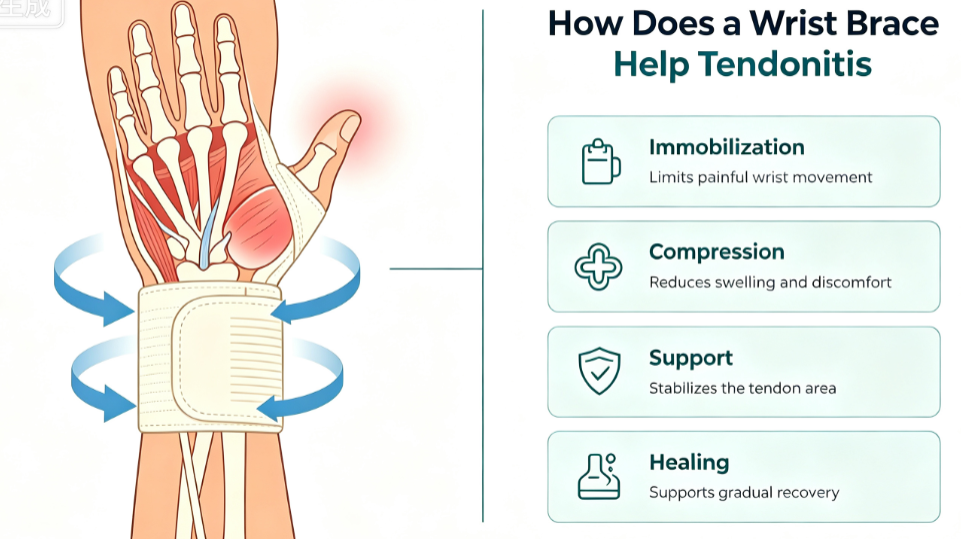
How Does a Wrist Brace Help Tendonitis? The Science Behind It
A wrist brace works by locking your joint into a neutral position—straight, with no excessive bend forward or back, and no side-to-side wobble. That neutral alignment is the entire point. It’s the design feature every clinical product guide points to first.
Here’s why neutral matters. Tendons flare up when they’re repeatedly stretched, compressed, or rubbed against surrounding tissue. A wrist splint blocks that motion. It doesn’t heal the tendon. It stops you from re-injuring it every time you type an email or grip a dumbbell.
The stabilization mechanism works on three fronts. Reduced tendon excursion means less joint movement and less friction on already-irritated tissue. Some braces add compression support that helps manage swelling, giving you more comfort without directly repairing tissue. One wrist stabilizer design caps overextension near 70 degrees while still allowing 30–50 degrees of normal bend. That’s a partial restriction.
Most people flex their wrist unconsciously while sleeping. That repetitive, low-grade stress adds up over eight hours, which is exactly why nighttime bracing shows up so often in symptom-relief protocols.
Acute flare-ups call for continuous wear. As pain drops, you shift to activity-based use, wearing the brace for typing, lifting, or repetitive hand work and taking it off the rest of the time. One clinical guide maps this taper across 6 to 8 weeks.
The best orthopedic wrist support for tendonitis usually includes a palm-side metal stay, true neutral alignment, and forearm extension for added leverage. Adjustable wrist splints let you dial in exactly how much motion you’re comfortable losing.
Bracing doesn’t erase inflammation. It removes the movement that keeps re-triggering it. Healing still needs time, reduced overuse, and often rehab work alongside the brace.
Buy, Skip, or See a Doctor?
Not every wrist twinge needs a specialist. But some do, and knowing the difference saves you weeks of wasted time.
Buy the Brace When Your Pattern Matches This
A wrist brace for tendonitis makes sense when your pain is mechanical and mild-to-moderate. Look for these signs:
- Pain that worsens with wrist motion, typing, or gripping, but improves once you stop the activity
- Night numbness or tingling from sleeping with a bent wrist
- Thumb-side pain with stiffness that eases with neutral splinting
If your symptoms fit that pattern, a short trial with a night splint plus activity changes is reasonable first-line care.
Skip Self-Treatment and See a Doctor Instead
Certain signs mean a brace alone isn’t enough. Get evaluated if you notice:
- Persistent or worsening numbness, especially if it spreads into your fingers
- Weakness: dropping objects, struggling to button a shirt, or losing grip strength
- Swelling, redness, warmth, or fever around the wrist
- Loss of function: can’t make a fist or move your fingers normally
- Sudden severe pain, a pop or grinding sound, or visible deformity
- Thenar muscle flattening at the thumb’s base
The Two-Week Rule
If symptoms aren’t improving after two weeks of consistent bracing and self-care, or they’re getting worse, stop guessing. Persistent numbness or weakness makes brace-only treatment a weak bet. A doctor visit becomes the smarter next step, not a backup plan.
What to Look for Before Buying a Wrist Brace for Tendonitis?
Fit beats brand every time. A $70 orthopedic wrist support that doesn’t hold your joint right is worse than a $12 sleeve that does.
Wrist Brace Types Compared: Soft Compression vs Splint with Stays vs Thumb Spica
Not every wrist brace does the same job. Grabbing whatever’s cheapest on Amazon without checking what your pain needs is how people end up with a drawer full of unused neoprene.
Soft Compression Wrist Brace
This is your entry-level option. Fabric, breathable, low bulk. One product guide classifies these as “mild-moderate” support—best suited for the return-to-activity phase, not the acute flare-up.
Pros: Easy to wear for hours, doesn’t restrict motion much, comfortable under long sleeves or during light desk work.
Cons: Weak on immobilization. If you’re dealing with an acute sprain, active tendon flare, or waking up in pain at night, a soft sleeve won’t do enough.
Price range: $9.59–$18.61 for copper-infused or compression-style wrist wraps on major retail listings.
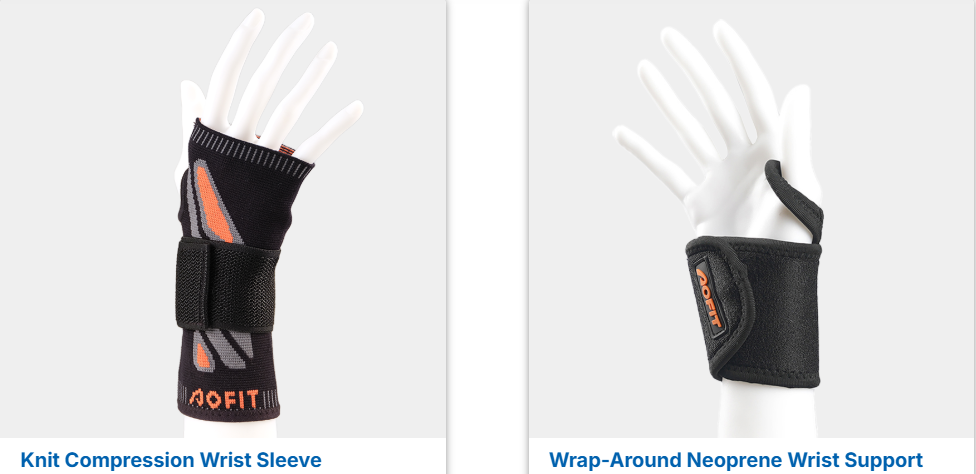
Wrist Splint with Stays
Step up in support. These include a removable aluminum or thermoplastic stay that runs along the palm side, from mid-forearm down to just below the knuckles. That stay limits flexion and extension—giving you actual motion control.
Best fit: Moderate pain, carpal tunnel, post-cast recovery, or tendonitis needing daytime stability or night splinting.
Price range: Consumer models run $15–$30. Premium medical-grade versions climb to $32.08–$72.80+, depending on build quality and adjustability.
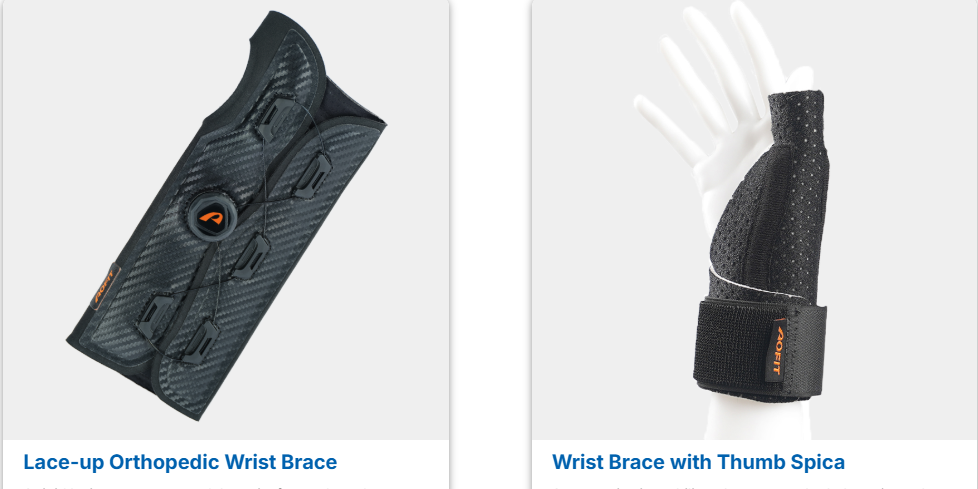
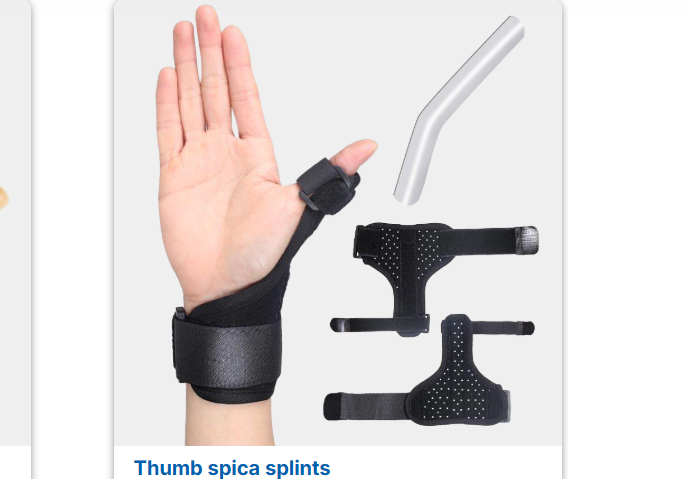
Thumb Spica / De Quervain’s Brace
Different problems, different tools. If your pain sits on the thumb side of your wrist—especially with swelling near the thumb base or trouble gripping and pinching—you’re likely dealing with de Quervain’s tenosynovitis, not general wrist tendonitis.
A positive Finkelstein test gives it away. Tuck your thumb into a fist, bend your wrist toward your pinky. Sharp pain there points to de Quervain’s specifically.
A thumb spica immobilizes the wrist and thumb together, leaving the thumb’s tip joint free while holding it slightly abducted.
Price range: Common listings show $17.08, $19.52, $25.95, $26.92. Higher-end medical versions start near $32.08.
Quick Selection Rule
- Mild, diffuse pain: soft compression
- Moderate pain, need motion restriction: splint with stays
- Thumb-side pain, worse with gripping: thumb spica
Night vs Day Use Scenarios
Timing matters as much as fit. A night wrist brace and a daytime compression wrap solve different problems. Mixing them up wastes money.
Night Use: Stopping Unconscious Flexion
If your pain peaks the moment you wake up, your wrist is bending while you sleep. You can’t control that. A rigid or semi-rigid wrist immobilization splint can.
The target is a neutral “handshake” position held through the night, from just below the palm to mid-forearm on the palm side. Wear it for 6–8 hours, but don’t jump straight there. Ease in with 2–4 hours on nights 1–3, 4–6 hours on nights 4–7, then 6–8 hours after week one.
Fit check: slip one finger under the strap. Press a fingertip; color should return within 2 seconds. If it doesn’t, loosen it.
Most people notice less morning stiffness within the first week. Numbness and waking pain typically improve within 1–2 weeks.
Day Use: Task-Based Support, Not All-Day Wear
Daytime calls for something lighter. Think of a low-profile typing brace that sits about 1 inch above the wrist bone, loose enough to slide two fingers underneath.
Skip continuous wear. Start with 1–2 hour blocks during your worst trigger tasks, like long typing sessions, repetitive mouse work, or lifting. Remove it during breaks and low-risk activities.
If you’re worse at waking, prioritize night bracing. If typing or lifting makes it worse, prioritize day bracing. If both bother you, wear it for a short morning window of 1–2 hours, then switch to task-based daytime use.
Key Selection Criteria
The Neutral Position Test
Put the brace on and look at your hand. It should line up with your forearm—no upward bend, no downward sag, no sideways tilt. Clinical reviews target 0–10° of extension, with some allowing up to 15°. For carpal tunnel-style splints, aim closer to 0–5°. If you can see your wrist flexing or extending inside the brace, the support is too soft or shaped wrong for your case.
Rigid Stays vs Semi-Rigid vs Soft
Match rigidity to severity:
– Mild symptoms: soft sleeve or night brace
– Moderate symptoms: semi-rigid brace with adjustable straps
– Severe symptoms or post-op recovery: rigid volar/dorsal stays for true immobilization
Rigid stays matter most at night. A common benchmark for early-to-moderate nerve or tendon symptoms is 4–6 weeks minimum of consistent night splinting.
Breathability for Long Wear
Desk work all day? Skip the maximum-rigidity model. A breathable hybrid brace with removable stays handles repeated motion without cooking your wrist. Snug beats compressive. Too much squeeze can aggravate nerve irritation instead of fixing it.
Red Flags After Putting It On
Wear it 15–20 minutes, then check:
– Fingers move freely
– One finger slides under the strap
– No new numbness, tingling, or color change
White, blue, or cold fingertips mean loosening it now.
Common Questions Before You Buy (FAQ)
Real questions from real buyers, answered without the fluff.
How long can I wear a wrist brace daily?
Stick to 6-8 hours max, timed around symptoms, not the clock. Hospital splinting guides recommend starting at 15 minutes twice daily, building to 30 minutes, then up to an hour. Skip 24/7 wear – it weakens the stabilizing muscles you’re trying to protect.
Do copper-infused braces work better?
No solid evidence shows copper or magnetic wraps outperform standard compression for arthritis pain. Any perceived benefit likely traces back to the placebo effect. Look for adjustable stays and neutral positioning instead of copper marketing claims.
Same wrist brace for arthritis and tendonitis?
Not quite. Arthritis needs soft, warming compression for daily comfort. Tendonitis needs stronger motion restriction during flare-ups or heavy activity – protection during use, not all-day wear.
Same wrist brace for carpal tunnel syndrome and tendonitis?
Yes, you can often use the same rigid wrist brace with a metal or plastic palm splint for both carpal tunnel syndrome and tendonitis. Both conditions require keeping the wrist in a stable, neutral position to stop painful bending and reduce pressure on the inflamed nerves or tendons.
Conclusion
A wrist brace for tendonitis won’t cure your condition. Used correctly, it reduces strain and speeds recovery when paired with rest and proper treatment. That means a splint style during the day, a softer compression brace at night, matched to whether you’re dealing with general inflammation or de Quervain’s tenosynovitis.
The real value is knowing which type fits your specific symptoms, how long to wear it, and when bracing alone isn’t enough. That’s what separates people who heal faster from those who mask pain until it worsens.
Further, for hospitals, healthcare brands who want to update the product line to meet the needs of your patients, AOFIT, as your reliable wrist brace manufacturer, is ready to service you with our full OEM/ODM solutions and factory price.