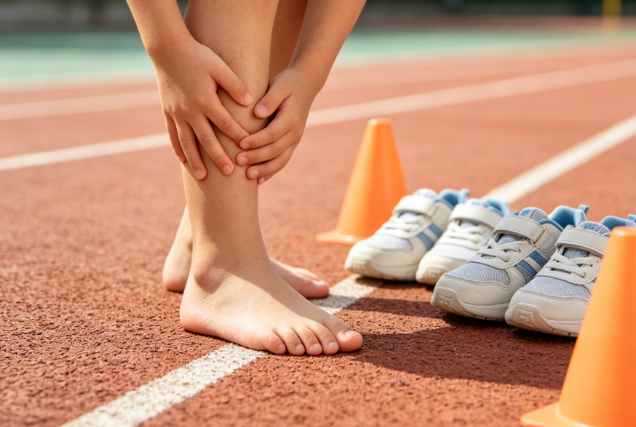
Watching your kid limp off the field with a rolled ankle is scary enough. Choosing the wrong brace to send them back out there shouldn’t add to that worry. Whether you’re dealing with a fresh sprain, a physical therapist’s recommendation, or just want to protect an active young athlete before the next basketball season or soccer match, finding the best child’s ankle brace means balancing support, comfort, and medical-grade protection.
We tested and researched top-rated options, from lace-up stabilizers to lightweight compression sleeves, to help you find a reliable child’s ankle brace for sprains that fits your kid’s age, sport, and injury level.
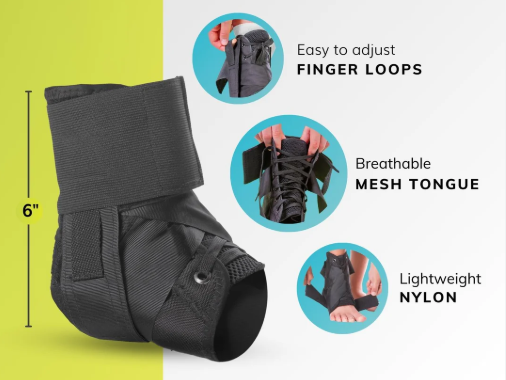
BraceAbility Lace-Up Kids Ankle Brace
Figure-8 wrapping isn’t just for pro trainers taping up athletes in the locker room. BraceAbility built that same principle into a reusable brace, and it’s become a go-to pick for parents managing an active kid’s sprained ankle recovery.
The design uses a ballistic-nylon shell paired with a non-elastic figure-8 strap that crosses the ankle diagonally, limiting the inversion and eversion movements responsible for most sports-related rolls. A breathable knit tongue and seamless footbed cut down on rubbing, while the open-heel construction keeps range of motion natural for kids playing basketball, soccer, gymnastics, or baseball who need mobility along with protection.
Sizing runs true to shoe size, and one brace fits either foot, which simplifies shopping if you’re outfitting siblings or replacing a lost pair. Pricing sits around $27–$39, depending on the retailer.
Parent reviews (averaging 4.2–4.6 stars) praise the adjustability. The laces let you dial in a snug fit without cutting off circulation. The main complaint: younger kids often need help lacing it up correctly, and it can feel bulky inside narrow sneakers.
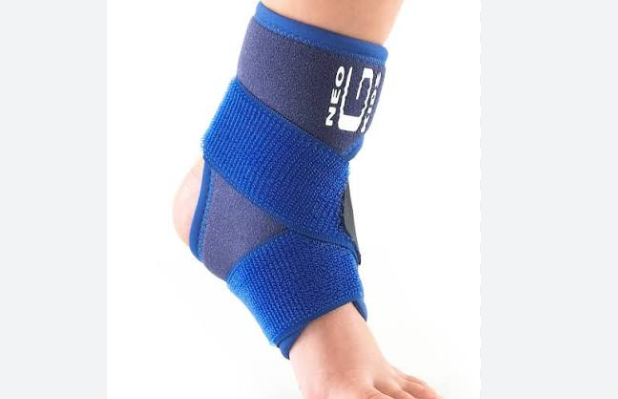
Neo-G Kids Ankle Support (887K Figure-8 Strap)
The Neo-G 887K is registered internationally as a Class 1 Medical Device, so it carries hospital-grade credibility in a soft, kid-friendly build. That status matters if your child’s ankle sprain treatment needs a doctor’s sign-off or you’re hoping to tap FSA funds. The brace carries HCPCS code A4467, the standard code for elastic and non-elastic support braces.
The 887K is built around a heat-therapeutic neoprene sleeve that warms muscles and joints while a figure-8 strap locks down inversion and eversion. Neo-G positions it as mild-to-moderate support, a gentler tier than lace-up stabilizers. It suits juvenile arthritis flare-ups, aching joints, and everyday sports like basketball, soccer, gymnastics, and volleyball.
Sizing and fit specs:
- Fits ankle circumference 5.1–11.8 inches
- Designed for kids up to roughly age 12
- Weighs just 2.08 ounces, dimensions 1.57 x 3.94 x 7.48 inches
- Compatible with most sneakers, though very tight or narrow shoes may feel snug
Parents managing chronic joint pain appreciate the neoprene’s warmth. Just know it traps more heat than mesh alternatives, so it’s better suited for cooler practices than peak summer tournaments.
Push Ortho Aequi Junior Ankle Brace
Some ankle injuries need more than a sleeve or a strap. They need real structure. The Push Ortho Aequi Junior is built for kids ages 6–12 with shoe sizes around EU 30–36.
This is a semi-rigid orthopedic brace. The medial side has a rigid shell molded with a cavity for the medial malleolus, so the ankle bone doesn’t take pressure directly. The lateral side uses preformed foam that flexes to your child’s foot shape. Diagonal non-elastic straps wrap into the rigid shell to block inversion and eversion – the twisting motions behind most lateral ligament sprains. Elastic straps add circumferential compression on top, boosting proprioception without cutting off circulation.
Dorsiflexion and plantarflexion stay free. Your kid can still walk, run, and push off normally. Only the dangerous side-to-side rolling gets restricted.
Push designed this for moderate ankle instability in growing children, whether that’s subacute sprain recovery or chronic looseness after repeated injuries. It pairs best with a sturdy lace-up shoe, and orthopedic doctors or physical therapists typically guide fitting and strap tension. Expect pricing around €60–120 (roughly £50–100 or AUD 80–150), with partial insurance reimbursement common when prescribed through a treatment plan.
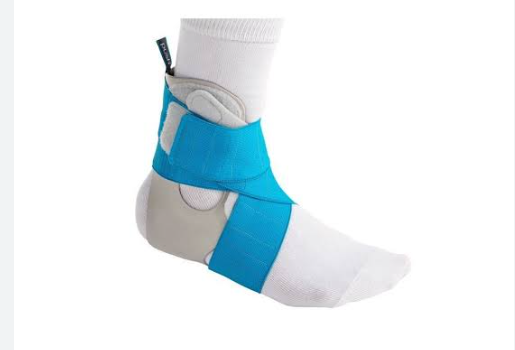
Med Spec ASO Ankle Stabilizer (Youth Sizing)
Orthopedic clinics and sports medicine suppliers like DME-Direct, Orthocanada, and Physio stock the ASO because they trust it for recurrent ankle sprains, chronic instability, and post-op transitions off a walking boot. That clinical pedigree carries into the XX-Small Pediatric size, built specifically for smaller feet and narrower ankles.
The Pediatric size shares the same figure-8 strap system and lace-up front as the adult ASO — nylon fabric, machine-washable, with a rear locking cuff that keeps everything cinched. The design targets inversion and eversion, making it a solid pick for kids returning to basketball, volleyball, or soccer after a rolled ankle.
Sizing breakdown (ankle circumference): The XX-Small (Pediatric) fits 9 to 10 inches (boys’ shoe size ~5–6), and the X-Small fits 10 to 11 inches (boys’ shoe size ~6–7).
Measure around the heel and ankle bone with socks on. If your kid falls between sizes, size down for tighter support. That’s the standard advice among retailers selling this as a professional-grade device.
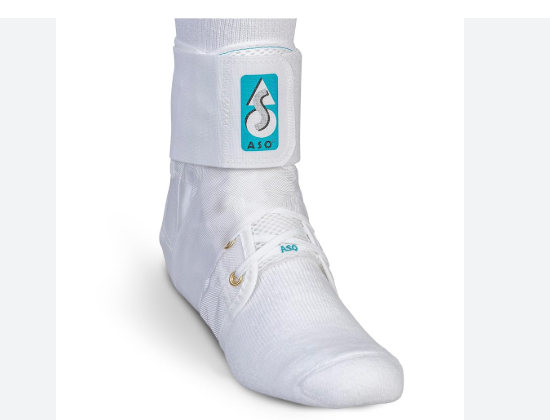
Lightweight Ankle Sleeve Comparison: Luwint, Haysandy, Tarpop, and Honoson
Not every ankle needs a rigid shell or a figure-8 strap. Sometimes a kid just wants something thin enough to disappear inside a sneaker, and that’s where these four brands come in. None of them publish detailed spec sheets, but grouping them by structure and price makes the shopping decision straightforward.
Haysandy and Honoson sit at the entry level — thin knit fabric, elastic wrap, priced around $3–$7. They’re built for prevention, not recovery. Think everyday sneaker wear, PE class, or a kid coming back from a mild ankle sprain who just needs light compression as a reminder to move carefully.
Luwint is similar but leans more toward daily comfort during light activity — walking, casual play, longer stretches in shoes without feeling bulky.
Tarpop stands apart with a strap-based, criss-cross compression design. It’s still lightweight, but the adjustable wrap gives more stability than a pure sleeve, priced around $5–$9.
None of these compare to medical-grade stabilizers with silicone pads and rigid support strips, which typically run $75–$85 for serious instability. For everyday prevention and kids’ ankle compression sleeve needs, though, this lightweight tier gets the job done without crowding the shoe.
How to choose the best child’s ankle brace for your kid
Not every ankle needs an average size. And not every sore ankle should settle for a thin sleeve either. Choosing the best child’s ankle brace means matching real support to your kid’s actual needs.
Based on Injury Severity & Support Level
The brace that fits the actual injury separates a smart pick from a wasted purchase — or worse, a repeat trip to the ER.
Grade I (Mild) Sprains — Compression Only
Pain sits below 3/10, swelling is minimal (under 1–1.5 cm circumference difference from the healthy ankle), and range of motion is barely restricted. You’re in kids ankle compression sleeve territory. Look for 5–10 mmHg of light-to-moderate pressure. It won’t lock down inversion or eversion, but it’ll manage swelling and sharpen proprioception — enough for a kid heading back to gym class or light practice.
Grade II (Moderate) Sprains — Strap-Based Support
Pain climbs to 4–6/10, swelling gets noticeable (1.5–3 cm difference), and joint stability tests show 3–5 mm of laxity. This calls for 10–20 mmHg compression paired with adjustable figure-8 or wrap straps. These braces restrict the specific direction that caused the injury (usually inversion) while still allowing walking and light activity. That’s the exact niche filled by picks like the ASO or BraceAbility above.
Grade III (Severe) Sprains — Semi-Rigid or Rigid Bracing
Pain hits 7/10 or higher, swelling exceeds 3 cm difference, and stability tests reveal displacement over 5 mm. This is pediatric orthopedic ankle brace territory — think semi-rigid shells like the Push Ortho Aequi. These structures limit dangerous rotational movement while sparing normal flexion, and they’re typically fitted under a physical therapist’s guidance following fracture or complete ligament tears.
When to Upgrade
If a kid re-sprains the same ankle twice within four weeks while wearing a soft brace, or swelling never drops below a 2 cm difference, that’s your signal to move up a support tier.
Based on Age & Fitting
Age isn’t just a number. A 4-year-old’s ankle needs different support than a 10-year-old’s. Grab the wrong tier and you risk restricting healthy joint development or leaving a growing athlete exposed to another rollover. Start with real measurements instead of guessing based on age or shoe size.
Getting a Right Size
For ages 3 to 4, ankle circumference typically runs 15 to 18 cm. Stick to soft, XS to S sized sleeves and skip rigid shells. For ages 5 to 7, expect 17 to 21 cm. Size S works for a snug, low-profile fit, while M suits kids in high-intensity basketball or soccer who need more hold without slipping. For ages 8 to 10, circumference climbs to 19 to 23 cm, landing most kids in a children’s M or adult XS or S. How to get the ankle brace size right? Read our related articles.
Fitting a Figure-8 Strap Brace
Pull the brace body smooth before strapping. Wrinkles create pressure points once your kid starts moving. With straps, tension should build gradually from the foot upward: snugger across the top of the foot, looser toward the lower leg. That gradient keeps circulation flowing. Cross the straps at the center of the foot or front of the shin, never directly over the ankle bone itself.
Once secured, have your child march in place for 10–20 steps and cycle through 5–10 ankle flexes (toes up, toes down) plus a few rotations. If the foot or toes show pressure lines or feel pinched, loosen the crossing point by half a wrap and retest.
Matching Support to Sports
For basketball, cutting and jumping require a semi-rigid or strap-reinforced brace, like ASO or Push Ortho. For soccer, running and directional changes call for a soft, compression-based brace that still fits inside cleats. For running or track, go lightweight and elastic. Full ankle mobility matters more than rigid lockdown. For gymnastics or dance, use thin, flexible sleeves only. Anything stiff interferes with pointed-toe and flexed-foot positions.
High-contact sports need stability first. Flexibility-driven activities need range of motion first. Match the brace to the demand, not just the injury.
Conclusion
If your child is bouncing back from a fresh sprain, a rigid lace-up like the BraceAbility or ASO Youth model will give them the stability they need to heal right. If they’re lacing up for basketball or soccer season, a lightweight ankle brace for kids sports like the Neo-G or Push Ortho Junior keeps them protected without slowing them down.
The right brace, sized correctly and matched to the activity, can mean the difference between a quick recovery and a repeat trip to the pediatrician’s office.
Want to lunch or are operating a business on a child’s ankle brace? Contact AOFIT, leading medical brace manufacturer in China, and we are ready to offer you the full-line ankle brace manufacturing.