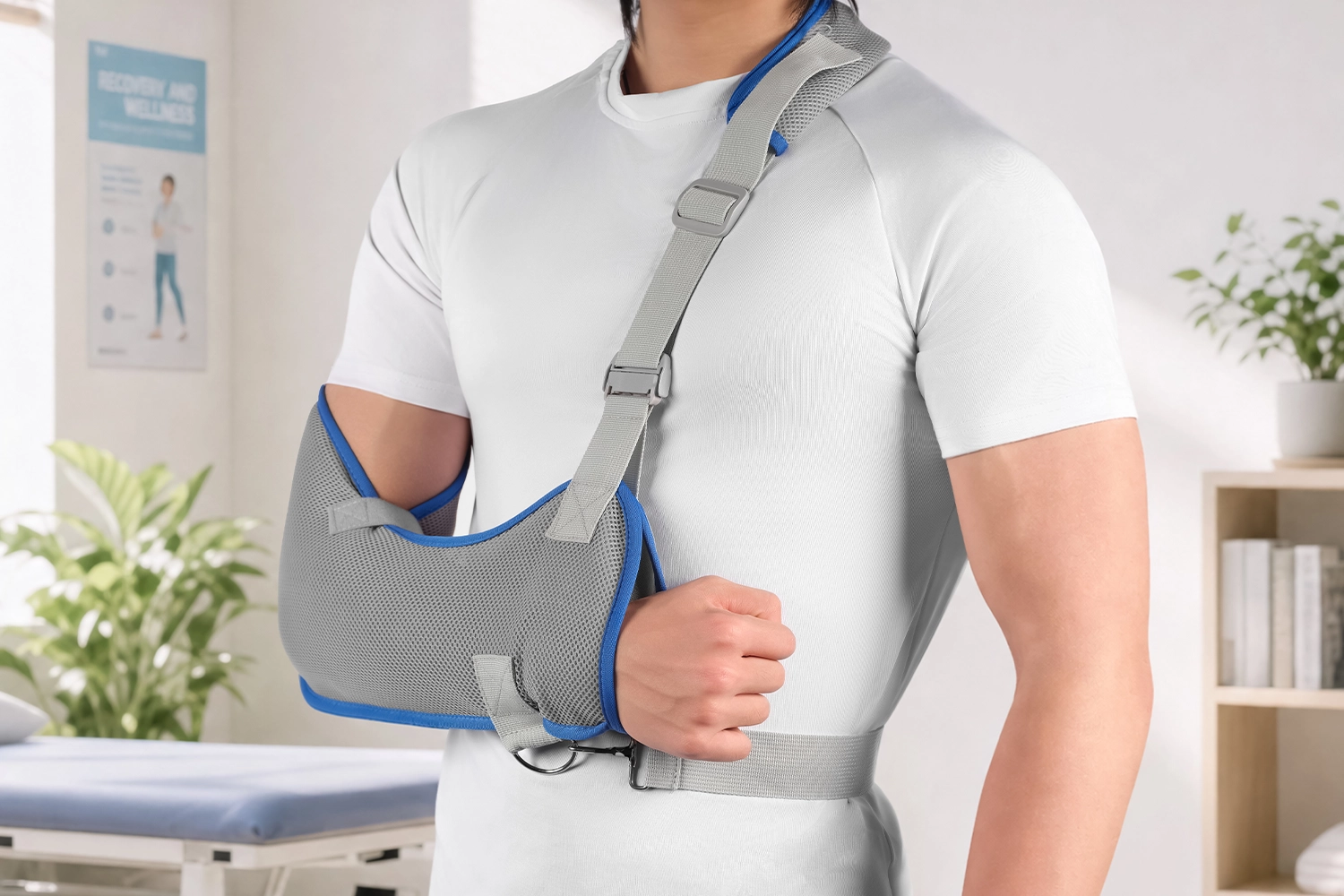
Everyone knows that rolled-ankle moment, with its sharp twist, instant swelling, and the sinking feeling that your workout (or your week) just got derailed. And everyone asks the same question: do I actually need a brace, or am I just being cautious? The right ankle brace for sprain recovery gives your ligaments the structured support they need to heal correctly the first time. Whether you’re nursing a fresh sprain, guarding against the wobbly instability of an old injury, or trying to stay in the game without risking another setback, we’ll explain how bracing works, which type fits your specific situation, and how to use one properly.
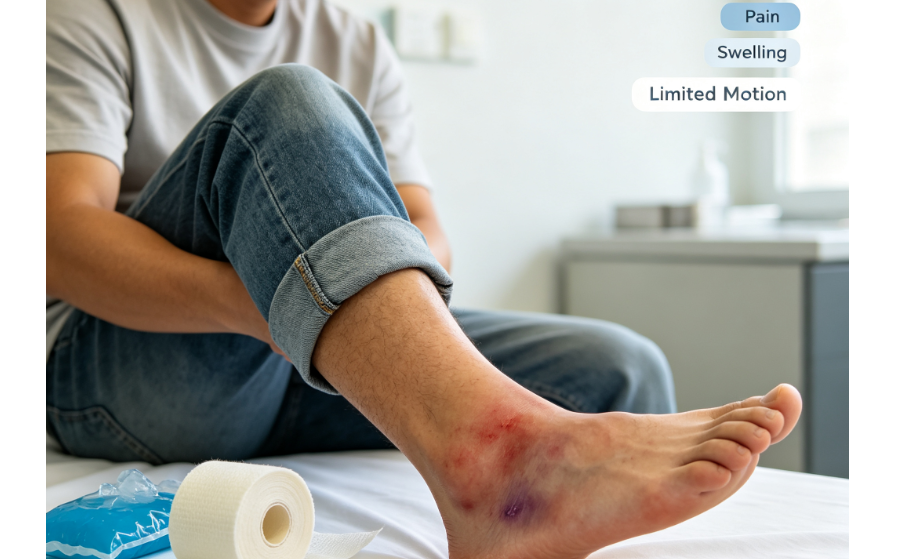
How Ankle Braces Work for Sprained Ankles?
Let’s understand the science behind sprain support first.
Key Benefit 1: Pain Relief & Swelling Reduction After a Sprain
Swelling shows up fast after a sprain, and so does the throbbing that makes you want to stay off your feet. This is where compression earns its keep. For acute closed soft-tissue injuries, early compression reduces swelling and internal bleeding, as long as it doesn’t restrict circulation or intensify pain.
The data tells a clear story. In one acute injury study, the compression group showed less bleeding and edema starting six hours post-injury, with inflammatory markers consistently lower at the 3, 6, and 18-hour marks. The six-hour mark showed the most significant difference (P<0.05). Immediately after compression, swelling looked similar between groups. But 30 minutes later, the compression group had better limb circumference and tissue tension (P<0.05), with less swelling overall (P<0.01).
Key Benefit 2: Joint Stabilization to Prevent Re-Injury
Reinjury isn’t a scare tactic—it’s the statistical reality of ankle sprains. Among athletes, recurrence rates climb as high as 70–80%. The first sprain is often just the opening act. This is exactly where joint stabilization changes the story.
External support works. Systematic reviews pooling data on braces and taping report an odds ratio of 0.40 (95% CI 0.29–0.56)—that’s roughly a 60% drop in repeat sprains compared to going unbraced. A separate analysis found nearly identical numbers: OR = 0.40 (95% CI 0.30–0.53). The consensus across the literature is loud and clear.
Why It Works: Blocking the Danger Zone
An ankle stabilizer brace limits the risky end-range inversion and eversion movements—the exact motions behind most repeat injuries. A lace-up ankle brace or hinged orthopedic ankle brace restricts that dangerous rolling motion while still letting you walk, pivot, and move naturally.
For Chronic Instability, Pair Bracing With Training
If you’re dealing with chronic ankle instability from past sprains, bracing alone isn’t the full picture. Proprioceptive training reduces re-sprain risk to RR = 0.64 (95% CI 0.51–0.81), with an NNT of 13—meaning just 13 people need training to prevent one recurrence. Balance and sport-specific exercise programs push that benefit further, with pooled data showing OR = 0.59 (95% CI 0.51–0.68) for reduced recurrence.
The most effective combination for chronic instability: strength training + balance work + proprioceptive drills, done consistently. Evidence points to balance training more than 3 times weekly, sustained for over 4 weeks, as the sweet spot for improving both self-reported function and dynamic stability—especially in posterior-direction balance tasks.
Know When Bracing Matters Most
Not every activity carries equal risk. Guidelines specifically flag indoor ball sports and track events as high-risk categories where an ankle brace for sports injury prevention delivers the most value. If you’re stepping back onto the court or track after a sprain, that’s precisely when structured joint support—paired with rehab—does its best work.
Key Benefit 3: Faster Return to Daily Activities & Sports
Recovery timelines follow a predictable pattern once you know which grade of sprain you have. Ankle sprain grades set the baseline: a Grade I sprain typically clears up in 1–2 weeks, Grade II runs 3–6 weeks, and Grade III can stretch to 6–12 weeks or longer, sometimes requiring surgery if instability lingers.
What Recovery Actually Looks Like, Week by Week
- Days 0–3: Pain and swelling dominate; weight-bearing feels limited.
- Days 4–10: Swelling eases and gentle daily movement returns.
- Days 11–21: Walking normalizes; stairs and work become manageable again.
- Weeks 3–6: Light jogging enters the picture.
- Weeks 6–12: Full return to sport at your previous level.
Massachusetts General Hospital’s guidance places return-to-sport at 6+ weeks post-injury, while NHS guidance notes light sport by 3–6 weeks and full-level sport by 6–12 weeks.
An ankle stabilizer brace earns its place in daily rehab here, not as a crutch but as a bridge. Structured support during Phases II through IV of functional rehab (weight-bearing, balance work, agility progression) lets you move confidently sooner, without risking the setback that comes from rushing back unprotected.
Choosing the Right Type of Ankle Brace for Sprain Severity
Not all sprains are created equal, and neither is the gear that treats them. Assess severity first, then choose support strength, then check shoe compatibility.
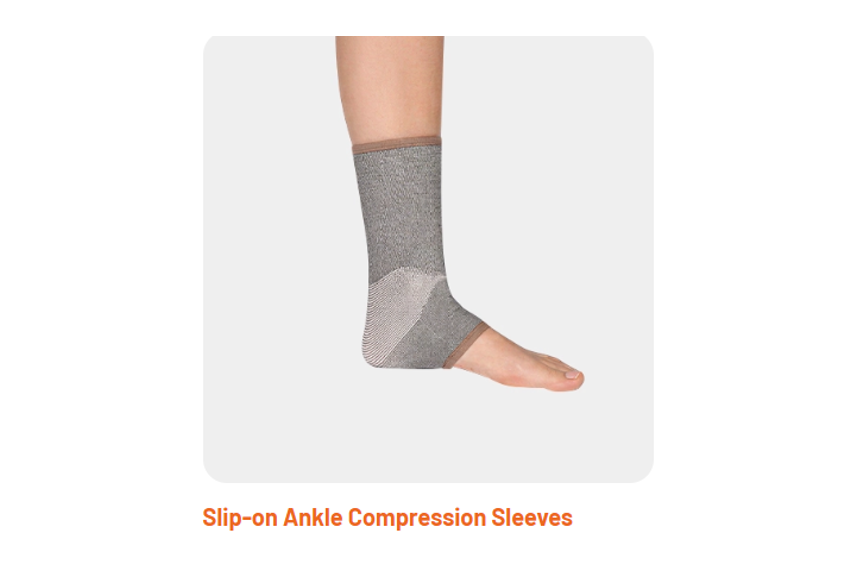
Grade 1: Soft Compression Sleeve
Mild sprains (swelling, minor discomfort, but the joint stays stable) respond well to a soft compression sleeve. Most people wear one for 3–10 days, sometimes tapering off over 1–2 weeks, occasionally stretching to three. Retail prices are in the $10–30 range, with sturdier options using hook-and-loop closures running $20–40.
Grade 2: Lace-Up or Semi-Rigid Brace
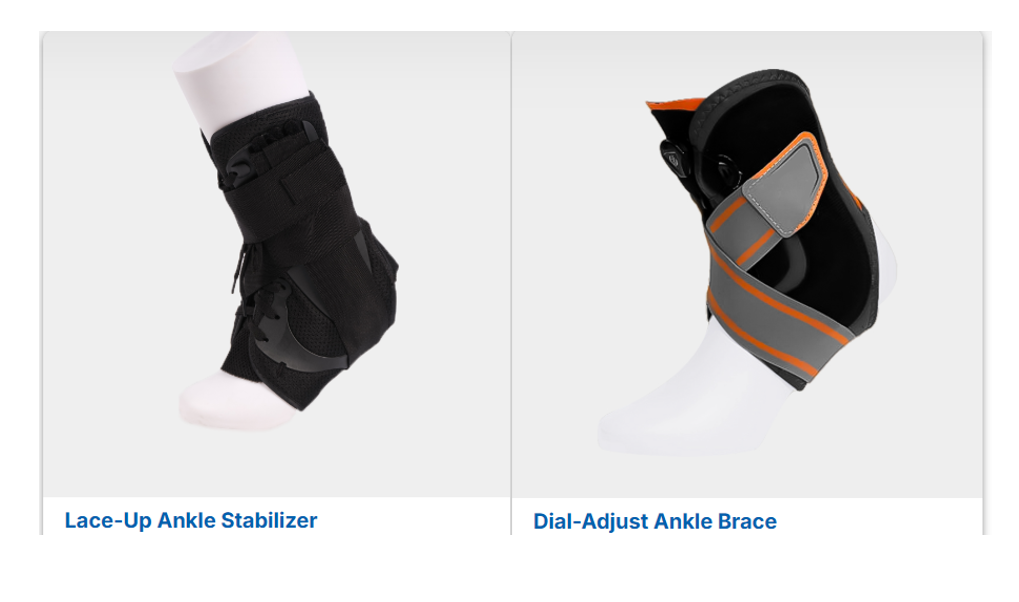
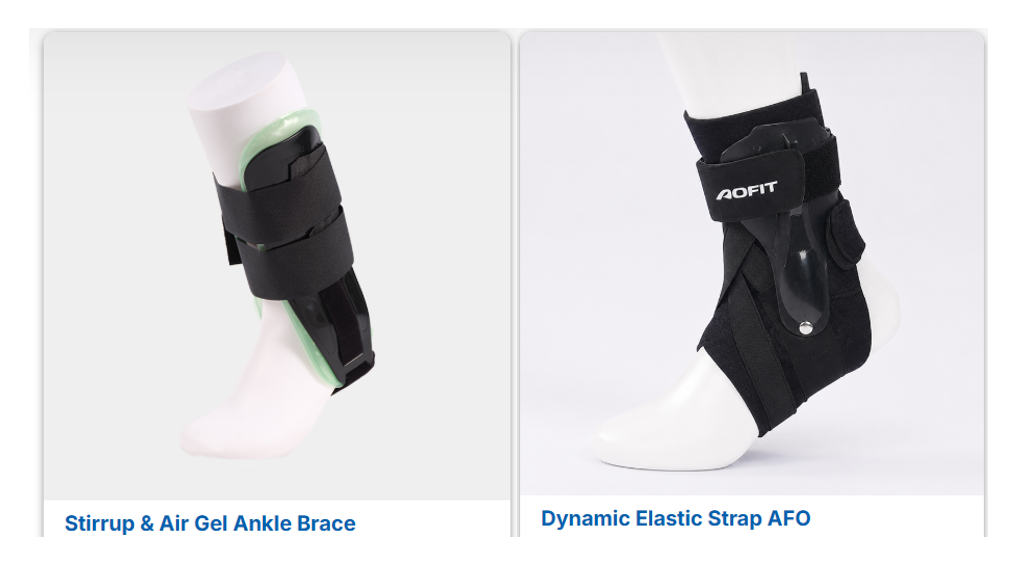
Partial ligament tears need more structure. A lace-up ankle brace uses crossed straps to limit inversion and eversion while preserving natural ankle flexion. If instability feels more lateral, like your ankle wants to slide sideways, a semi-rigid or stirrup brace offers firmer resistance. Expect 3–6 weeks of wear, sometimes longer during sports to guard against recurrence. Fit note: stirrup designs often need extra room, so a wider shoe may be necessary.
Grade 3: Rigid or Hinged Brace
Complete tears, heavy bruising, or difficulty bearing weight usually start in a walking boot for 2–6 weeks, transitioning into a hinged brace as function returns. Athletes returning to high-risk sports sometimes continue bracing for 6–12 weeks. Medical-grade options come with adjustable straps, rigid side supports, and sizing based on circumference, not shoe size.
| Injury Grade | What Happens | Symptoms | Bracing Recommendation |
| Grade I (Mild) | Ligaments are stretched with minimal tearing | Mild swelling and pain; ankle remains stable | Usually not needed. Heals well with R.I.C.E. (rest, ice, compression, elevation). |
| Grade II (Moderate) | Partial tearing of ligaments | Swelling, bruising, more pain, especially with movement | Helpful for support during healing and to reduce re-injury risk when returning to sports. |
| Grade III (Severe) | Complete tear of the ligament | Significant instability, severe swelling, bruising, trouble bearing weight | Recommended for physical activity; surgery may be required in some cases. |
Best Ankle Braces for for Sprain in Specific Use Cases
Not every sprain or every sport calls for the same brace. A marathon comeback needs a different brace than a basketball player cutting through the paint. Matching the brace to the activity is where real protection starts.
Check do you really need one?
| Factor | Bracing Recommended? | Reason |
| Grade I sprain | ❌ No | Heals naturally; bracing restricts movement and strength gain. |
| Grade II sprain | ✅ Yes (during activity) | Provides support and reduces re-injury risk. |
| Grade III sprain | ✅ Yes (for physical activity) | Needed for stability; surgery may be an option. |
| Chronic instability | ✅ Yes | Prevents further damage to weakened ligaments. |
| High-risk sports return | ✅ Yes | Protects against pivots, jumps, and quick direction changes. |
| Strengthening exercises | ❌ No (remove during) | Muscles need to be challenged to regain strength. |
| Building confidence | ❌ No (gradually phase out) | True confidence comes from strength and balance training, not dependence on a brace. |
Running After a Sprain
For runners easing back in, a semi-rigid ankle brace is usually the sweet spot. Semi-rigid designs outperform elastic braces for actual ligament stabilization. Elastic sleeves feel nice, but they don’t control the joint the way running demands. Look for breathability and low bulk so it doesn’t chafe mile after mile. You also want moderate mobility, not a full lockdown. Adaptive brace systems allow more freedom of movement and feel less restrictive than rigid orthoses, which matters when you’re trying to run naturally again. This setup fits best for return-to-run after a mild-to-moderate sprain, or for anyone managing chronic instability through a training block.
Basketball & Quick-Turn Sports
Basketball’s jump-land-pivot demands are brutal on ankles, so prevention needs more muscle. A lace-up ankle brace with straps balances stability and comfort well. One common ranking calls it best for “stability with carrying comfort.” If you’ve got real instability or a history of repeat sprains, step up to hard-shell or brace-with-splint models; these deliver the most stability for quick-turn sports. A compression sleeve alone only offers mild support, not serious prevention.
Orthopedic vs. Normal Brace
An orthopedic ankle brace is reserved for moderate-to-severe sprains, chronic instability, post-op recovery, and some stable fractures. A standard compression sleeve suits mild sprains, swelling, or preventive daily wear. Measure your ankle circumference above the ankle bone for proper sizing. Wear it during risk activity for prevention, or most of the day if you’re in acute recovery, per your clinician’s guidance.
How to Wear and Use an Ankle Brace to Improve Effectiveness?
Fit determines function. A brace that’s too loose won’t stabilize anything; too tight, and you’re cutting off circulation. Getting the details right matters more than the price tag.
During the first 24–48 hours after a sprain, continuous wear alongside rest, elevation, and ice gives your ligaments the immobilization they need. Avoid putting strong force against the brace during this window—it can bend or lose shape.
Sizing It Right
Measure your ankle circumference, then match it to the brand or brace manufacturer’s chart. Try the brace on with your actual sock and shoe; snug is good, numbness or discoloration means it’s too tight.
Putting It On
Keep the ankle at 90° (neutral, dorsiflexed) while securing the brace. Seat your heel fully into the back cup, centered, not shifted. And refer to our article for different types of ankle braces, different wearing ways.
Warning Signs to Watch
Numbness, tingling, pale or bluish skin, or worsening pain means the brace is too tight—remove it immediately and seek evaluation. Pressure points or a wobbly feel usually mean it’s too loose or the heel isn’t seated.
Pairing With Rehab
Before wearing the brace, try this mobility drill: bend and straighten your knee a few times, then with your knee bent, pull your foot up toward it, hold for 5 seconds, release. This warms up the joint before loading it. Bracing works best alongside range-of-motion work, balance training, and strengthening. Recheck fit every time before activity. Make sure the heel is seated, straps are tensioned, and there’s no slipping.
Conclusion
Ankle sprains are stubborn. They’re sneaky. And they love coming back if you don’t give them proper support from day one. An ankle brace for sprain recovery reduces swelling, stabilizes the joint, and helps you get back on your feet without that nagging fear of rolling it again. The right ankle stabilizer brace—matched to your sprain grade and how you actually move—turns “just resting it” into real recovery.
Are you choosing the right bracing solution for your customers or patients? Contact AOFIT now and we offer the full OEM/ODM ankle brace lines.