You’ve rolled your ankle one too many times, and now you’re standing in the sporting goods aisle staring at two very different solutions: a rigid brace or a roll of athletic tape. Which one keeps you on the court, field, or trail without holding you back?
The question of ankle brace vs tape isn’t as simple as going with the popular choice. Your decision depends on whether you’re managing a fresh sprain, dealing with chronic ankle instability, or just trying to prevent the next injury. Some athletes swear by the freedom of kinesiology tape, while others won’t step onto a basketball court without a lace-up brace strapped tight.
This guide breaks down how each option works and when to use one over the other— backed by real sports medicine insight.
Ankle Brace: Definition, Mechanism, and Core Features
An ankle brace is an external support system that keeps your foot from rolling in directions it shouldn’t. It uses compression and structural resistance to limit excessive inversion or eversion, while still letting you move naturally enough to play. That combination of support without total restriction makes bracing a popular choice for both prevention and recovery.
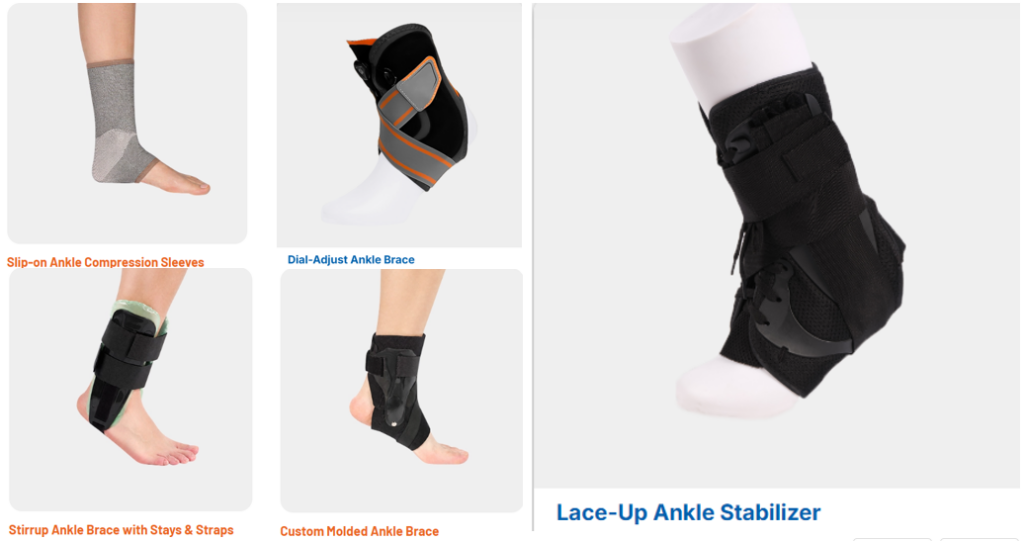
Not all braces work the same way, though. Three main types exist, each for a different level of protection.
Soft/Sleeve Braces are the lightest option. They are thin, elastic sleeves that apply circular compression, typically in the 10–30 mmHg range depending on how much support you need. They barely limit forward-and-back ankle motion, making them a solid pick for runners or anyone wanting daily reinforcement without bulk. Expect to pay around $15–25.
Lace-Up Braces step things up. Cross-strapping and adjustable laces create a mechanical barrier against rolling, which is exactly why they’re a go-to ankle support for basketball players dealing with constant cutting and landing. Prices usually land between $20–40.
Semi-Rigid Braces add plastic support shells that physically block extreme inversion angles. For chronic ankle instability recovery, these braces cut healing time and re-injury rates compared to soft braces. They run $30–60.
All three types work by improving proprioception: your brain gets better feedback about joint position, helping you correct instability before it becomes a sprain. That’s why bracing remains one of the most cost-effective tools for ankle injury prevention.
Athletic Tape: Definition, Mechanism, and Core Features
Grab a roll of tape, and you’re choosing between two very different tools. Rigid athletic tape and kinesiology tape look similar on the shelf. They work nothing alike on your skin.
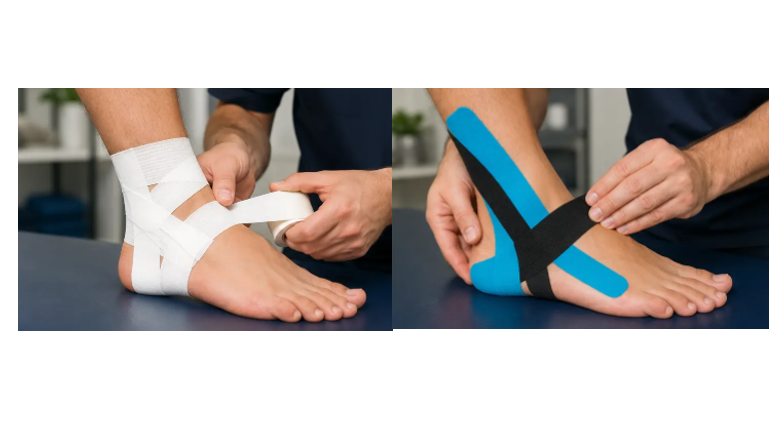
Rigid athletic tape is non-stretch, usually 1.5 — 2 inches wide, wrapped in layers to mechanically block your ankle from rolling. Kinesiology tape stretches up to 140–160% of its length and moves with your muscles instead of against them. It supports circulation, sensory feedback, and muscle activation rather than locking a joint in place.
There’s a catch. Rigid tape loses 40–60% of its restrictive power within the first 10–20 minutes of hard play. By 30–45 minutes, joint mobility creeps back to 70–80% of baseline. That’s why trainers re-tape before every game rather than trusting one wrap to last.
Kinesiology Tape vs Rigid Tape
| Feature | Rigid Tape | Kinesiology Tape |
| Stretch | 0–5% | 140–160% |
| Thickness | Noticeable | ~0.5mm, low-profile |
| Wear time | Single session | 3–5 days |
| Purpose | Mechanical block | Sensory input, muscle support |
Basketball taping leans rigid and aggressive against inversion. Volleyball taping keeps more ankle freedom for jump takeoff. Kinesiology tape follows muscle lines rather than locking joints. It works when you want support without sacrificing feel.
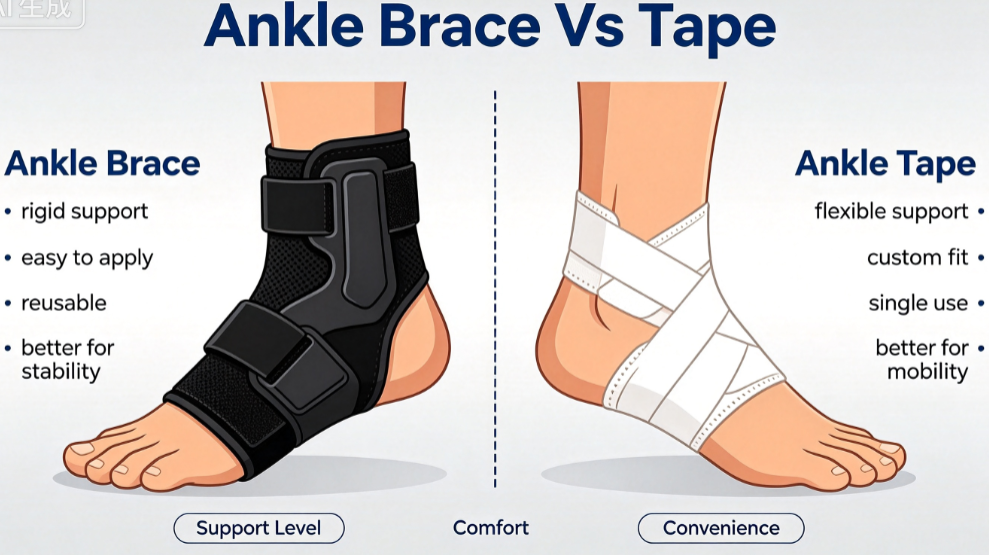
Ankle Brace vs Tape:Comparison of Key Dimensions
Numbers don’t lie, and when you put ankle braces and tape side-by-side under real testing conditions, the gaps get obvious fast. Here’s what four years of ankle sprain treatment research and sideline tracking actually reveal.
Support and ROM limitation
Fresh tape wins the opening minutes. It restricts dangerous inversion motion by roughly 45–55% right out of the wrap. But that support has an expiration date. Tracking taped athletes shows significant loosening within 20 minutes, with ROM returning to 70–80% of baseline by the 30–45 minute mark. Lace-up and semi-rigid braces start slightly lower, around 20–30% ROM reduction, but that number barely moves for the entire game. Lab testing on high-platform jump landings confirms this: barefoot max inversion angle hit 14.23°±2.85, and semi-rigid bracing dropped that to 11.26°±2.82—a 21% reduction that held steady, not one that faded by halftime.
Cost over a season
This one surprises people. A single roll of tape runs $1–2, and double-ankle taping burns through 1–2 rolls per session, plus 3–8 minutes of a trainer’s time. Multiply that across 80–100 sessions in a competitive season, and you’re looking at $400–1,200 per athlete once labor gets factored in. A quality lace-up ankle brace for basketball or semi-rigid model costs $30–60 per side and lasts one to two seasons. Run the math across a 20–30 person roster, and switching from tape to braces can cut annual protective equipment spending by 60–80%.
Skin complications and satisfaction
Roughly 59% of taped athletes report at least one skin issue per season, including redness, blistering, and contact dermatitis, compared to just 14.6% among brace users. That gap also appears in satisfaction scores: braces average 7.5 — 8.5 out of 10 for comfort and wear tolerance, while tape lands at 6.0 — 7.0, dragged down by irritation and repeated re-application waits.
Application time
A brace takes 30–60 seconds to strap on solo. Proper ankle taping technique needs a trained hand and 3–5 minutes per ankle. Scale that to a 20-person team and tape eats up roughly 160 minutes per session versus 20 minutes for self-applied braces. Over a full season, that’s 213 hours of trainer time spent on tape alone—time that could go toward actual rehab work instead.
How to Choose Based on Your Situation: Should I Tape or Brace My Ankle
There’s a 72-hour rule that changes everything about this decision. If you’re inside that window after a fresh sprain, brace up—don’t rely on tape alone while pushing back into activity.
Acute Sprain: The First 72 Hours Matter Most
Right after rolling your ankle, rigid support wins. A hard-shell or semi-rigid brace paired with RICE (rest, ice, compression, elevation) is the standard for those first three days. Tape doesn’t cut it here as a standalone fix.
Skip proper stabilization now, and your one-year re-injury risk climbs to 30–40%, based on common sports medicine ranges for lateral ankle ligament damage. That’s not a small number.
After the acute phase, your protocol should shift:
- 1–3 weeks (subacute): Move to a bilateral stirrup brace or silicone matrix design, slowly reintroducing range of motion.
- 4+ weeks (chronic): Switch to a cross-strap or mid-to-high stability brace during activity. Ultra-thin sleeves work fine for daily wear once you’re stable.
Chronic Instability: Build a Long-Term Habit
Got that loose or unstable feeling even without a recent injury? High-impact sports like basketball, soccer, or badminton call for the highest-protection lace-up brace you can find. Curry-level pros often wear A2-DX rated braces that lock down inversion and eversion hard.
For lower-impact days—walking, light cardio—a sleeve-style brace with basic compression and proprioceptive feedback is enough. Some rehab guidelines recommend sticking with supportive bracing through a full 3–6 month season cycle, paired with balance and strength training.
Match Your Sport to the Right Gear
Running: No injury history? Grab a lightweight knit brace at 15–25 mmHg compression. Measure your ankle circumference about 5cm above the outer ankle bone—M fits 22–26cm, L covers 26–30cm, XL runs 30–34cm. Tape is mostly a game-day-only tool, not a daily solution.
Basketball/soccer/badminton: Cross-strap braces with dual-U side support cut anterior talofibular ligament stress by roughly 40% during cutting and landing. Soccer players need to double-check cleat compatibility—test a 90° flexion range before lacing up your boots so the brace doesn’t jam against the shoe collar.
Gym/dance/low-impact cardio: A basic sleeve brace covers most needs. No reason to pay extra for rigid structure you won’t use.
Budget Reality Check
- Low budget, high-contact sport, acute injury: Pause competition, invest in a bilateral brace.
- Mid budget, chronic instability: High-protection brace daily, plus custom taping on game day.
- Prevention only, no injury history: Basic knit brace, replaced every 6–8 months as sweat and material fatigue wear down compression.
FAQs on Ankle Brace and Tape
How to tape your ankle or put on an ankle brace?
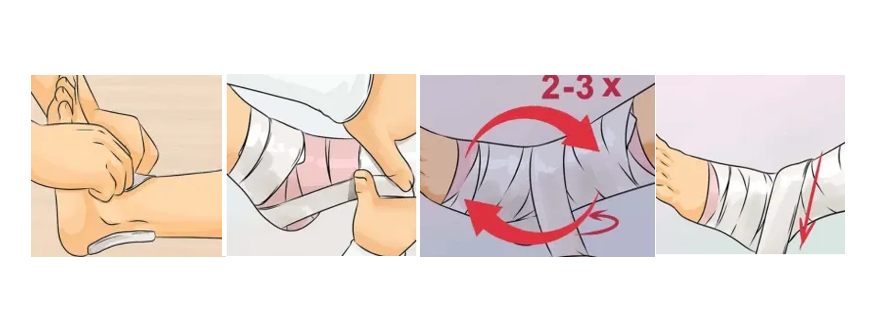
Proper ankle taping starts with pre-wrap foam (about 1–2mm thick) to protect skin from friction. Then comes the real structure:
- Anchor strips: 2–3 circles around the lower leg and midfoot
- Stirrups: 3–5 overlapping strips (half-to-two-thirds overlap) fighting inversion
- Horseshoes: 2–3 strips under the heel controlling shift
- Closing strips: Figure-8 patterns locking everything into one rigid sleeve
Technicians customize the limitation. They tighten high-risk directions like inversion for basketball players while leaving safer movement planes freer.
For putting on an ankle brace, refer to our related article.
Can I use an ankle brace and tape at the same time?
Yes, but layering only makes sense in specific situations, not as your everyday routine. High-contact athletes with a history of repeated sprains—basketball, soccer, volleyball, mountaineering—sometimes combine a lace-up ankle brace with tape under a physician’s guidance. This stacks mechanical limits on inversion and eversion for extra insurance during high-risk games. Post-surgical patients or those recovering from severe instability might also use tape as a short-term booster during specific training blocks, but never as a daily replacement for their primary support.
For most people, though, picking one does the job just fine.
Ankle Brace Vs Tape: Which one’s better for long-term use?
Braces win here, hands down. They’re reusable, adjustable, and cheaper over time since you’re not burning through rolls every session. Tape requires fresh material and skilled hands each time you wrap, which adds up fast if you’re training five days a week.
How to get the ankle brace size right and how tight should my brace fit?
Measure ankle circumference, then match the result with the ankle brace size chart to get the ankle brace size right. The tightness test is simple: you should get one finger under the top and bottom straps. If you can’t, the brace is cutting circulation. If your toes turn pale, purple, cold, or numb within 5–10 minutes, loosen it.
How long should you wear an ankle brace for a sprain?
For a moderate (Grade II) sprain: days 1–3, wear it during any activity (over 80% of waking hours), and take it off for sleep. Days 4–14, cut back to 4–6 hours daily, only during outdoor movement or weight-bearing training. If you’re using a brace for long-term prevention, log 8–12 tape-free hours each day and pair the brace with ankle strengthening work.
Conclusion
There’s no universal winner between ankle brace and tape, just the right tool for your specific situation. If you have chronic ankle instability or need reliable support for back-to-back training sessions, a lace-up ankle brace delivers consistent protection without the daily hassle. If you’re an athlete who needs freedom of movement combined with proprioceptive feedback, kinesiology tape might be your better bet—assuming you or your athletic trainer can nail the taping technique.
Ankle Brace Vs Tape: Which Should Be Your Business? Contact AOFIT now and get a market plan. We offer full OEM/ODM ankle brace solutions to meet your needs.