Compression socks relieve many common pregnancy symptoms, which is why more maternity brands, pharmacies and postnatal centres are looking seriously at the category. Still, choosing the wrong pressure level or getting the sizing slightly off leaves you with uncomfortable customers, returns and claims you can’t back up. We cover when compression helps and when it doesn’t, which pressure level and style suit each symptom, and how to get sizing and materials right. By the end, you’ll know whether this range belongs in your lineup and how to buy with confidence.
Are Compression Socks Good For Pregnancy —When they are and When They Are Not
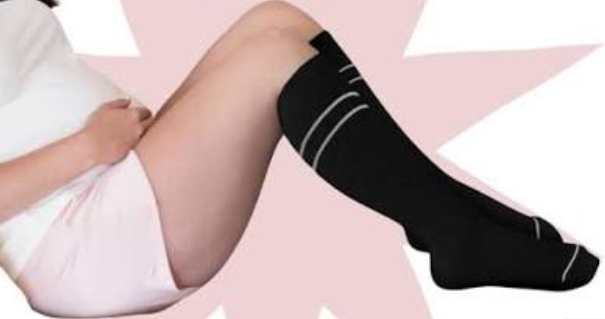
Mild swelling in both legs is where compression works best. It eases puffy ankles, aching legs, and varicose-vein discomfort, particularly after hours on your feet, long travel, or during third-trimester swelling. Graduated compression reduces fluid pooling and keeps legs feeling lighter.
What the Evidence Supports
- Less swelling: In a 60-person randomized trial, pregnant women wore 20-30 mmHg knee-high stockings for about 8 hours a day. Calf and ankle diameter increased less than in the group without stockings.
- Better symptoms: In one study, 7 of 27 women wearing compression reported improved leg symptoms, compared to 0 of 15 in the control group.
- Better blood flow: Deep-vein flow velocity increased in women with late-pregnancy leg edema.
- Extra comfort: A small crossover trial of 74 women suggested possible gains in nausea, dizziness, and leg-related quality of life. Still, don’t build your pitch on this.
For pregnancy edema relief, light-to-moderate graduated compression of 15-20 mmHg is a sensible starting point. The 20-30 mmHg range remains the standard in clinical studies. Choose well-fitted knee-high or maternity styles that do not bunch or fold at the ankle or calf. Wearers should put them on first thing in the morning before getting out of bed, while swelling is lowest, and take them off at night unless a clinician advises otherwise.
What They Don’t Do
Keep claims honest. One randomized study tested 18-21 mmHg and 25-32 mmHg stockings. While some venous-reflux and symptom measures improved, the stockings did not prevent superficial varicose veins from appearing. Broader reviews also describe trial evidence for edema and varicose veins as limited or inconsistent. Position the product as symptom relief, never as guaranteed prevention and never as a substitute for a medical evaluation.
When Not to Self-Treat
Packaging and product pages should instruct customers to seek medical advice if:
- One leg is noticeably more swollen than the other.
- A leg becomes painful, warm, red, tender, or suddenly discolored, which can indicate DVT.
- Swelling appears suddenly or turns severe, particularly in the face or hands.
- Swelling comes with persistent headaches, blurred vision or spots, upper-abdominal pain, sudden weight gain, or shortness of breath. These symptoms can signal preeclampsia or another urgent condition.
- Chest pain or difficulty breathing occurs. Customers must seek emergency care immediately, as a pulmonary embolism is possible.
When to Stop Wearing Them
Wearers should take them off and get a refit or medical advice if toes turn numb, pale, blue, cold, painful, or swollen. Stop wearing them if the skin breaks down or the top band rolls into a tight ring. Rolled garments and ordinary tight socks can restrict blood flow.
Pregnancy Symptoms Matched With Pressure Level and Product Type
Pressure level is the first spec to lock in, and it should match the symptom. Most consumer pregnancy compression runs between 8 and 30 mmHg. This table maps common situations to the right pressure range and garment style.
| Symptom / use case | Pressure level | Product type | Notes |
| Foot fatigue, mild ankle or calf swelling, daily comfort | 8-15 mmHg | Lightweight graduated knee-high | Dr. Motion’s Everyday Compression maternity socks suit all-day wear and mild swelling. |
| Heavy legs, long shifts on your feet, travel, moderate swelling | 15-20 mmHg | Graduated knee-high or breathable maternity hosiery | The standard range recommended for everyday wear. |
| Noticeable varicose veins, more substantial swelling | 20-30 mmHg | Firm graduated socks or maternity pantyhose | Dr. Motion treats this as treatment-level, usually selected with a doctor’s input. Ames Walker carries 20-30 mmHg maternity pantyhose. |
| Severe edema, diagnosed venous insufficiency in pregnancy, post-delivery swelling | 20-30 mmHg or higher, only if prescribed and fitted | Medical stockings, thigh-high or medical pantyhose | Stronger compression requires a clinical assessment and fitting. Customers should not buy firm compression on their own. |
Knee-High vs Thigh-High Compression
Swelling below the knee calls for 8-20 mmHg knee-high socks. Graduated designs squeeze tightest at the ankle and ease off up the calf, helping venous blood move back up the leg. If swelling extends past the knee, or the entire leg aches, step up to thigh-high stockings or maternity support hosiery at a provider’s recommended pressure. Ames Walker, for instance, offers 15-20 mmHg sheer and 20-30 mmHg opaque maternity pantyhose.
Range Planning and Fit Points
- Build a ladder: Fitrell offers graduated socks at 15-20, 18-25 and 20-30 mmHg, while Ames Walker stocks maternity pantyhose at 15-20 and 20-30 mmHg. Both lineups show how retail buyers can cover mild to firm support needs without stocking too many SKUs.
- Choose graduated over uniform: Graduated compression supports people who spend their days sitting or standing. Uniform compression belongs on bedridden or post-surgical patients.
- Set wear-time guidance: Expect customers to wear pregnancy compression socks for roughly 4-8 hours a day during daytime activity.
- Don’t force one product to do everything: Leg compression will not relieve abdominal heaviness or pelvic pressure. Those symptoms call for an adjustable maternity support band, which allows free movement and carries no mmHg rating.
A customer showing sudden one-sided swelling, marked pain, redness, chest pain, headache, or facial and hand swelling needs an immediate medical assessment.
Knee-High, Thigh-High, and Maternity Pantyhose: Which Format Fits the Use Case
Match the format you stock to where the symptoms stop. Here is how the three styles compare.
Knee-High Socks
Knee-highs cover the foot, ankle, and calf. They are the easiest to put on, run cooler than taller cuts, and rarely slip down. They work well for tired legs, lower-leg swelling, travel, extended sitting or standing, and calf-level varicose veins. They provide no support above the knee.
Thigh-High Stockings
Thigh-highs end 2-3 inches below the groin, covering nearly the full leg without covering the abdomen. Sizing charts must include thigh circumference, and you will need silicone bands or garters to prevent rolling. Standard pressure classes run 8-15, 15-20, 20-30, 30-40, and 40+ mmHg. The top two classes treat advanced venous conditions and require professional guidance.
Maternity Pantyhose
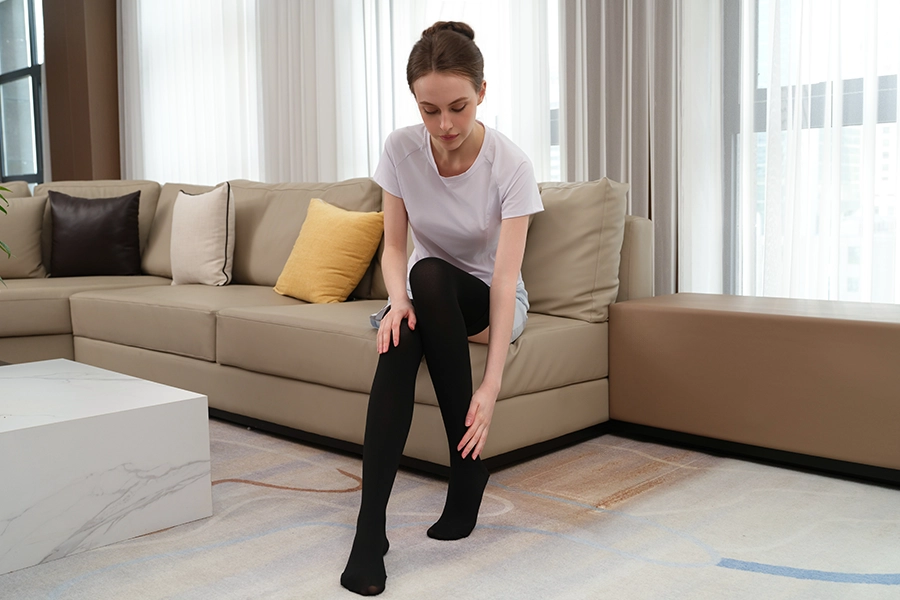
Maternity pantyhose combine full-leg coverage with an expanding belly panel. They give wearers a smooth one-piece option under dresses and skirts, with no separate waistband or thigh band to dig in. Putting them on takes more effort, and sizing must account for the ankle, calf, thigh, height, and a growing belly.
A Quick Selection Rule
- Feet, ankles or calves only: knee-high.
- Swelling or varicose veins crossing the knee: thigh-high.
- Both legs affected, plus a need for dress-friendly coverage: maternity pantyhose.
- Mild lower-leg swelling: start with 15-20 mmHg knee-highs. Move to pantyhose if belly fit or coverage above the knee becomes an issue.
Spec Examples From Supplier Listings
- Ames Walker AW 226: opaque microfiber, 20-30 mmHg. Sizing runs from a 7-8 inch ankle and 10.5-14.5 inch calf in small up to an 11-12.5 inch ankle and 13.5-18 inch calf in XL.
- Absolute Support: 20-30 mmHg. The ankle runs 7-8 inches in small to 10-11 inches in 2XL, with calf measurements from 9-12 inches to 15-18 inches.
- NuVein: opaque 20-30 mmHg styles list at 24.59-47.99, depending on size and variant.
Whichever format you choose, garments should feel snug and graduated, never pinching or rolling down at the top band.
Compression Socks Sizing for Pregnancy: Measurements That Control Fit and Returns
Ankle and calf circumferences determine the fit of most pregnancy compression socks. Shoe size serves only as a backup reference.
Measure Right
- Take measurements at the narrowest point of the ankle and the widest point of the calf.
- Measure first thing in the morning before swelling builds, since afternoon measurements often lead customers to buy a size too small.
- Keep shoe size secondary. Calf width carries equal weight, particularly for wide-calf and plus-size shoppers.
- Publish total sock length or below-knee height whenever possible. Comparable knee-high socks list lengths of 13.3-15.7 inches across sizes.
Sample Size Chart
One published pregnancy compression chart illustrates the standard sizing tiers:
| Size | Ankle | Calf |
| S | 6.5-8.5 in / 17-22 cm | 8-10 in / 21-26 cm |
| M | 8-10 in / 21-26 cm | 9-11.5 in / 23-29 cm |
| L | 9-11.5 in / 23-29 cm | 11-15 in / 28-38 cm |
| Extended XL | 13-19 in / 33-49 cm | 17-23 in / 43-58 cm |
Other brands follow a similar structure. A pregnancy-focused SRC chart spans from S (ankle 19-21 cm, calf 29-34 cm) to XL (ankle 25-27 cm, calf 40-45 cm), while dedicated wide-calf pregnancy styles expand to 24-29 inches.
Size-Boundary Rules That Cut Returns
- If ankle and calf measurements fall into different size tiers, follow the calf.
- When a customer lands right between sizes, consumer guides generally recommend sizing up for a more comfortable fit.
- Overlap your measurement bands. One chart ends its S/M calf range at 15 inches and starts L/XL at 14 inches, creating a built-in 14-15 inch buffer for day-to-day swelling.
- Display both inches and centimeters directly on the chart, since single-unit tables generate conversion mistakes.
Fit Checks for Product Pages and Returns
- Toes must reach the toe cap without bunching or stretching the fabric taut.
- The heel must sit squarely inside the heel pocket.
- The top band should rest directly below the knee rather than creasing behind the joint.
- Sagging fabric, slipping heels, rolling edges, or uncomfortable pinching indicate an incorrect size.
When customers request a return, ask for their shoe size, morning ankle and calf measurements, pregnancy week, purchased size, and specific fit complaint. This intake distinguishes sizing mistakes from actual manufacturing flaws.
List compression levels (15-20 or 20-30 mmHg) separately from product sizes. Stock both standard and wide-calf cuts, and let buyers select their size using dual ankle-and-calf inputs.
Conclusion
Compression socks work well during pregnancy when matched to the right symptoms. Recommend 15-20 mmHg knee-highs for mild swelling, and move to 20-30 mmHg or pantyhose styles when varicose veins or DVT risks come into play. Sizing based on accurate ankle, calf, and leg-length measurements—with room left for third-trimester swelling—keeps return rates down. Keep your product claims honest, and tell customers when they need to check with a doctor first.
If you are ready to build your maternity support hosiery range, send us your target symptoms, sizes, and volumes. We will walk you through samples, specs, and OEM/ODM compression socks options.