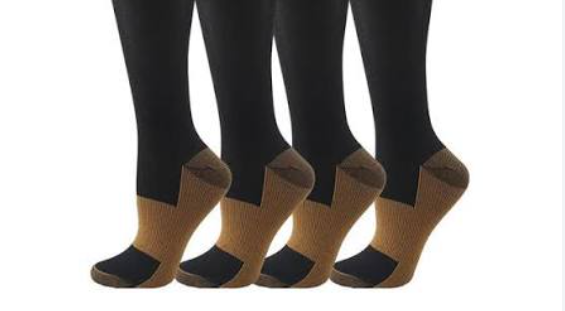
You’ve seen the ads, scrolled through the Amazon reviews, and you’re one click away from ordering. Copper Fit socks work well for light daily support, but they aren’t medical-grade compression. That difference matters if you’re dealing with serious swelling or vein issues. Are Copper Fit Compression Socks Good? Now, I’ll break down how they feel after 7-14 days of wear, how they handle long shifts, flights, and foot pain, and whether the copper does anything meaningful. You’ll also see how they will work, plus sizing, durability, and safety notes, so you can decide before you spend a dime.
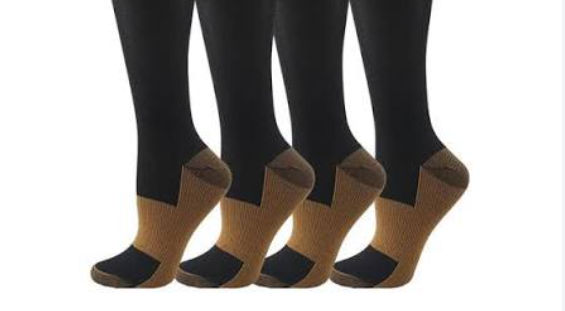
Copper Fit Compression Socks Are Good for Light Daily Support—Not Medical-Grade Compression
Think of Copper Fit as an everyday sock with a gentle squeeze rather than a medical treatment tool. That is the clearest way to evaluate it.
What “Light Support” Actually Means
Medical compression socks come in standardized classes of 15-20, 20-30, and 30-40 mmHg. A true medical spec, such as a 20-30 mmHg knee-high in 88% nylon and 12% spandex, is built and tested for a targeted medical need. Copper Fit sits at the mild end of that spectrum, usually around 15-20 mmHg, so check the product listing before you buy.
That level gives you enough support if you stand all day and your legs feel tired without swelling, though serious edema or vein issues call for heavier clinical grades.
Where the Copper Fits In
The copper-infused yarn reduces bacterial growth to keep odor under control. That antimicrobial defense is the practical benefit of the fabric, meant for freshness rather than pain relief.
Who Gets the Most Out of Them
- Office workers with mild end-of-day leg fatigue
- Travelers who want a little extra comfort on long trips
- Anyone who wants warmth, light support, and fresher socks
If you need graduated compression socks for a diagnosed condition, skip this tier and talk to your doctor first.
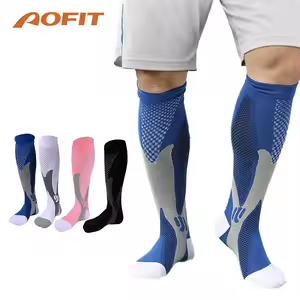
Copper Fit Compression Socks Review: Pressure, Comfort, and Support After 7–14 Days
Copper Fit Energy socks sit at 10-20 mmHg, and that rating explains how they feel on your legs.
Pressure and Design
The graduated compression stays firmest at the ankle and eases toward the calf, hugging the leg snugly without pinching. These knee-high socks feature light arch support, a cushioned footbed, and moisture-wicking fabric built from 78% nylon, 14% spandex, and 8% polyester.
What Wearers Report
Across 7-14 days of regular wear, feedback points to consistent results:
- Less foot and leg fatigue by the end of the day
- Mild swelling reduction
- Good cushioning with light arch support short of orthopedic correction
- Socks that stay in place without sliding down
One reviewer wore them through 8-hour standing shifts, while another found them looser than doctor-prescribed pairs. On Amazon, the Energy listing holds 4.5/5 stars from 204 reviews.
The Downsides Show Up Early
The copper fit socks pros and cons usually surface within the first two weeks:
- The ankle band can squeeze uncomfortably, even when the foot and calf fit well.
- The fabric often runs long on shorter legs.
- Compression varies between styles; one buyer noted that one color band slid on easily while another felt much tighter.
- Pulling them over wider calves takes real effort.
- Odor control and durability fall off in the menthol-infused pairs.
Check the copper fit socks sizing guide before buying, because poor fit drives most of these issues.
The 7-14 Day Verdict
These are a dependable choice for light-to-moderate everyday compression. They suit travel, long shifts on your feet, and general leg fatigue. Expect solid end-of-day relief without the heavy squeeze of clinical hosiery.
Take them off if you notice numbness, discoloration, pain, or persistent ankle pressure.
Copper Fit Compression Socks for Standing, Travel, Swelling, and Foot Pain
Which Copper Fit pair is worth buying depends on how you plan to use them. Here is how I’d match them up.
Standing All Day
Energy or Energy Plus is the best pick for long shifts. People on their feet all day report less ankle swelling and better comfort. Pick your size by calf circumference instead of shoe size, and wear them during work hours only.
Long Flights and Desk Days
Knee-high graduated compression works well when you have to sit for hours. One Target reviewer wore them on a long-haul flight and called them a success. Check your pair’s product page before ordering, as some listings show 10-15 mmHg and others show 10-20 mmHg.
Mild Swelling and Foot Pain
Graduated Energy models handle mild swelling well. For heel or arch discomfort, go with Arch Strong—its built-in panel targets the plantar fascia and fallen arches. Energy socks give good general support, but they will not replace a plantar fasciitis brace.
Price and Sizing Snapshot
- Energy: about $16.88 per pair at Walmart
- Arch Strong: $19.99 promotional price
- L/XL: shoe size 9-11, calf 15-17 inches
- 2XL/3XL: shoe size 12-15, calf 18-20 inches
- 4XL/5XL: shoe size 12-15, calf 20-22 inches
Measure at the widest part of your calf, especially if you tend to swell.
Where Users Push Back
Some buyers struggle to get them on and off, despite claims that they slide on easily. Others report slipping, tight sizing, or fabric tearing shortly after the first wear.
Severe, one-sided, persistent, or painful swelling needs a clinical assessment.
Do Copper Fit Compression Socks Work Better Because of Copper?
No. Compression strength, fit, and consistent wear do the heavy lifting, not the copper.
What the Research Shows
- One small trial found a skin benefit. A double-blind pilot study compared copper-impregnated stockings to standard ones in patients with venous disease. After 8 weeks, the affected skin area shrank from 42,637 to 35,739 mm² in the copper group, while the control group measured 41,487 to 43,210 mm² (p = 0.04). Everyday symptom scores showed no measurable difference between the two groups.
- The trial doesn’t match typical buyers. The participants had chronic venous skin disease, unlike healthy office workers, travelers, or athletes buying socks for sore legs.
- Compression is the key spec. One clinical protocol tested 14-18 mmHg stockings (88% nylon, 5% elastin, 7% spandex) with copper ions bonded to the fibers.
- Recovery gains come from compression alone. Graduated compression can offer mild to moderate recovery benefits for up to 48 hours after hard exercise. No data shows copper models beating standard compression socks.
- A device listing isn’t proof. Copper Fit appears in the FDA medical device registry under compression hosiery, but that listing does not validate performance claims.
How to Buy Smart
Pay extra for copper if you want built-in odor control. Skip the upcharge if you expect better blood flow or pain relief. Base your purchase on rated pressure strength, ankle and calf measurements, and how well the elastic holds its squeeze across multiple wash cycles.
If you manage venous ulcers, severe swelling, arterial disease, diabetes-related circulation issues, or chronic leg pain, have a clinician select your pressure level.
Bottom line: with equal compression and fit, Copper Fit performs about like any ordinary compression sock.
Copper Fit Compression Socks Sizing Guide and Fit Problems
Most Copper Fit complaints come down to sizing.
Quick Sizing Guide
Standard Energy pairs go by shoe size:
- S/M: men’s 6-9, women’s 7-10
- L/XL: men’s 9-12, women’s 10-13
Larger sizes add calf measurements, as listed earlier. If you fall between sizes, have a wide foot, or your calf sits near the upper limit, go up a size.
What a Good Fit Feels Like
The sock should feel firmly snug at the ankle, with no pain or numbness. It should lie flat, without folds or a rolled cuff. These are knee-high, closed-toe socks, so check the length on the product listing.
Fixing Common Fit Problems
- Tight at the foot or ankle: Try the next size up. Never fold the cuff down.
- Tight at the calf: Measure the widest point and choose a calf-based size or wide-calf option.
- Rolling down: Pull the sock smooth to the knee. A sock that keeps rolling down is usually too small.
- Bunching: Work the fabric up from the ankle rather than tugging at the cuff.
- Hard to put on: Put them on early, before swelling builds. Turn the sock inside out down to the heel, then roll it up over your leg.
Remove the socks if you notice tingling, discoloration, or cold toes.
Copper Fit Socks Durability: Washing, Stretch, and Shape Retention
Copper Fit socks give you moderate stretch and hold their shape decently, but they wear out fast if you’re rough on them.
What They’re Made Of
Most compression pairs use 85% nylon, 8% spandex, and 7% polyester. Another version lists 84% nylon, 9% polyester, 6% spandex, and 1% copper-containing fiber. Ankle socks run 98% polyester and 2% spandex. Listings rate the stretch as medium.
How They Hold Up
Good Housekeeping’s lab found one model pilled and shrank somewhat, though testers said it still kept a snugger fit than an older pair that had lost its squeeze. Wearer experiences vary. Some find the socks stay up all day, while others run into rips on the second wear or heel thinning in under 15 uses. Those are individual cases, but poor sizing and hard tugging at the cuff or toe make damage far more likely.
Care Routine That Helps
- Wash inside out in a mesh bag on cold and gentle, using mild detergent.
- Skip bleach, ironing, and dry cleaning.
- Press out water instead of wringing.
- Tumble dry low or air-dry flat.
- Rotate two to three pairs.
Copper Fit Compression Socks: Medical Warnings and When to Seek Care
Compression that feels fine at 8 a.m. can become a problem by lunch. Know which signals mean “adjust” and which mean “get help.”
Check the Fit in the First 10 Minutes
A firm fit is normal, but the socks should never hurt. Take them off and reassess if you notice:
- Numbness or tingling within 5-10 minutes
- Toes that look pale, blue, or discolored
- Strap or band marks that last 30 minutes or longer after removal
- A band that rolls down or digs into your skin
These signs mean the pressure is too high. Compression socks don’t have a break-in period.
Stop Wearing Them for Skin Reactions
Take the socks off if you notice itching, burning, a rash, redness, blisters, or swelling. Copper-infused yarn can trigger an allergic reaction in some people. Never wear compression over open wounds, ulcers, active dermatitis, or infected skin without talking to a clinician first.
Know What the Label Doesn’t Tell You
“Copper,” “support,” and “medical” are marketing words. Confirm the actual mmHg rating (15-20, 20-30, or 30-40) on the product page. Claims like “used in medical settings” do not mean a product is medically approved. Check the pressure rating, packaging, and regulatory documents before you treat any sock as a medical device.
See a Clinician Before Use If You Have
- Peripheral arterial disease or poor circulation
- Diabetes-related foot problems or neuropathy
- A history of blood clots
- Unexplained leg swelling
- Heart or kidney disease
Reduced sensation is the main risk here. If you can’t feel excessive pressure, you won’t know when the socks are too tight.
Seek Prompt or Urgent Care
Call your doctor if symptoms persist after you take the socks off, get worse, or come with severe pain, weakness, or loss of sensation.
Go to urgent care for sudden one-sided leg swelling, warmth, redness, or calf pain. Chest pain, shortness of breath, coughing blood, fainting, or sudden weakness also need immediate evaluation. These can signal a clot or a cardiopulmonary problem, and adjusting your socks won’t fix them.
Conclusion on Are Copper Fit Compression Socks Good
Copper Fit compression socks work well for the right buyer, though their real benefits differ from the ads.
They offer light, comfortable support for long shifts, flights, and desk-bound days. They do not provide medical-grade compression, and the copper mainly helps with odor control rather than foot pain or poor circulation.
If you want an affordable option for tired legs, they are worth trying. If you have varicose veins, significant swelling, diabetes, or arterial disease, talk to your doctor before buying.
Before you order, confirm the compression level (mmHg) on the product page, measure your ankle and calf, and check the sizing chart from compression socks manufacturers. Start with a few hours of wear, then build up as your legs adjust.