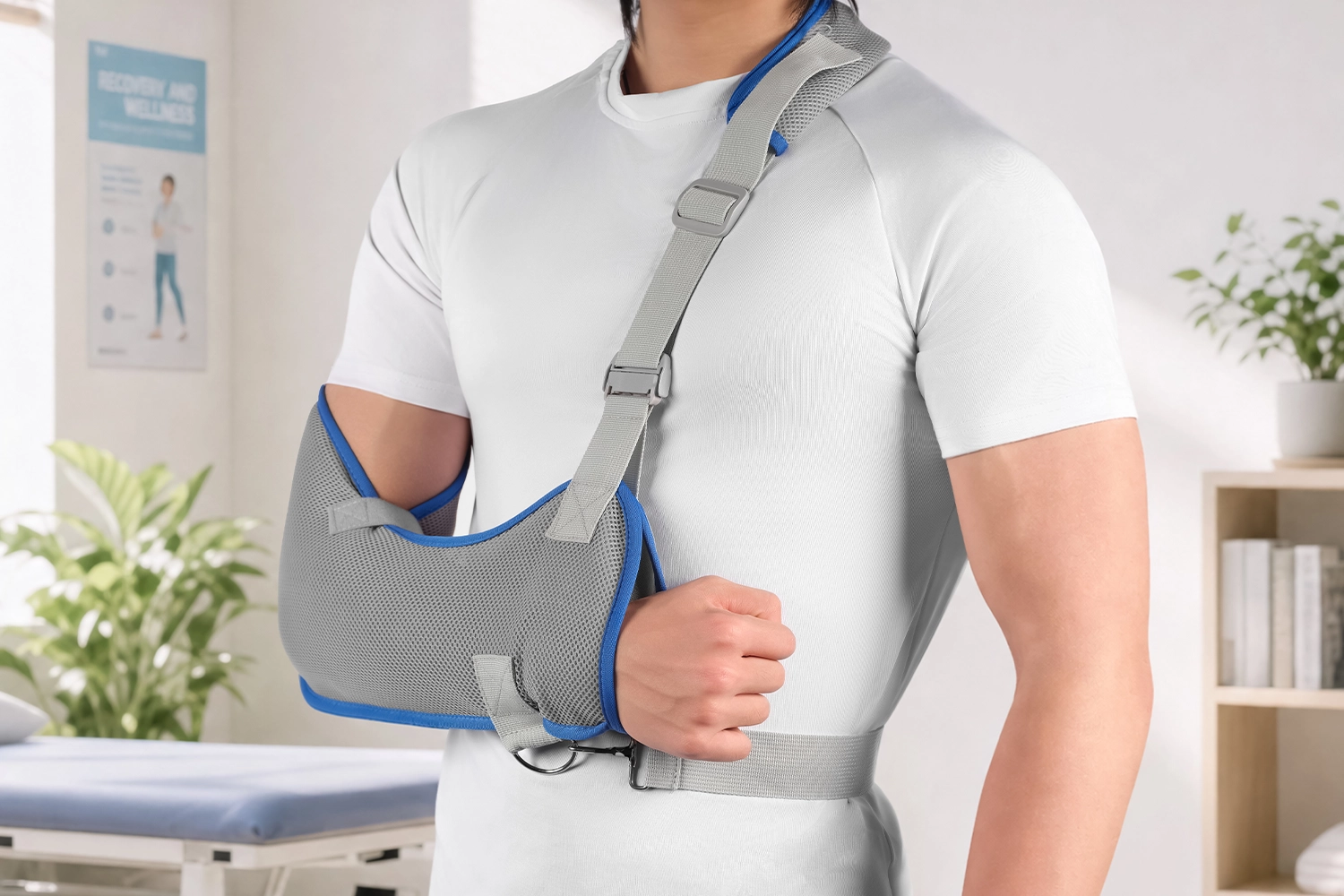
You’ve just gotten a brace strapped to your arm, and now you’re staring at your bed wondering if you’re supposed to sleep in the thing. It’s a fair question, and the answer isn’t a simple “yes” or “no.”
You can wear an elbow brace to bed, but only sometimes. It all depends on why you’re wearing it. A compression sleeve for tennis elbow and a rigid post-surgery immobilizer do different jobs, and treating them the same way could slow your recovery or, worse, cut off circulation while you sleep.
Below, we’ll break down when nighttime wear helps and when it hurts, so you can protect that elbow without waking up to numb fingers or a worse ache than when you went to bed.
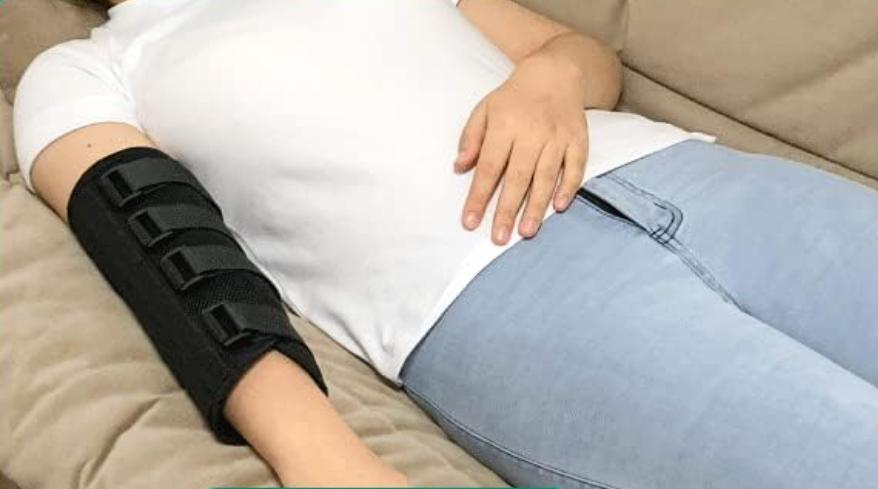
Can You Wear an Elbow Brace to Bed? The Direct Answer and Why
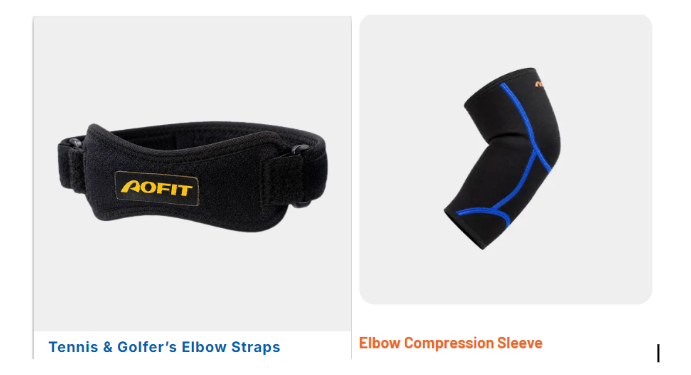
Night splints and immobilizers are built for sleep; compression sleeves, neoprene wraps and tennis elbow straps, by contrast, are lighter and more flexible. They’re great for daytime activity but less useful for controlling motion overnight.
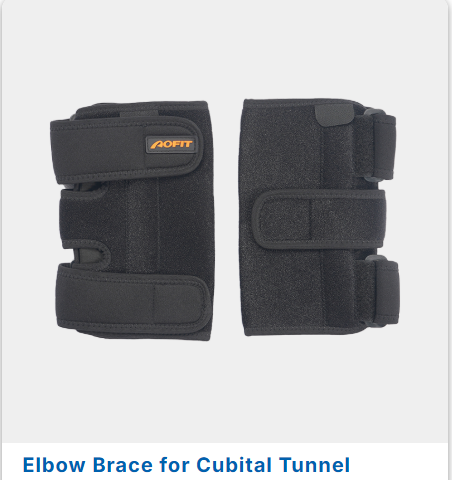
Elbow Brace for Cubital Tunnel Syndrome at Night
Your ulnar nerve doesn’t care what time it is—it reacts to angle, not the clock. That’s why cubital tunnel syndrome needs its own discussion here.
Research measured nerve pressure inside the cubital tunnel and found something specific: pressure on the ulnar nerve hits its lowest point at around 40°–50° of elbow flexion. Bend past that, especially into the deep flexion you fall into during sleep, and pressure spikes. A night elbow splint is designed to stop that from happening.
A rigid or semi-rigid night splint holds your elbow in a neutral position, usually somewhere around 30–45° of flexion, though some models lock you into full extension. The whole point is to stop your arm from bending too far while you’re unconscious and can’t correct it yourself.
This matters most if you’re dealing with cubital tunnel syndrome with the night splint. Ulnar nerve irritation flares up when the elbow folds tightly during sleep, and that’s exactly what a night brace prevents. Some adjustable models even offer a “night mode” setting around 150°–180°, giving you a wider, gentler angle than daytime use.
The angle that works
Clinical protocols point to one number: 45°. One study locked patients into a rigid night brace at 45° flexion for 3 months straight, and 21 out of 24 elbows—88%—showed successful treatment. An older but longer study capped flexion at no more than 60° and had patients wear the splint nightly for at least 6 months. Every single patient improved. Sixteen out of seventeen who got follow-up EMG testing showed measurable nerve improvement too.
A broader review of five studies found an average success rate of 89% (with a confidence range of 69%–99%), across an average treatment window of 18.7 months. For mild-to-moderate cases, success rates combining nighttime bracing with activity education sit around 76%–88%.
What improves—and what doesn’t
Pain and tingling (paresthesia) respond well to consistent night bracing. Muscle wasting doesn’t reverse as easily once it’s set in, so earlier intervention matters more than later.
What to look for in a brace
- Target angle: 40°–50°, ideally close to 45°
- Structure: rigid or semi-rigid support with an adjustable hinge—soft compression sleeves won’t hold the angle
- Fit: stable enough to survive a full night of unconscious movement without creeping into deep flexion
Track your progress by watching for fewer nighttime wake-ups, less morning numbness, and improved grip strength over the following weeks.
Tennis Elbow & Golfer’s Elbow: Should You Sleep in the Brace
Tennis elbow and golfer’s elbow don’t need the same nighttime strategy as cubital tunnel syndrome. There’s no rigid locking angle to hit. The goal is to stop your elbow from folding too far and your hand from clenching into a fist while you sleep.
When nighttime bracing actually helps
- Pain wakes you up when you roll over, or your elbow feels stiffer in the morning than it did the night before
- You catch yourself sleeping with a clenched fist or a bent wrist, both of which load the tendon at the elbow
- Symptoms are mild during the day but flare up specifically at night
If none of that describes you, say your pain shows up during activity but disappears once you’re horizontal, you probably don’t need overnight support at all. A pillow under your arm might do the job.
Daytime brace vs. nighttime brace
Daytime symptoms usually call for a counter-force forearm strap, worn a few centimeters below the elbow joint. It redistributes tendon strain during gripping and lifting. Nighttime symptoms call for something softer: a light splint or sleeve that keeps the elbow near-neutral without locking it down hard.
Fit check: you should be able to slide one finger under the strap. Numbness, tingling, or cold fingers means it’s too tight—loosen it immediately.
Sleep positioning that helps
- On your back: prop the affected arm on a pillow, elbow slightly bent, not jammed straight or folded tight
- On your side: sleep on the pain-free side, with a pillow between your arms so the sore elbow isn’t bearing your body weight
A simple pre-bed routine
- Warm compress or warm water rinse on the forearm to loosen tightness
- Pillow support under the arm if sleeping on your back
- Soft night splint only if you tend to clench or bend the elbow deeply in your sleep
- Skip the tight forearm strap at night. Snug support only.
If numbness or skin indentation shows up at any point, that’s your signal to loosen the brace or switch to something softer.
Post-Surgery or Post-Injury Immobilization Guidelines
Surgeons don’t leave this one up to guesswork. If you’ve just had elbow surgery—whether it’s ulnar nerve transposition, olecranon fracture repair, or tendon reconstruction—nighttime bracing usually isn’t optional. It’s written into your recovery protocol.
The logic is simple: you can’t consciously protect healing tissue while you’re asleep. A stray roll onto your arm, an unconscious bend past your safe range, and you risk undoing weeks of surgical repair. That’s why post-op elbow immobilizers work differently than the compression sleeves and night splints covered above.
Typical night-wear timelines look like this:
- 7–10 days for some tendon repairs, where early motion isn’t the priority yet
- Around 4 weeks for fracture fixation and certain ligament procedures
- 4–6 weeks, often extending until you hit a specific range-of-motion milestone your surgeon sets
What makes post-surgical bracing different
Post-op elbow immobilizers are often hinged and locked at a fixed angle, sometimes near full extension, to keep the joint from moving at all during early healing. Regular daytime braces flex with you. Surgical ones don’t, by design.
Most elbow brace manufacturers allow brief removal for controlled exercises, but only while seated or lying down, and only if your surgeon has cleared it. Standing or walking? The brace stays locked and on.
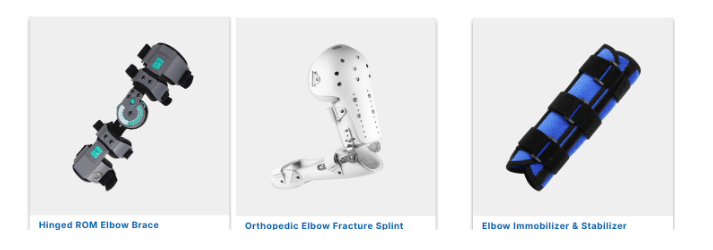
Rules that matter here:
- Follow your surgeon’s or physical therapist’s exact timeline. Don’t wing it based on how you feel.
- Keep the locked angle locked. Adjusting it yourself can compromise the repair.
- Watch for numbness, cold fingers, or skin indentation. These signs, common with any overly tight brace, still apply post-surgery and warrant a call to your provider.
- Weaning off night wear typically starts once you’ve hit a sustained extension goal or your surgeon signs off, not on a fixed calendar date.
This phase isn’t the time for improvisation. It’s the one situation where “just sleep without it for a night” can genuinely set back your recovery.
When You Should NOT Sleep in an Elbow Brace
Some nights, the smartest move is taking the brace off. Ignoring warning signs here doesn’t just delay healing — it can cause real elbow brace side effects, from nerve damage to skin breakdown.
Stop wearing the brace if you notice:
- Numbness or tingling in your ring and pinky fingers — classic ulnar nerve compression
- Blue, pale, or very cold fingertips — a direct sign of elbow brace circulation problems
- Rapid swelling, redness, or warmth around the elbow or hand
- Sharp pain that wakes you up or worsens overnight
- Dropped objects or weak grip — your fingers aren’t responding the way they should
- Redness lasting more than 20 minutes after you remove the brace means it’s too tight. Refit it before the next use.
Daytime compression sleeves cause the most problems at night. They’re built for activity, not for eight hours of unconscious pressure. If a brace locks your elbow into an uncomfortable fixed angle, it can increase nerve compression instead of relieving it. Waking up with more numbness than you had at bedtime is your body telling you something’s wrong.
Sleep positions that sabotage even a well-fitted brace:
- Arm tucked under your head or pillow
- Lying directly on the affected side
- Fetal position with the elbow bent tight
- Stomach sleeping with your arm forced overhead
Your safest benchmark is keeping the elbow close to straight, somewhere between 30–45°. Back sleeping with a pillow supporting the arm gives you the most neutral, nerve-friendly position available.
How to Wear an Elbow Brace While Sleeping
Fit makes or breaks a night brace. The same splint that protects your elbow at 45° can pinch a nerve at 2 a.m. if it’s cinched too tight, so getting the fit right matters more than the brace itself.
The snug-not-tight standard
- Aim to slide one finger under the strap. A looser two-finger test works if you want extra margin.
- If you can’t get a finger under it at all, or if numbness, tingling, or throbbing shows up after strapping in, it’s too tight.
- The support should sit right at the elbow joint, not slide up onto the upper arm or down onto the forearm where it can pinch instead of stabilize.
- Any nighttime or morning numbness, discoloration, coldness, or swelling means loosen immediately or skip the brace that night.
Sleeping position with an arm brace
Back sleeping wins here. Lay your arm at your side with a thin pillow or rolled towel underneath, keeping your elbow near-straight or with a slight bend. If you’re a side sleeper, don’t trap the braced arm underneath your body. Hug a body pillow instead, keeping the arm in front of you rather than pinned beneath your weight.
Skip the fetal curl, and don’t tuck your arm under a pillow or your head. These positions push the elbow into deep flexion, the exact angle that spikes ulnar nerve pressure.
A quick pre-sleep checklist
- Confirm the fit with the one-finger test before bed.
- Check finger color, temperature, and sensation once you’re lying down.
- Adjust within 10–15 minutes if anything feels off.
- Prop the arm with a pillow if you’re on your back.
- Check again in the morning for pressure marks or lingering numbness. If they’re there, loosen the strap or switch to a softer brace next time.
Conclusion
Whether you can wear an elbow brace to bed depends on your diagnosis, your doctor’s guidance, and how your arm feels when you wake up. A night elbow splint might be non-negotiable for cubital tunnel syndrome or post-surgical recovery. For tennis elbow, a lighter elbow support while sleeping (or none at all) may serve you better.
Fit, function, and feedback matter most. If your brace is cutting off circulation, causing numbness, or leaving pressure marks, that’s your body telling you something’s wrong—don’t ignore it.
Looking for a custom elbow brace solution for your patients while sleeping? Reach out AOFIT, your reliable orthopedic brace manufacturer, now.