That elbow sleeve you bought because the label promised “medical-grade compression”? It might be doing far less than the marketing suggests—or exactly what you need, depending on what’s actually stitched into the fabric. Most buyers pick an elbow sleeve based on price or brand recognition, not on understanding what nylon, spandex, or neoprene actually do to your joint. We’re breaking down elbow sleeve materials—what they deliver, where the science holds up (and where it doesn’t), and how fabric choices should match your specific pain, activity level, and skin sensitivity. No guesswork, no hype—just the material facts that determine whether your next sleeve actually works.
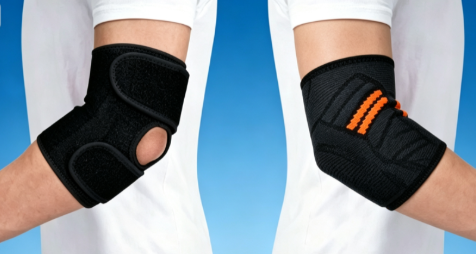
Nylon-Spandex Elbow Sleeves: Material Properties and Function Explained
Brands pair nylon with spandex in ratios like 85/15, 86/14, 87/13, or 70/15/15, and each combination changes how the sleeve behaves on your arm.
Why the Nylon-to-Spandex Ratio Matters
Higher nylon content means more durability and a smoother, slip-on feel, ideal for daily wear under clothing. Copper Fit Pro Series and Copper Fit Freedom both use 85% nylon/15% spandex, targeting light-to-moderate support you can wear all day. Tommie Copper bumps that to 86/14 with “4D stretch” for better range of motion. McDavid’s product line shows both 87/13 and a more elastic 62/38 version, proving that even within one brand, nylon ratios shift based on intended compression level.
When spandex content climbs, like Recoverite’s 68/32 blend rated at 20–30 mmHg, you get a stronger, more medically-oriented compression fabric suited for tennis elbow or arthritis recovery. NeoAlly adds 5% polyester to its 60/35 blend specifically to boost moisture-wicking performance.
How Spandex Ratio Changes Compression
The percentage of spandex in your compression elbow sleeve fabric controls the support level:
- Under 5% — comfort stretch only, no real compression
- 8%–10% — improved fit, light everyday support
- 12%–15% — moderate compression, suitable for tennis elbow or baseline joint support
- 15%–20% — true compression territory, tighter fit, less breathability
Fabric weight matters too—most compression sleeves fall between 180–300 GSM, with heavier weights delivering firmer support. Nylon-spandex blends consistently outperform cotton-spandex combinations for sustained pressure and rebound.
Neoprene Elbow Sleeves: High-Compression Support Meets Heat Retention
Five millimeters of neoprene changes everything about how an elbow sleeve performs. It’s the industry-standard thickness for heavy training gear, giving you maximum compression and warmth at the cost of breathability.
Why Lifters Reach for Neoprene
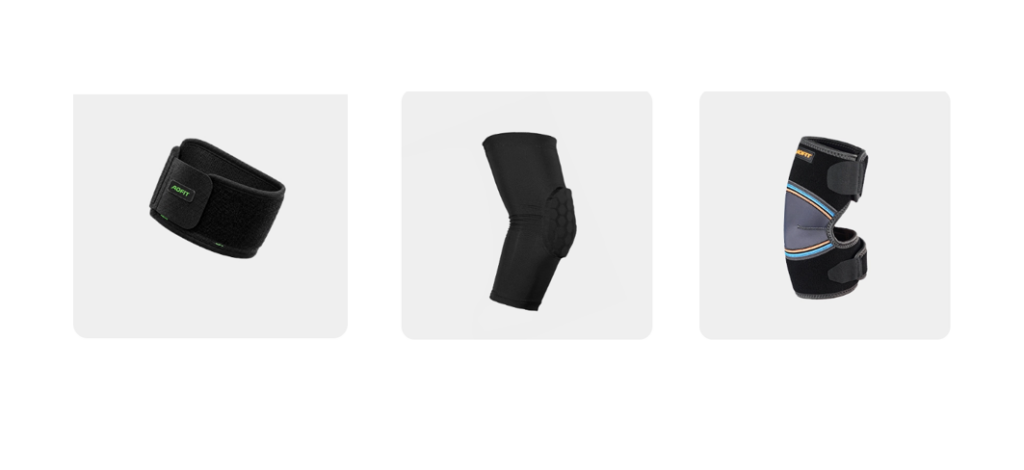
Product listings describe 5mm neoprene elbow sleeves as delivering “level 1 compression” or support “through the full range of motion.” Neoprene’s density provides the joint stability powerlifters need during bench press, shoulder press, bicep curls, and tricep extensions. The “contoured fit” and “superior stability” language on these listings reflects real mechanical support under heavy load.
The Heat Retention Factor
Neoprene’s second job is trapping body heat around the joint. Elbow brace manufacturers think it reduces stiff muscles and joints and increases blood flow. The physics backs that up. Retained warmth keeps connective tissue more pliable during cold-environment training or long sets of heavy pressing, which matters if your elbows tend to stiffen up between sets.
Where Neoprene Falls Short
Breathability is the trade-off. Pure neoprene traps heat and moisture, so brands add perforated neoprene or spandex mesh at the elbow crease to work around that limitation. Compare this to a neoprene-polyester-lycra-Kevlar blend marketed for excellent breathability and moisture-wicking. That combination patches neoprene’s biggest weakness.
Material Comparison of Neoprene vs. Fabric-Blend : Breathability, Compression, Durability, and Antibacterial Properties
Four factors decide whether an elbow sleeve helps or hurts your recovery: breathability, compression, durability, and odor control. Here’s how the three main elbow sleeve materials stack up against each other.
Scorecard: Nylon-Spandex vs. Neoprene
| Material | Breathability | Compression | Durability | Odor Control |
| Nylon-Spandex | 4/5 | 3.5/5 | 4/5 | 2.5/5 |
| Neoprene | 2/5 | 5/5 | 4.5/5 | 1.5/5 |
Nylon-spandex wins on airflow. Blends like 86% polyester/14% spandex or 41% nylon/27% cotton/26% polyester/6% spandex prioritize lightweight, moisture-wicking fabric over compression strength. That’s why nylon-spandex dominates all-day wear. Bauerfeind’s AirKnit, for example, is designed for heat control during summer training or long office hours.
Neoprene sacrifices breathability for compression. A 2/5 breathability score confirms what most lifters already know—neoprene holds onto sweat, which makes it a poor choice for hot environments or extended daily wear.
Price Ranges by Material
- Basic nylon-spandex compression sleeves: $10–$25
- Neoprene sleeves with reinforced straps: $15–$40
Choosing the Best Material for Your Needs: Tennis Elbow, Arthritis, and Gym Training
Pick fabric based on your specific condition and activity level—not the flashiest label on the packaging.
Tennis Elbow Recovery
Go with neoprene plus an adjustable compression strap. Mueller’s tennis elbow support uses neoprene 81% / nylon 10% / elastic 5% / POM 4% and is built for a 7–14 inch (17–35 cm) elbow circumference. It’s designed for tennis, golf, bowling, and gardening—anything demanding repetitive grip strength. Neoprene’s warmth soothes tendon stiffness during recovery, and the counterforce strap lets you adjust compression as pain levels shift. That adjustability matters more than raw compression strength during active recovery.
Arthritis with Sensitive Skin
Skip copper-infused sleeves if your skin reacts easily. Copper compression benefits center on odor control and antibacterial action, but manufacturer warnings flag swelling or allergic response as reasons to stop use. Soft blends like polyamide, polyester, elastic knits, or cotton-lined neoprene reduce friction and work better for all-day wear. Save copper for arthritis sufferers without skin sensitivity who specifically want odor management.
Gym and Weight Training
Neoprene outperforms standard fabric blends when it comes to weightlifting. Rehband’s 3mm elbow sleeve uses 70% SBR foam / 30% neoprene with polyamide layers. It gives you firm support and joint warmth but less breathability. That combination handles bench press, shoulder press, and pulling movements where stability matters more than airflow.
Cubital Tunnel Syndrome
- Best elbow brace for cubital tunnel: Breathable cotton-canvas or soft foam wraps with embedded plastic/aluminum stays (for night); flexible breathable knit (for day).
- Why: It needs to physically block excessive elbow bending (flexion) to keep the ulnar nerve from stretching or compressing, especially during sleep.
After Surgery
- Best Material: Rigid thermoplastic shells paired with adjustable metal hinges and soft hypoallergenic cotton padding.
- Why: Post-surgical recovery requires strict, measurable range-of-motion (ROM) control and absolute structural stability to protect healing grafts or bone
Quick Selection Rule
- All-day wear, breathability priority → nylon-spandex
- Short-duration, maximum support priority → neoprene
- Training for bench-heavy sessions or need warmth to prevent joint stiffness→ neoprene
Buying Guide: How to Spot the Real Performance Behind Material Labels
On any elbow sleeve fabric label, only three things matter: fiber percentage, verifiable claims, and size-to-compression match. Skip everything else.
Read the Fiber Breakdown, Not the Buzzwords
Labeling rules typically require fiber content to be listed by weight, in descending order. Anything under 5% often gets lumped into “other fibers,” so “copper-infused” printed in bold letters means nothing without a number attached. A label reading “Nylon 78% / Spandex 22%” tells you exactly what’s driving performance. “Copper fiber” with no percentage tells you almost nothing. U.S. textile labeling standards also allow a 3% tolerance, so minor variance between stated and actual content is normal.
Verify Antibacterial Claims With Real Standards
Copper compression has real benefits, but marketing loves the word “antibacterial.” Ask whether the copper is woven into the yarn or just surface-coated. Coatings wear off faster with washing. Look for testing against AATCC 147 (qualitative) or AATCC 100 (quantitative). No standard number means it’s just a slogan.
“Medical-Grade” Needs a Definition
Ask whether it means the material is medically approved or simply “used in medical settings.” Those aren’t the same claim.
Compression Sizing Checklist
- Measure elbow circumference, not shirt size
- Check ankle/calf-style graduated pressure charts if available
- Demand wash-retention data, not first-use results only
Conclusion
Not all elbow sleeve materials are created equal, and choosing blindly can leave you undersupported or overheated. Nylon-spandex blends deliver the sweet spot of breathability and elastic compression for daily wear and tennis elbow relief. Neoprene brings the heat, ideal for arthritis stiffness and cold-weather workouts. The science behind copper’s antimicrobial claims is thinner than the marketing suggests, though the fabric itself still compresses effectively.
Match the material to your condition, not the hype on the packaging.
AOFIT, as your reliable medical brace manufacturer, offers you custom elbow braces with wide material options. If you’re a clinic center managing chronic pain, prioritize moisture-wicking, medical-grade compression over trendy infusions. If you’re a sports brand, durability and flexibility matter more than buzzwords.