Designing a cervical collar for kids requires completely different engineering, anatomical, and physiological considerations than designing one for an adult. Because children have unique body proportions, developing bones, and sensitive skin, pediatric collars must balance rigid immobilization with exceptional safety and comfort.
This guide pulls directly from AOFIT, a neck brace manufacturer specs and clinical guidance, so you’re not guessing about the best Custom Cervical Collar For Kids. Whether you’re a distributor scaling up inventory or an e-commerce seller launching a private label line, you’ll know which product deserves your trust and your budget.
The primary design considerations for a Custom Cervical Collar For Kids
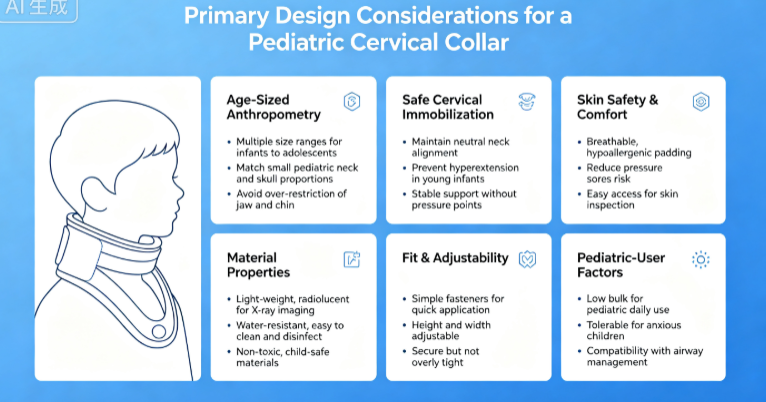
When designing a pediatric cervical collar, the primary consideration is that children are not just smaller adults; they possess distinct anatomy, thinner skin, and different developmental needs. A successful design must balance rigid immobilization with the unique physical and psychological needs of a growing child.
Pediatric Anatomy & Proportions
- The “Large Head” Offset: Children under the age of 8 have a disproportionately large occiput (the back of the head) relative to their torso. When a child lies flat on their back, a standard flat collar design forces the neck into forward flexion (bending downward), which can compromise the airway. Designers must build collars with a lower profile at the back of the neck or ensure compatibility with thoracic padding to keep the airway in a neutral alignment.
- Short, Developing Necks: Children have shorter necks and weaker musculature. The vertical height of the collar must be precisely adjustable or available in granular pediatric sizing to ensure the chin rests securely on the support without forcing the head upward or letting it slip inside.
Airway Management & Access
- Tracheostomy/Anterior Opening: A wide, clear anterior window is a vital safety requirement. It ensures that healthcare professionals can quickly access the trachea for emergency procedures, easily check the pulse (carotid artery), and monitor the child’s breathing patterns.
- No Swallowing Obstruction: The chin piece must offer structural support without putting backward pressure on the mandible (jawbone line) or chin, which can cause severe discomfort and make eating or swallowing dangerous.
Skin Integrity & Microclimate Management
- Pressure Injury Prevention: Children have highly vulnerable, delicate skin. Research shows that cervical collar design heavily influences “interface pressure,” especially at the occiput and chin. Tight straps and poor padding cause the rapid release of inflammatory markers on the skin, causing skin breakdown.
- Moisture and Humidity Control: Many rigid collars use closed-cell foam materials, which create a high-humidity microclimate trapped against the skin. To prevent painful rashes and skin maceration, the collar should incorporate breathable, open-cell, or open-weave removable and washable pads.
- Complete Plastic Coverage: No rigid structural plastic components should ever come into direct contact with the child’s skin. The inner padding must completely wrap around the outer plastic rim.
Sizing Precision & Mechanism Safety
- Fixed vs. Adjustable Sizing:
- Adjustable mechanisms (pins or dials) allow one unit to scale to different ages but must feature robust locking mechanisms so the child cannot accidentally change the size while playing.
- Fixed pediatric sizes offer a more contoured, precise fit at extreme growth spectrums but require medical centers to maintain multiple units in stock.
- Secure, Contoured Fasteners: Hook-and-loop (Velcro) straps must be engineered to withstand movement and transport without slipping, while remaining easy for parents or caretakers to realign accurately.
Diagnostics & Behavioral Compliance
- Radiolucency: The collar materials (such as advanced polymers instead of metal rivets) must be completely radiolucency-compliant. This allows doctors to take X-rays or CT scans without removing the collar and risking secondary spinal injuries.
- Pediatric Aesthetics & Comfort: Unlike adults, children will aggressively resist devices that cause them discomfort. A bulky or painful design triggers crying or struggling, which actually increases cervical motion. The collar must look non-threatening and feel comfortable enough to promote behavioral compliance.
How AOFIT, Your Manufacturer, Build High-quality Pediatric Cervical Collars
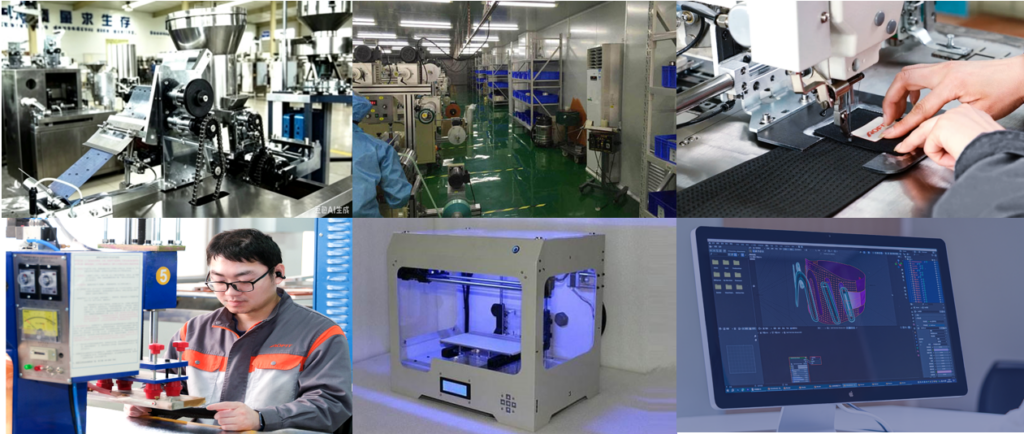
To achieve these precise pediatric design goals, AOFIT combines advanced biocompatible materials, specialized manufacturing processes, and rigorous prototyping. The manufacturing strategy to bring these design considerations to life includes:
Material Selection (Comfort, Strength, & Radiolucency)
- Structural Shell: Use High-Density Polyethylene (HDPE) or Polypropylene (PP). These polymers are lightweight, structurally rigid enough to immobilize the spine, and completely radiolucent (invisible on X-rays and CT scans). They can also be easily injection-molded into smooth, contoured shapes with no sharp edges.
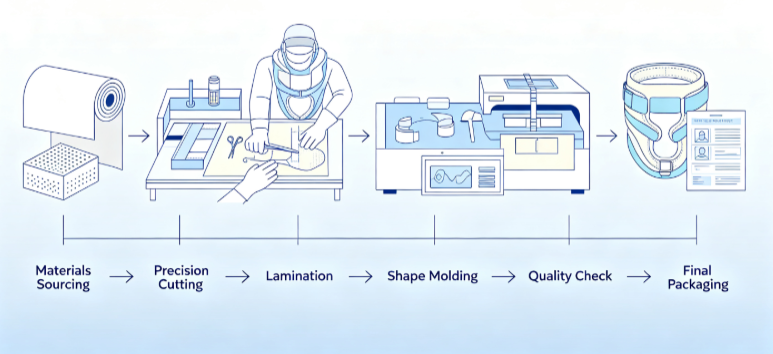
- Skin-Contact Padding: Avoid cheap, non-breathable EVA foams. Instead, utilize open-cell polyurethane foam or 3D spacer fabrics laminated with moisture-wicking fabrics (like CoolMax or bamboo-derived textiles). This allows heat and humidity to escape, drastically reducing the microclimate moisture that causes skin breakdown.
- Biocompatibility: Ensure all skin-contact materials are certified ISO 10993 compliant (free from cytotoxic, irritating, or allergenic chemicals) to protect delicate pediatric skin.
Manufacturing Processes & Tooling
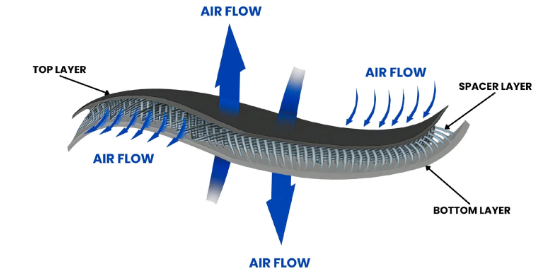
- Plastic Injection Molding: The outer rigid shell should be injection-molded. To accommodate multiple pediatric sizes efficiently, manufacturers use family molds or interchangeable mold inserts. This allows a single machine setup to produce small, medium, and large pediatric components, reducing tooling costs.
- Overmolding (Soft-Edge Technology): To prevent rigid plastic from digging into a child’s neck, manufacturers use multi-shot injection molding to bond a soft elastomer (like Thermoplastic Polyurethane or TPU) directly onto the hard plastic edges. This ensures a seamless, permanent soft border that cannot peel off.
- Die-Cutting and RF Welding: Foam pads are cleanly die-cut and their edges are Radio-Frequency (RF) welded or ultrasonically sealed rather than stitched. Stitched seams create rough friction points, whereas RF welding creates perfectly flat, ultra-smooth edges that won’t irritate the skin.
Engineering for Adjustable Sizing & Safety
- Two-Piece or Sizing Pin Mechanism: To create adjustable heights, manufacture a two-piece sliding shell. Secure the desired height using a push-and-lock safety pin mechanism. The pin should require a dual-action motion (e.g., press and slide) or a specialized tool so a child cannot accidentally unlock it.
- Age-based sizing: It’s marketed for kids 12 and under, with size bands at 0–6 months, 6–24 months, 2–6 years, and 6–12 years. Fit still needs a clinician’s eyes on it, but age gets you in the right zone fast.
Prototyping, Testing, and Compliance
- Anatomical Fit Testing: Cervical collar manufacturers use 3D pediatric anthropometric data (standardized child body measurements) to create digital CAD models. They then 3D-print prototypes to test the fit on pediatric medical manikins and check for airway clearance.
- Interface Pressure Mapping: Place electronic pressure sensors inside the collar prototype during testing. The engineering goal is to keep pressure on the chin and occupy below 32 mmHg (the capillary closing pressure). Keeping it below this threshold prevents skin ischemia and pressure ulcers.
- Regulatory Compliance: Build a technical file to meet FDA Class I/II medical device regulations or CE marking (MDR) requirements, ensuring traceable quality control during mass production.
Custom branding info
- Pediatric Cervical Collar Sizing and Fitting Guide
- How To Put On A Pediatric Cervical Collar (Step-By-Step)
- How Long Is A Child Supposed To Wear The Collar
- Cleaning & Care Instructions
Conclusion
Are you looking to manufacture a rigid collar for emergency trauma or a soft/semi-rigid collar for long-term therapy? Contact AOFIT now and let me know if you would like to explore specific manufacturing cost considerations or material suppliers for this project.