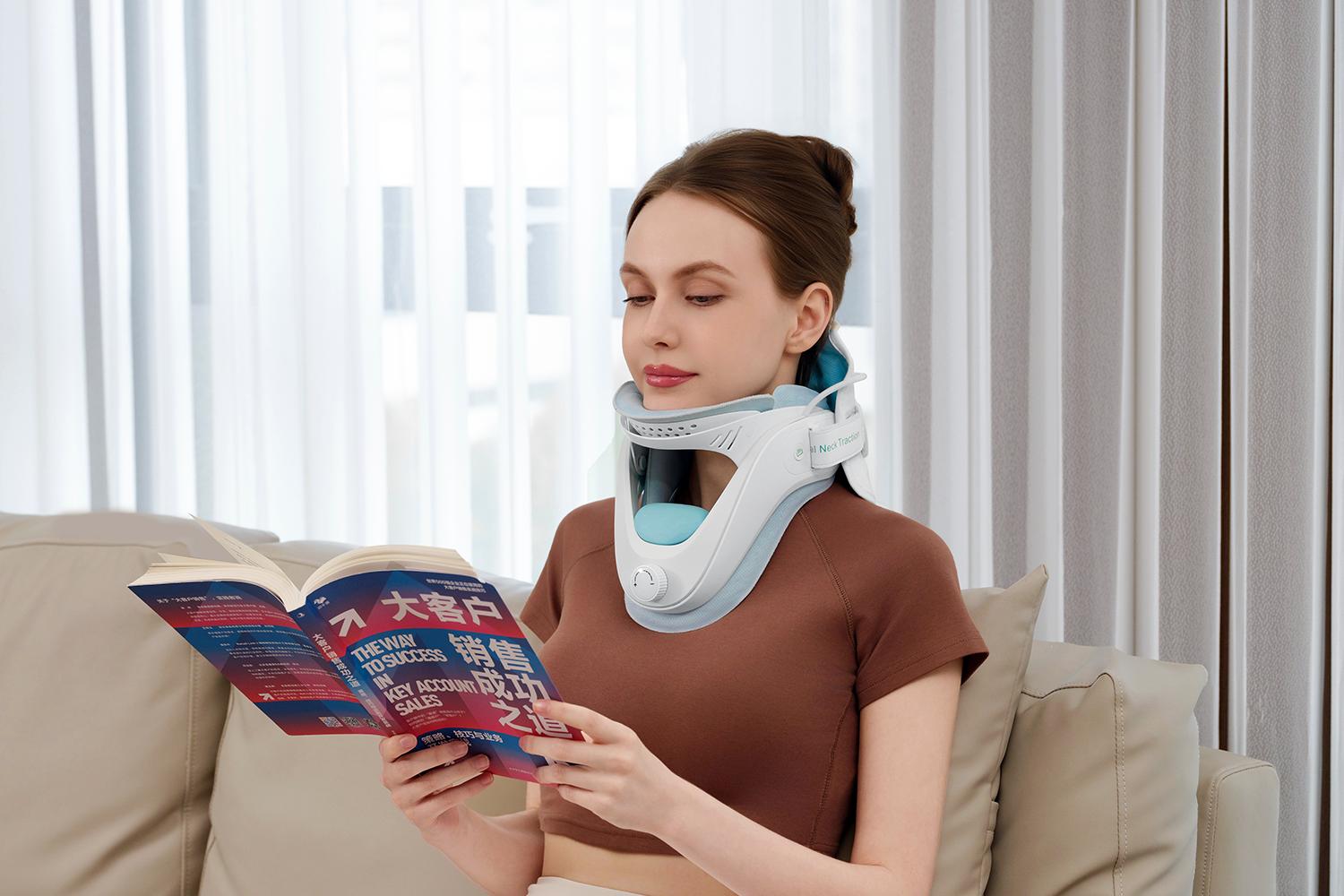
With their similar appearance, different cervical collars can have very different mechanical functions. The right design depends on the patient’s condition, the required level of support, the intended duration of use, and the individual’s anatomy.
This ultimate guide explains everything you need to know about cervical collars—from their basic function and different designs to clinical applications, fitting, daily use, and manufacturing considerations.
What Is a Cervical Collar?
A cervical collar is an external support device worn around the neck to help control cervical movement and provide support to the head and neck.
The cervical spine consists of seven vertebrae that connect the skull to the upper part of the spine. It provides both stability and mobility, allowing the head to move forward, backward, from side to side, and through rotation.
When the cervical spine is injured, recovering from surgery, or otherwise requires additional support, uncontrolled movement may place additional stress on healing or vulnerable structures.
A cervical collar creates a controlled external interface between the patient’s head, neck, and upper torso. Depending on the design, it may use the chin, occipital region, chest, shoulders, and other anatomical areas as support points.
The purpose is not simply to make the neck feel secure. A properly selected cervical collar is designed to provide a specific level of mechanical support appropriate to the intended application.
How Does a Cervical Collar Work?
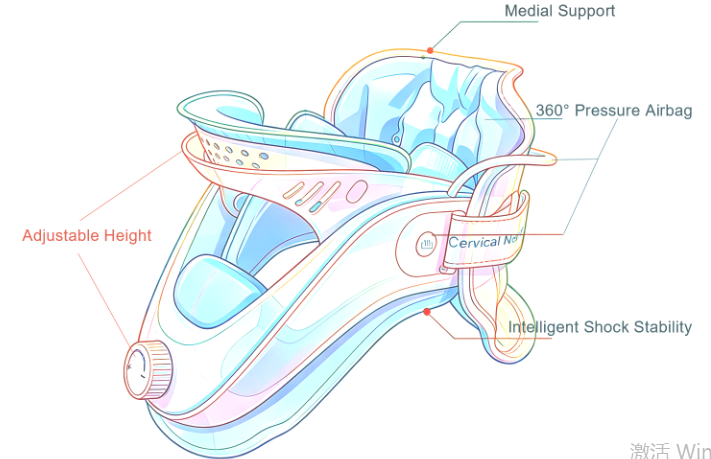
The function of a cervical collar can be understood through three fundamental mechanical principles.
Motion Control
The cervical spine normally allows several types of movement:
- Flexion
- Extension
- Rotation
- Lateral bending
A cervical collar creates physical boundaries that reduce unwanted movement.
The amount of movement controlled depends on the construction of the device. Flexible collars provide relatively limited restriction, while rigid designs use structural components and multiple anatomical contact points to provide greater control.
This difference in mechanical behavior is the main reason cervical collars are available in multiple designs.
Load Distribution
The head creates a continuous load on the cervical spine and surrounding muscles.
A properly designed collar can transfer part of that load through its supporting structures, such as the chin and upper torso, depending on the design.
This can reduce the amount of muscular effort required to maintain head position and may provide temporary support or comfort in appropriate clinical situations.
Positional Support
Certain cervical conditions require the neck to remain within a controlled range of motion.
Rigid cervical orthoses are designed to help maintain the head and cervical spine in the prescribed position by limiting excessive movement.
However, even a rigid cervical collar should not be considered a device that produces absolute zero-motion immobilization.
Types of Cervical Collars
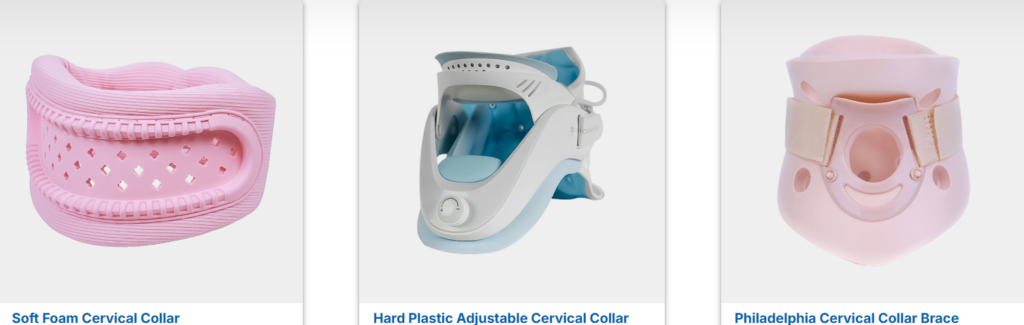
Cervical collars are broadly classified according to the level of support and structural rigidity they provide. The two most common categories are soft cervical collars and rigid cervical collars.
Soft Cervical Collar
Soft cervical collars are generally made from flexible foam covered with fabric or another soft material.
They are lightweight and conform relatively easily around the neck. Their primary function is gentle support and limited movement restriction rather than rigid stabilization.
A soft cervical collar may be considered for:
- Mild neck discomfort
- Muscle strain or spasm
- Certain short-term whiplash symptoms
- Temporary cervical support
Because the structure is flexible, a soft collar allows substantially more movement than a rigid cervical orthosis.
Rigid Cervical Collar
Rigid cervical collars use a structured frame made from firm materials, commonly molded polymer components combined with cushioning and fastening systems.
Many designs consist of front and rear sections. The front section generally provides chin and upper-chest support, while the rear section supports the back of the head and neck.
Rigid collars are designed for significantly greater control of cervical movement and may be prescribed for:
- Certain cervical fractures
- Cervical instability
- Some cervical dislocations
- Postoperative stabilization
- Other conditions requiring substantial motion restriction
The exact design and level of rigidity vary between products and clinical applications.
Soft vs. Rigid Cervical Collar: Key Differences
Soft and rigid cervical collars should not be viewed as interchangeable versions of the same product.
| Feature | Soft Cervical Collar | Rigid Cervical Collar |
| Main function | Gentle support and movement reminder | Greater motion restriction and stabilization |
| Structure | Flexible foam or textile-based construction | Rigid structural components with padding |
| Movement control | Limited | Moderate to substantial, depending on design |
| Typical applications | Mild symptoms and temporary support | Injury, instability, and postoperative care |
| Comfort | Generally more flexible and comfortable | More restrictive |
| Fitting | Relatively simple | More precise fitting is important |
| Adjustability | Often limited | Frequently adjustable |
| Intended use | Usually short-term when clinically appropriate | Duration determined by the clinical condition |
The most rigid collar is not necessarily the best collar.
The objective is to match the mechanical performance of the device to the clinical requirement. Excessive restriction can create unnecessary discomfort, while insufficient support may not provide the control required for a particular injury.
When Is a Cervical Collar Used?
A cervical collar may be used in several different clinical situations. The indication determines the required level of support.
Cervical Spine Trauma
Following an accident, fall, or other significant trauma, a cervical collar may be used when a cervical spine injury is suspected.
In emergency care, a collar is normally part of a broader stabilization and assessment process rather than a standalone treatment.
Healthcare professionals may combine cervical support with manual stabilization, positioning, imaging, and other measures according to the patient’s condition.
Cervical Fractures and Instability
Some cervical fractures or unstable injuries require substantial restriction of neck movement while healing takes place.
A rigid cervical orthosis may be used to help maintain a controlled cervical position and reduce unwanted movement.
The appropriate treatment depends on factors such as the location and stability of the injury, imaging findings, treatment approach, and healing progress.
Postoperative Care
A cervical collar may be prescribed after certain cervical spine procedures.
Whether a collar is required depends on the surgical procedure, the structures involved, the surgeon’s protocol, and the patient’s recovery.
Some procedures require external support during a defined recovery period, while others do not.
Whiplash and Cervical Strain
Soft cervical collars may sometimes be used for short-term symptom management following whiplash or cervical strain.
However, prolonged immobilization is not generally the objective for uncomplicated soft-tissue injuries. Once serious structural injury has been excluded, an appropriate rehabilitation program may emphasize gradual return to normal movement.
A healthcare professional should determine whether cervical collar use is appropriate for an individual patient.

How to Choose the Right Cervical Collar
Choosing a cervical collar should begin with the intended clinical function, rather than the appearance or rigidity of the product.
1. Determine the Required Support Level
The first consideration is how much external support is needed.
A patient requiring temporary comfort may need a very different product from someone recovering from a cervical fracture or surgical procedure.
2. Consider Patient Anatomy
Cervical collars need to accommodate differences in:
- Neck height
- Neck circumference
- Chin shape
- Jaw position
- Shoulder height
- Head and neck proportions
A collar that fits one patient well may not fit another patient equally well.
3. Consider Size and Adjustability
Multiple sizes and adjustable components allow a product to accommodate a wider range of anatomical profiles.
Adjustability can also make clinical fitting easier and help maintain consistent positioning.
4. Consider Comfort and Wearability
For products intended for extended use, factors such as padding, ventilation, weight, material softness, and pressure distribution become increasingly important.
Comfort should not replace mechanical performance, but poor comfort can negatively affect patient compliance.
5. Match the Product to the Intended Application
The same cervical collar design may not be suitable for emergency stabilization, postoperative support, and mild neck discomfort.
The intended use should determine the product specification.
How to Fit a Cervical Collar Correctly
Correct fitting is essential to achieving the intended performance of a cervical collar.
When a cervical injury is suspected, the collar should be applied by appropriately trained medical personnel.
For a prescribed cervical collar, the general fitting principles are:
Step 1: Maintain the Prescribed Position
Keep the patient’s head and neck in the position recommended by the healthcare professional.
Do not intentionally tilt or extend the neck to make the collar easier to apply.
Step 2: Position the Rear Section
Place the rear section centrally behind the neck.
It should support the back of the head without riding excessively high or low.
Step 3: Position the Front Section
Guide the front portion beneath the chin.
The chin should rest within the intended support area rather than slipping underneath the collar.
Step 4: Secure the Straps Evenly
Fasten the straps on both sides so the collar remains centered.
Uneven strap tension can cause the device to rotate or shift.
Step 5: Confirm the Final Position
The collar should remain stable and the head should be maintained in the intended position.
It should feel secure without creating excessive pressure.
Step 6: Check Whether a Cervical Collar Fits Correctly
After fitting, the collar should be checked for both position and patient comfort.
Potential signs of an incorrect fit include:
- The chin slides down inside the collar
- The collar sits noticeably higher on one side
- The head is pushed forward or tilted
- The front edge presses against the throat
- The collar shifts excessively
- One strap is significantly tighter than the other
- Persistent pressure or skin irritation develops
- Breathing or swallowing becomes difficult
If these problems occur, the collar should be reassessed by a qualified healthcare professional.
Simply tightening the straps is not always the solution. An incorrectly sized or poorly contoured collar may require adjustment or replacement.
How Long Should You Wear a Cervical Collar?
There is no universal wearing schedule for every cervical collar.
The duration depends on:
- The reason for treatment
- The type of injury
- The stability of the cervical spine
- Whether surgery was performed
- Healing progress
- Clinical examination
- Follow-up imaging
A soft collar used for temporary symptom management may be worn for a much shorter period than a rigid collar prescribed following a significant cervical injury.
As recovery progresses, the healthcare provider may change the wearing schedule or transition the patient away from external support.
The safest approach is to follow the specific instructions provided for the condition being treated.
Do not remove a prescribed collar early or continue using it longer than recommended without medical guidance.
Living With a Cervical Collar
A cervical collar can affect everyday activities. Patients should adapt their routines according to their specific medical restrictions.
Sleeping
If continuous wear has been prescribed, this may include sleeping with a neck brace on.
A pillow that maintains a comfortable, neutral head position may be preferable to one that pushes the head significantly forward.
Before sleeping, check that the collar is centered, the chin is correctly supported, and the fastening system remains secure.
Bathing
Whether the collar can be removed during bathing depends on the device and the patient’s medical condition.
Some products are designed for limited removal, while others should remain in place.
Follow the instructions provided by the treating healthcare professional.
Driving
Driving with a rigid cervical collar is generally unsafe because restricted neck movement can interfere with checking surrounding traffic and responding to changing road conditions.
Patients should follow their healthcare provider’s restrictions and applicable driving requirements.
Daily Movement
Depending on the underlying condition, patients may need to avoid:
- Sudden head movements
- Heavy lifting
- Repeated neck rotation
- Excessive bending
- Prolonged downward-looking positions
- Activities involving significant physical impact
The specific restrictions should come from the treating clinician rather than from a generic collar-wearing guide.
Skin Care
Pressure areas should be checked regularly, particularly around the:
- Chin
- Jawline
- Clavicle
- Behind the ears
- Back of the skull
Persistent redness, swelling, blistering, tenderness, or broken skin should be reported.
Do not add extra padding without professional guidance because it can alter the fit and pressure distribution.
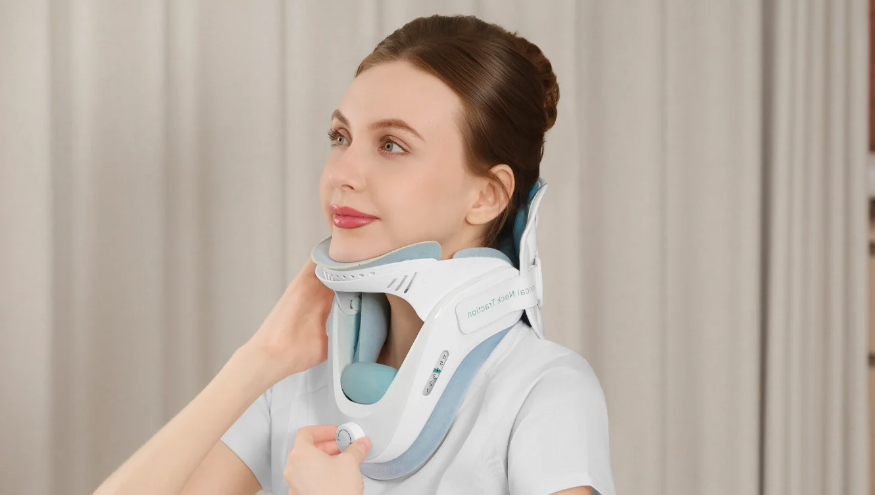
Benefits and Limitations of Cervical Collars
A cervical collar can provide important external support when used for an appropriate indication.
Potential Benefits
Depending on the clinical situation, a cervical collar may:
- Reduce unwanted cervical movement
- Help maintain a controlled position
- Reduce mechanical stress on vulnerable tissues
- Provide temporary support
- Assist postoperative stabilization
- Support cervical protection during emergency assessment
Limitations
A cervical collar does not eliminate all neck movement and does not independently repair an underlying injury.
Unnecessary or prolonged use may contribute to:
- Neck stiffness
- Reduced mobility
- Muscle weakness
- Skin irritation
- Pressure injury
- Discomfort
For this reason, cervical collar use should be integrated into an appropriate treatment and rehabilitation plan.
Cervical Collar Manufacturing and Customization
For medical device companies, distributors, hospitals, and healthcare brands, choosing a cervical collar involves more than selecting an off-the-shelf product.
Manufacturing capability can determine whether the device can meet specific requirements for anatomy, clinical use, market positioning, and production volume.
Structural & Material Customization
Along with material selection, the geometry of a cervical collar has a major influence on its performance. AOFIT offers you wide structural and material support.
| Design | Considerations | |
| Structural Design | Anatomical Contouring ensures stable contact and minimizes unnecessary soft-tissue pressure. | Must accommodate: chin, jaw, occipital region, neck, chest, and shoulders. |
| Pressure Distribution | Support must be spread across appropriate anatomical areas, not concentrated at isolated points. Especially critical for prolonged wear. | |
| Ventilation | Openings shall improve airflow and reduce heat buildup. Contributes significantly to comfort in long-term use. | |
| Weight | Every additional gram increases patient load. Design must achieve necessary mechanical performance with minimal material mass. | |
| Structural Stiffness | Frame must provide stiffness matched to clinical needs. Too little = poor motion control; too much (without anatomical design) = increased discomfort. Optimal design is a balance, not maximum rigidity. | |
| Material Choices | Structural Materials | Rigid collars commonly use molded thermoplastics (e.g., polyethylene, polypropylene, other medical-grade polymers). Selection affects rigidity, weight, durability, manufacturability, and tactile feel. |
| Padding Materials | Forms the patient–device interface. Key attributes: cushioning, compression resistance, moisture management, skin compatibility, durability, and pressure distribution. Foam materials are preferred for cushioning and low weight. | |
| Fastening System | Must provide: secure closure, consistent adjustment, easy clinical handling, reliable positioning, and repeatable fitting. Hook-and-loop fastening is commonly used for rapid, user-adaptable adjustment. |
Custom Sizing
Different patient populations may require different dimensions.
Neck Brace Manufacturers can develop multiple size ranges or customized dimensions based on:
- Neck height
- Neck circumference
- Chin position
- Shoulder geometry
- Target patient population
OEM and ODM Development
For brands seeking customized cervical collars, product development may involve:
- Product concept
- Engineering design
- Prototype development
- Sample evaluation
- Material selection
- Tooling or mold development
- Pilot production
- Quality verification
- Mass production
Cervical Collar: The Key Takeaway
A cervical collar is a medical orthotic device designed to provide controlled support and restrict unwanted movement of the cervical spine.
The two major categories—soft and rigid cervical collars—serve different purposes. Soft collars provide flexible, relatively gentle support, while rigid collars are engineered to provide substantially greater control when cervical stabilization is required.
A well-designed cervical collar should do more than restrict movement. It should provide the right level of mechanical support, in the right anatomical position, for the right clinical application.
As an experienced medical brace manufacturer in China, AOFIT connects neck brace engineering with practical manufacturing requirements throughout the whole process. No matter if you are medical device companies, distributors, hospitals, or healthcare brands, we are ready with wide custom ODM/OEM solutions.