You’ve scrolled through dozens of listings, and they all look the same until you notice one has a hole over the kneecap and the other doesn’t. That small design choice changes how a sleeve feels on a deep squat, a long run, or a flight of stairs, especially if you’re dealing with patellofemoral pain syndrome or a kneecap that never feels quite settled. Open designs give the patella room to move and breathe, while closed designs wrap the whole joint in even compression and warmth. Open Patella Vs Closed Patella Knee Sleeve: Neither style works for everyone. Below, you’ll see how each one handles kneecap support, patellar tracking, and comfort, and which option suits your symptoms and activity.
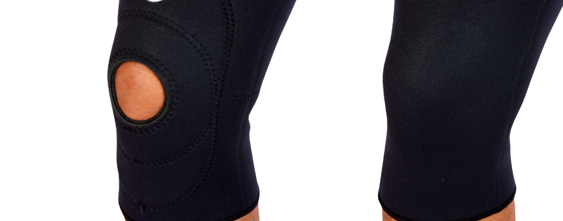
Open Patella vs Closed Patella Knee Sleeve: Side-by-Side Comparison Table
A hole over the kneecap tells you where the fabric stops. It doesn’t tell you how well the sleeve stabilizes the joint.
Core Structural Differences
| Feature | Open Patella | Closed Patella |
| Structure | Round or oval opening that leaves the kneecap exposed | Continuous fabric across the front of the knee without cutouts |
| Typical materials | Neoprene, nylon-spandex knit, polyester blends; soft elastic or a patellar ring often trims the opening | Neoprene, cotton blends, nylon-spandex, perforated fabrics; some include mesh or vented panels behind the knee |
| Coverage | Compresses above, below, and alongside the kneecap | Covers the kneecap, patellar tendon, and surrounding soft tissue |
| Direct kneecap pressure | Lower directly over the bone | More uniform, with forward compression governed by sleeve size, thickness, and stretch |
| Compression pattern | Concentrated around the knee ring, creating a low-pressure zone over the front | Continuous across the front, sides, and back |
| Warmth | The open front vents heat during exercise | Holds heat across the entire joint, particularly in neoprene models |
| Breathability | Better airflow at the front, depending on the base weave and mesh | Lower airflow at the front, though perforations and rear vents help |
| Typical use | Relieving kneecap pressure while maintaining circumferential support and joint awareness; common for sports and general knee discomfort | Uniform compression, heat retention, and full coverage; common for arthritis, chronic soreness, and joint stiffness |
Features and Performance
| Factor | Open Patella | Closed Patella |
| Kneecap pressure | May reduce direct pressure on the front | More even pressure, but can feel stuffy |
| Patellar guidance | Limited. Depends on ring, silicone, or straps | General compression, not true guidance |
| Warmth and swelling | Cooler, with less pressure over the kneecap | Warmer, but can feel tight when the knee swells |
| Mobility | Better for deep bending and running | Thick models may limit deep flexion |
| Best for | Running, ball sports, cycling, daily wear | Lifting, squats, deadlifts, cold-weather training |
| Thickness | Usually 3 mm, though some run 5 or 7 mm | 3, 5 or 7 mm. Thicker builds add warmth and support |
| Price | $15–40 basic; $50–150 with rings or straps | $15–40 basic; $50–150 for thick or medical-grade |
Function Improvement
A basic open-patella sleeve compresses the joint perimeter and offloads front-facing pressure. It aids joint awareness and keeps tissue warm, but without an integrated ring, buttress, strap, or stay, it cannot actively guide the patella. A closed sleeve works similarly: without directional pads, straps, or hinges, it simply wraps the joint in uniform compression and heat.
- Side hinges or stays: These provide medial and lateral stability. Basic sleeves omit them, and they appear in both open and closed designs.
- Straps: Adjustable straps let you change tension and pull direction, which a standard pull-on sleeve cannot do.
- Patellar ring: A foam, elastic, or silicone ring distributes pressure around the kneecap border. The cutout helps with positioning when this ring is present.
- Silicone grippers: These keep the sleeve from sliding down or rolling during movement. They maintain sleeve position rather than stabilizing the joint.
- Lateral pad or buttress: A firm foam or silicone insert along one side applies directional pressure to guide patellar tracking.
- Mesh or perforated panels: These vent heat and sweat. They provide no mechanical stability.
When to Choose an Open Patella Knee Sleeve
An open patella knee sleeve makes sense when your kneecap itself is sore, but you still want general joint support.
Pick an open design if:
– Pressure over the kneecap bothers you when sitting, kneeling, or bending.
– You want light compression, better joint awareness, and airflow rather than rigid bracing.
– Your pain spreads around the kneecap and you need full mobility to run, walk, or play court sports.
– A clinician suggested temporary patellar unloading or a low-profile sleeve during activity.
– You need a slim fit under clothing that allows normal knee bending.
When an Open Design Is the Wrong Choice
- Noticeable swelling: An open ring leaves the kneecap exposed, so it does very little to compress fluid buildup.
- Cold sensitivity: A closed sleeve traps heat much better.
- Instability, dislocation risk, ligament injury, or post-surgery protection: These issues require a structured, hinged brace rather than a flexible sleeve.
- Locking, giving way, large effusion, or pain after a sudden injury: See a clinician before wearing anything.
What Makes an Open Sleeve Worth Buying
Look for graduated compression, breathable moisture-wicking fabric, and a cutout that sits squarely over your kneecap. An off-center or oversized opening creates uncomfortable pressure edges and reduces support. If a sleeve claims to offer real patellar stabilization, make sure it includes a padded buttress, straps, or flexible stays. A cutout hole alone cannot stabilize the joint.
When to Choose a Closed Patella Knee Sleeve
A closed patella knee sleeve works best when you need the whole joint warm, snug, and evenly compressed. It handles mild, spread-out aches much better than sharp, kneecap-specific pain.
Pick a closed design if:
– You have general knee discomfort, mild stiffness from osteoarthritis, or low-level swelling.
– Your knee feels loose instead of hurting in one specific spot.
– You train in cold spaces, or your joints need warming up before you squat, lift, walk, or stand for long stretches.
– The seam of an open cutout irritates your kneecap. A solid front panel spreads pressure across a wider area.
– You squat deep and want warmth and joint feedback. Close skin contact helps your sense of knee position, though it does not provide mechanical stability.
Match Thickness to Your Goal
| Thickness | Best for | Trade-off |
| 3 mm | Recovery, mild arthritis, warm climates, daily wear | Least bulky, with gentler compression |
| 5 mm | General gym work, CrossFit, regular squats | Balanced warmth, rebound, and mobility |
| 7 mm | Heavy squats, powerlifting, short intense sessions | Stiffest and most supportive, but bulky at deep flexion |
For heavy lifting, 7 mm is the benchmark. SBD’s lifting sleeve uses 7 mm neoprene at 30 cm, matching the maximum limits set by IPF specifications. Thicker neoprene returns more force out of the bottom of a squat. That feels supportive, but it can alter your natural movement.
Limits to Know Before You Buy
- Heat and moisture: Full front coverage runs hot in warm gyms.
- Bulk: A 7 mm sleeve can bunch behind the knee and limit your squat depth.
- Fit: Numbness, tingling, or skin discoloration means the sleeve is too tight. Loosen it or size up.
- Clinical role: A sleeve will not repair cartilage or correct joint alignment. In a randomized osteoarthritis trial, a heat-retaining sleeve reduced WOMAC pain scores by 2.5 points over four weeks, while the placebo sleeve group improved by 9.7%. Part of that benefit comes from the physical feel of compression itself.
Do not choose a closed sleeve to stabilize the patella. If your knee locks, gives way, swells heavily, or suffers a recent injury, get it assessed first.
How to Choose the Right Knee Sleeve: Sizing, Compression, Material Checklist
A well-fitted $20 sleeve will outperform a premium one that is a size off. Accurate fit decides whether you get real knee compression or just a tight band that slips and pinches.
Step 1: Measure Before You Buy
“Medium” means something different across brands, so grab a soft tape measure and follow the manufacturer’s specific directions.
- Most common method: measure around the center of the kneecap with the leg slightly bent.
- Other methods: some brands size from just above the kneecap, the upper calf, or the thigh a few inches above the knee.
- Posture: stand relaxed with a slight knee bend. Keep the tape flat against the skin without digging in.
- Two different knees: measure both legs and size for the larger one, unless the brand directs otherwise.
- Example: Nike lists 12–12.5 in for XS, 13.5–15 in for M, 15–17 in for L, and 19–21 in for XXL.
- Between sizes: go smaller for a snug performance hold. Go larger for easier movement and all-day wear.
Fit test: the sleeve should feel snugger than a sock, without pinching behind the knee or making your foot tingle.
Step 2: Match Compression to Your Use
| Use case | Compression / build | Priority |
| Daily wear, walking, light swelling | Light, about 15–20 mmHg | Comfort and breathability |
| Recovery, moderate support | Medium, about 20–30 mmHg | Stable fit without restricting movement |
| Firm or medical-level | About 30–40 mmHg | Get professional guidance if you have circulation problems, significant swelling, or a medical condition |
| Heavy squats and deadlifts | 7 mm neoprene | Warmth, stiffness, rebound |
| CrossFit, Hyrox, functional fitness | 5 mm | Support with mobility |
| Running, fast court sports | 3 mm | Light weight and ventilation |
The 3/5/7 mm split follows Rehband’s guidance: 3 mm for dynamic sports, 5 mm for all-round training, and 7 mm for heavy lifting. The mmHg bands are standard retail benchmarks rather than medical prescriptions.
Step 3: Check Material and Construction
- Nylon, polyester, spandex, or Lycra blends: best for running, hot climates, and long training sessions.
- Neoprene: warmer, firmer, and more cushioned, but holds sweat. It suits heavy lifting and cold gyms.
- Seams: look for flatlock or low-profile stitching so fabric won’t chafe behind your knee.
- Ventilation: choose knit panels with mesh zones if you run hot.
- Latex sensitivity: check the fiber tags and grip lining before buying.
- Real example: one sleeve lists 61% nylon, 24% neoprene, 7% elastane, 6% Lycra, plus silicone and TPU components.
- Grip band: choose a wide silicone band over a thin interior bead. The top cuff must stay flat as you squat; rolling indicates poor construction or the wrong size.
Don’t buy based on an open or closed patella cutout alone. Neither style suits every knee. Circumference accuracy, cuff grip, seam placement, and joint mobility matter far more.
Remove or Resize the Sleeve If You Notice
- Numbness, tingling, or pins and needles
- Skin turning pale, blue, or deep red
- A cold foot or lower leg
- Throbbing pressure behind the knee joint
- Inability to bend your knee through its normal path
- Skin chafing, or constant slipping that forces you to pull the sleeve up
If the sleeve slides on without any resistance, it is too loose. If your foot tingles, take it off immediately.
Common Mistakes
- “More compression is better.” Overly tight fabric cuts off circulation and limits your range of motion.
- Using your clothing size. Always check the brand’s measurement chart instead of guessing from your pant size.
- Sizing down as a default. Competitive lifters sometimes size down to get mechanical rebound out of a squat, but standard training calls for your true size.
- Ignoring thigh or calf measurements. Several designs anchor to the surrounding muscle rather than the joint center.
- Wearing thick neoprene for endurance sports. Heavy rubber traps heat and moisture over long distances. Choose thin, ventilated knits for road running and court work.
Conclusion
Your kneecap needs the right sleeve, regardless of price.
An open patella design gives the kneecap breathing room, which suits patellar tracking issues, tendon irritation, and anyone who dislikes pressure on the front of the knee. A closed patella design wraps the whole joint in warmth and even compression, which works better for arthritis, general achiness, and recovery days. Neither replaces a brace when you need serious patellar stabilization, and neither replaces a diagnosis.
Choose by your symptoms. Measure your knee, check the compression level, and test your pick across a few workouts. For a reliable knee sleeve manufacturer to enrich your brand or product line? Contact AOFIT now.