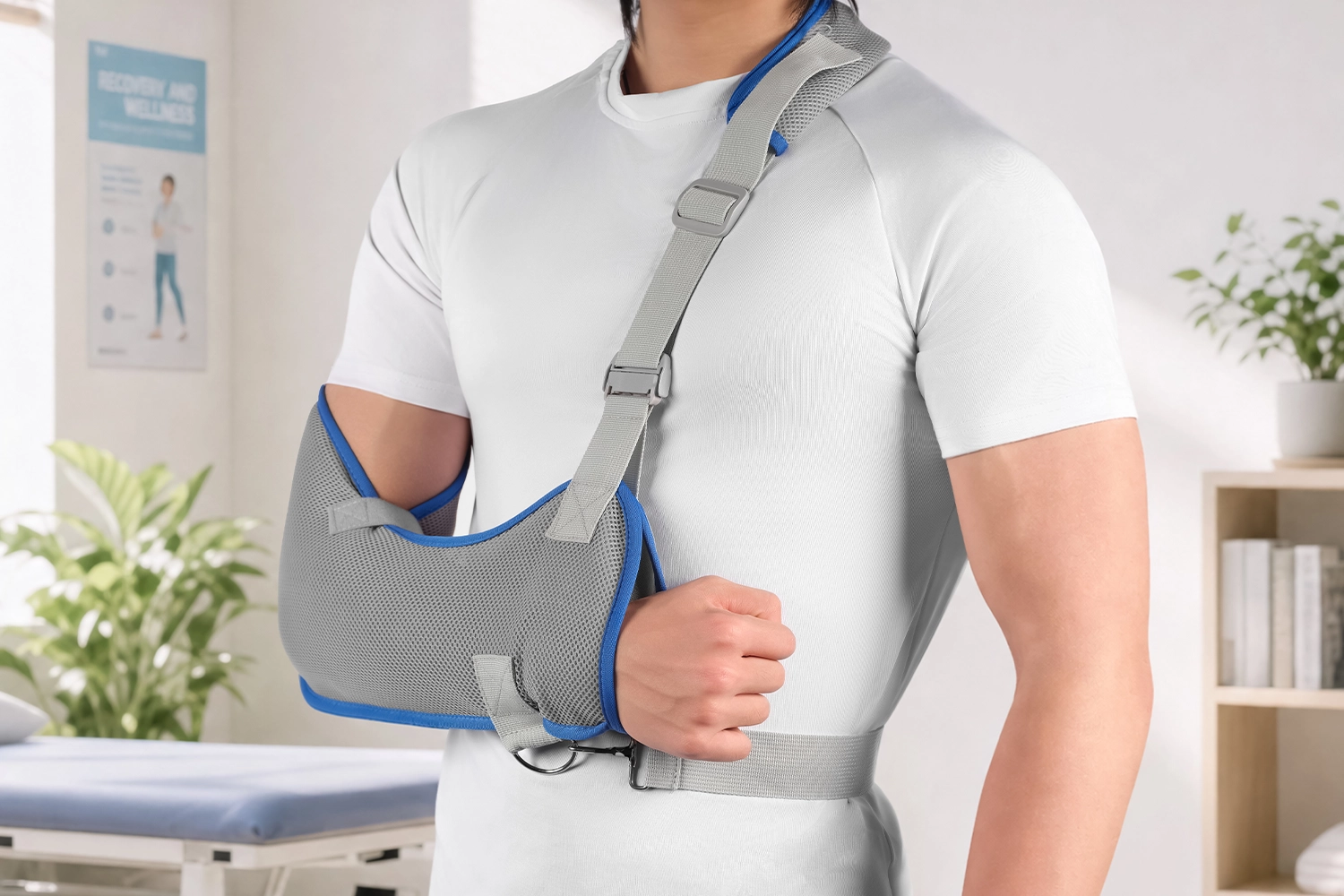
That sharp, radiating pain down your leg when you stand up from the couch? The numbness that creeps into your feet after just ten minutes of walking? If spinal stenosis has turned everyday movement into a calculated risk, you already know that not all back support is created equal.
The best back brace for spinal stenosis is the one matched to your specific stenosis severity, activity level, and pain pattern. Some patients need rigid, motion-restricting support. Others do better with a decompression-style brace that takes pressure off compressed nerves.
I’ll break down which brace types work best for different stenosis presentations and why, based on orthopedic principles.
What Is Spinal Stenosis & How Back Braces Help
Spinal stenosis happens when your spinal canal or nerve openings narrow, squeezing the spinal cord, nerve roots, or their blood supply. That compression is what triggers pain — not the word “stenosis” itself.
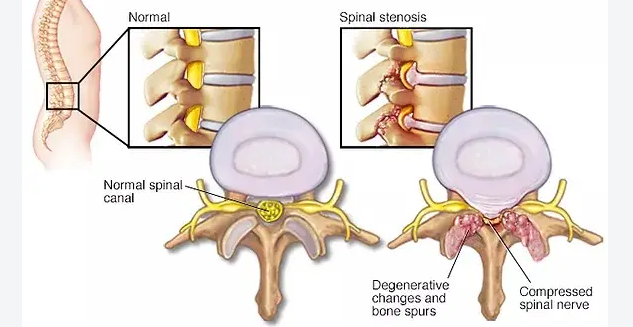
What causes the narrowing? Usually a combination of things: bone spurs from disc degeneration, herniated or bulging discs, thickened ligamentum flavum, enlarged facet joints, or vertebral slippage. Any of these can shrink the space your nerves need to function normally.
Spinal stenosis symptoms typically include lower back pain, pain radiating into the buttocks, leg numbness, tingling, weakness, and difficulty walking or maintaining balance. The hallmark sign is neurogenic intermittent claudication — your legs feel heavy, painful, or crampy when standing or walking, but bending forward or sitting brings quick relief. This happens because spinal extension narrows the canal further, while flexion opens it up.
Why does bracing help? A back brace for lower back pain doesn’t cure stenosis. It manages symptoms by keeping your lumbar spine in slight flexion or neutral position. Three mechanisms drive this.
- Motion restriction: Limits harmful extension movements that trigger pain.
- Pressure reduction: Anti-lordotic, flexion-based designs can lower intradiscal pressure by roughly 30%.
- Trunk support: Distributes load through abdominal and torso compression, reducing pain-related activity avoidance.
Clinically, flexion-type lumbosacral orthoses (Williams-type braces) are the go-to choice for degenerative stenosis with claudication, leg numbness, and back pain.
The limitation? No brace reverses bone spurs, ligament thickening, or slippage. Evidence remains mixed — braces work best as short-term symptom management, not standalone lumbar spinal stenosis treatment. Rigid back brace models can sometimes encourage extension, making symptoms worse. Flexion-focused support is usually safer.
Best for moderate-to-severe Lumbar Stenosis: Rigid LSO
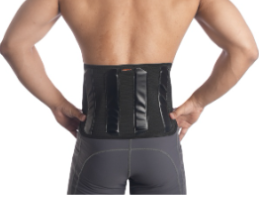
Rigid LSOs are straightforward: rigid front and rear panels, metal or plastic support stays, and a cincher or pulley compression system that lock down harmful motion.
They limit lumbar movement, increase intra-abdominal pressure, and offload spinal stress — three mechanisms tied directly to stenosis pain relief. Product data across this category link rigid panel support and abdominal compression to stabilization benefits for spinal stenosis, herniated disc, sciatica, and post-surgical recovery.
What Separates a Great Rigid LSO From an Average One
A great rigid LSO has rigid anterior and posterior panels for motion restriction, a 6:1 pull ratio pulley system for adjustable mechanical compression, moldable panels for customizable lordosis control, breathable liners and padding for daily wear without irritation, and easy donning closures for patients with limited mobility.
BraceAbility’s LSO line is a strong benchmark. It’s positioned for spinal stenosis, sciatica, herniated disc, and lower back pain, with adjustable compression straps, breathable spacer fabric, and rigid stabilizing panels. User feedback highlights comfortable all-day wear and reliable support during extended activity — the kind stenosis patients need when standing or walking triggers symptoms.
Ottobock’s Lumbosacral Orthosis takes a more clinical approach. It uses four auto-adaptive plastic stabilization rods with two individually adjustable elastic straps, giving high spinal stability without losing breathability. The anatomic design contours to your natural lordosis instead of forcing an unnatural shape. Ottobock frames this brace for chronic back pain lasting longer than three months, a good fit for degenerative stenosis with ongoing instability.
When you’re procuring a rigid LSO, look for rigid dual-panel construction, metal or plastic stays, adjustable pulley compression, moldable fit, breathable liner, and optional lordosis control. Skip anything without rigid stays — flexible designs won’t give the stabilization stenosis patients need.
Best for Multi-Level or Post-Surgical Cases: TLSO Brace
Multi-level stenosis and post-surgical spines need more than a lumbar wrap can offer. A TLSO — thoracic-lumbar-sacral orthosis — is the go-to orthopedic back brace for these complex cases.
TLSO vs LSO: What Actually Changes
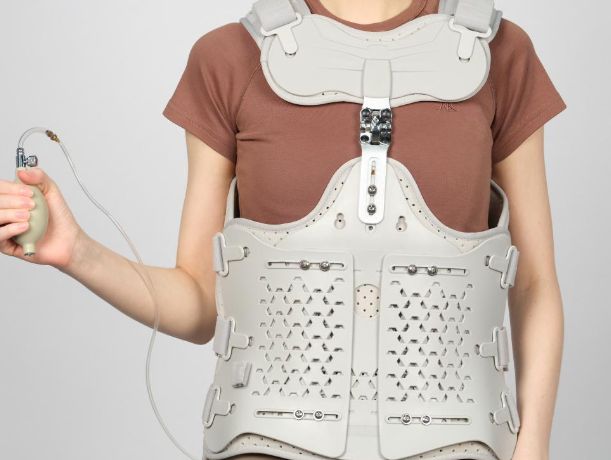
A TLSO covers far more territory than an LSO. Per CMS/insurance definitions, the back panel runs from the sacrococcygeal joint up to below the scapular spine, while the front extends from the pubic symphysis to the xiphoid process, sometimes reaching the sternal notch. An LSO stops at the thoracolumbar junction, controlling only the lumbosacral segment.
That extra coverage matters mechanically. TLSOs restrict flexion, extension, lateral bending, and rotation. LSOs mainly manage flexion and extension in the lower back.
Why multi-level and post-op patients need this extra reach: When a fusion, fracture, or deformity sits near the thoracolumbar junction (T12-L1) or mid-thoracic spine (T6-T10), a brace stopping too close to the injury site loses leverage. TLSOs shift the anchor point higher, creating a stronger three-point pressure system. That’s critical for limiting shear and rotational forces during post-surgical fusion recovery, vertebral fracture stabilization, or spinal deformity management.
Standout TLSO Options
BraceAbility’s TLSO works like a removable body cast. It’s designed for spinal stenosis affecting both thoracic and lumbar regions, post-op stabilization, fractures, kyphosis, and mild scoliosis. Rigid plastic back panels, padded lining, adjustable shoulder straps, and a sternal pad let it restrict harmful movement while promoting healing, without locking your arms and torso into complete immobility.
Horizon 627 sits closer to the LSO side but with rigid front and back panels plus internal stays. Its non-stretch, breathable honeycomb material and SlickTrack™ tensioning system stabilize the L2-S1 region, making it a solid pick for herniated disc or degenerative stenosis cases that don’t require full thoracic control.
Best for Mild Symptoms: Low-Profile Lumbar Support Brace
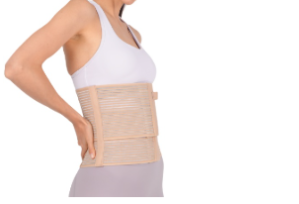
Not every stenosis case needs a rigid shell strapped to your torso. If you’re dealing with mild pain, muscle fatigue, or that nagging discomfort after a long day at a desk, a soft, elastic lumbar support belt does the job without the bulk.
How it works: Soft braces restrict spinal motion by roughly 10–25%, compared to 50–70% for rigid TLSO-style options. That limited motion is intentional. These braces use gentle compression, warmth, and proprioceptive feedback instead of locking your spine down. For early-stage stenosis or general lower back pain during driving, standing, lifting, or light exercise, that’s exactly the support level you want.
Why Low-Profile Wins for Daily Life
You can wear it under clothing. That’s the biggest advantage—nobody wants a visible brace during a work shift or a long commute. Low-profile designs deliver support during activity without immobilizing you.
Fit and wear guidelines:
– Should feel firm and stable, never painful or breath-restricting
– Best used 2–6 hours daily during demanding tasks, not 24/7
– Remove during sleep unless a doctor says otherwise
Look for terms like elastic lumbar belt, soft brace, or compression sleeve when shopping. These signal the right support category for mild symptoms.
Best for Decompression-Style Support: Decompression Back Brace
Rigid braces lock your spine down. Decompression braces pull it apart.
How Decompression Braces Work
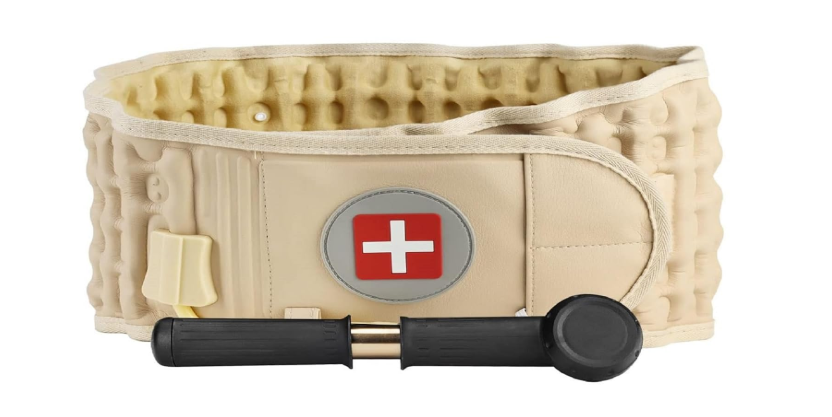
Instead of compressing your torso, these braces use inflatable air chambers or vertical air columns to stretch your spine longitudinally. The DDS system, for example, pushes upward against your rib margin while pushing downward on your pelvic band, creating gentle traction that pulls pressure away from compressed discs and nerves.
The numbers back this up. At 14 psi, a single air chamber generates roughly 2.7–3.6 lbs of traction force. Scale that across a full unit, and you’re looking at 61–111 lbs total traction on the DDS 500, or up to 133.94 lbs on the DDS Double.
When Decompression Beats Rigid Support
This is your spinal decompression brace category if you’re dealing with herniated or bulging discs, sciatica, spondylolisthesis, or lumbar sprain alongside stenosis. It helps during dynamic activity—walking, standing, long drives, light lifting—where you need pressure relief while staying mobile.
Price range: Expect $80–250 for legitimate decompression units. Basic compression belts run cheaper but skip the traction mechanism entirely.
How to Choose the Right Back Brace for Your Spinal Stenosis
Five brace types. One narrowing spinal canal. Pick wrong and you waste money and end up with worse pain.
Match the Brace to Where Your Stenosis Sits
The brace category depends on where your stenosis is.
- Lumbar or lumbosacral stenosis: Use an LSO. It covers the lumbar, sacral, and pelvic region, which is exactly where this type lives. Most orthopedic brace manufacturers list spinal stenosis as a primary LSO indication.
- Thoracic involvement or multi-level stenosis: Move to a TLSO. Broader coverage restricts more of the thoracic-lumbar-sacral chain, which is what complex or post-surgical cases need.
Quick test: if pain and radiation stay below your waist, go LSO. If symptoms reach into your mid-back or span multiple segments, you need a TLSO.
Match Rigidity to Severity
- Mild symptoms (occasional stiffness, low-grade compression discomfort) need a low-profile, semi-rigid lumbar support belt. Think comfort brace, not medical device.
- Moderate-to-severe symptoms (pain that gets worse with standing or walking, real functional limitation) need semi-rigid to rigid medical-grade LSO support.
- Multi-level, post-surgical, or unstable cases need medical-grade TLSO.
Self-check before buying:
- Does standing or walking make the pain worse, with relief when you sit or lean forward? That’s classic claudication, and you probably need more rigid support.
- Do you need your bending, twisting, or prolonged standing physically limited? The more limitations you need, the higher the rigidity tier you want.
- After wearing the brace, can you still bend freely with no pain improvement? Your support level is too low. Struggling to breathe or sit? Too rigid, or the wrong size.
Prioritize Fit Over Marketing Claims
- Breathable fabric: look for mesh or tri-laminate material. Breg and similar orthopedic brands use tri-laminate specifically for all-day wear.
- Adjustable closures: dual straps and segmented compression panels that you can retighten after eating, sitting, or activity.
- Size by waist circumference, not S/M/L labels. Serious brands size by actual measurement (70–80cm, 80–90cm, 90–105cm, 105–120cm, 120–130cm ranges) because generic sizing fails stenosis patients regularly.
The buying sequence that works: waist size first, rigidity level second, breathability and adjustability third. Skip that order and brand reputation won’t save you from a brace that doesn’t fit or support correctly.
Frequently Asked Questions About Best Back Brace For Spinal Stenosis
Questions pile up fast once you’re staring at five brace types and a diagnosis you didn’t ask for. Here’s what matters.
Can a back brace replace surgery? No. Clinical policy frames bracing as short-term symptom relief, not a cure. It reduces pain and helps you stand or walk — but that benefit disappears the moment you take the brace off.
Does it help with walking? Yes, more than you’d expect. Documented case data shows lumbosacral orthoses increase walking distance, reduce pain, and improve standing tolerance — sometimes enough to walk without assistive devices.
How do I clean it? Remove any detachable stays or pads first. Hand-wash in cold water or use a mesh laundry bag on a gentle cycle. Air dry only — skip the dryer. Keep skin-contact areas dry to avoid rashes or friction irritation.
Will it work with scoliosis or degenerative disc disease? Many LSO products list both as compatible uses. It helps with pain and posture support, but it won’t correct spinal curvature or reverse disc degeneration.
What should I budget? Standard lumbosacral orthoses run $65–110. Rigid, custom-fit, or medical-grade options push higher.
Where should I buy it? Prescription/DME channels work if you want insurance reimbursement or a custom LSO/TLSO fitting. Online retailers let you comparison-shop, but verify sizing, rigidity level, and return policy first.
Conclusion
Living with spinal stenosis doesn’t mean putting up with constant pain and limited mobility. The best back brace for you depends on how severe your condition is, what kind of activities you need it for, and how it fits into your daily routine. A rigid LSO works well for significant nerve compression, a low-profile brace might suit mild flare-ups, and decompression-style support can help with chronic sciatica. Choose based on evidence rather than marketing claims.
In need of a support and brace manufacturer offering one-stop orthopedic solutions for every type of back brace supplying you require? Reach out to AOFIT today. We craft fully finished braces under your brand name, and our in-house R&D team is ready to collaborate with you from initial concept through to prototype.