One wrong digit on a claim form, and a $200 elbow orthosis turns into a 45-day denial nightmare. If you’ve ever stared at a superbill wondering whether that patient’s epicondylitis brace should be billed as L3760 or L3761 — or why your last claim bounced back over a missing modifier — you’re not alone. The CPT code for elbow brace billing looks simple on paper, but the L3760-L3766 code family hides real traps: prefabricated versus custom-fitted distinctions, RT/LT side identifiers, and Medicare’s notoriously picky documentation rules. This guide breaks down which code fits which device, how to stack modifiers correctly, and what reimbursement you can expect from Medicare, Medicaid, and commercial payers, so your next claim clears the first time, not the third.

What Is the CPT/HCPCS Code for Elbow Brace (L3760 vs L3761)
There’s no such thing as a “CPT code for elbow brace.” Not officially. Billers say it out of habit, but elbow orthoses live in HCPCS Level II territory. CPT codes cover procedures and services. HCPCS Level II covers durable medical equipment, orthotics, and supplies — which is what an elbow brace is. Get this distinction wrong on internal training docs, and you’ll confuse new hires for months.
L3760 and L3761 are the two codes that matter most for adjustable elbow orthoses:
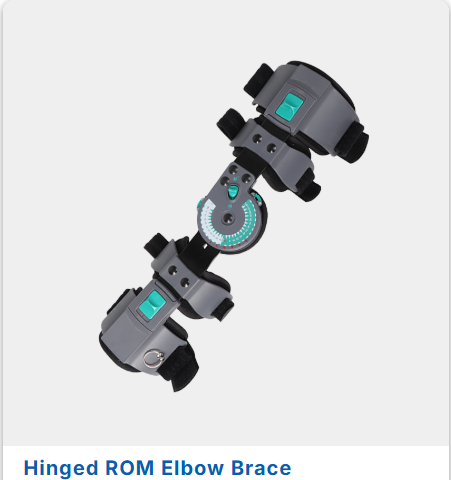
- L3760: Elbow orthosis with adjustable position locking joint(s), prefabricated, then trimmed, bent, molded, assembled, or otherwise customized by a trained professional to fit the specific patient.
- L3761: Elbow orthosis with adjustable position locking joint(s), prefabricated, off-the-shelf — no meaningful individual modification.
The Real Test: Was It Modified?
Forget the marketing name on the box. The deciding factor is substantial individual modification:
- Handed to the patient straight from stock, standard sizing, zero adjustment? → L3761.
- Trimmed, molded, or fitted by someone with clinical expertise to match that patient’s arm? → L3760.
Tennis Elbow Brace Confusion
“Tennis elbow brace” is a marketing term, not a coding category. A forearm compression strap without a hinge or locking joint typically doesn’t qualify for L3760/L3761 at all — some elbow brace suppliers code those under L3762 instead. Only braces with an adjustable range-of-motion locking joint belong in the L3760/L3761 family. The most common billing mistake in this space: billing an unmodified, off-the-shelf ROM brace as L3760 because it looks “adjustable.” If no professional customization happened, that’s an L3761 claim waiting to be flagged.
Elbow Orthosis Code Family L3760-L3766: Full Breakdown
Seven codes. Three anatomic zones. One family tree that most billers only half-understand.
The L3760-L3766 block is a structured ladder that climbs from the elbow through the wrist and hand to the fingers. Each rung has a custom-fabricated or prefabricated/off-the-shelf pair. Miss the anatomic extent, and you’ll bill the wrong rung even if the joint type and modifier are perfect.
The Three Zones, Broken Down
- Elbow-only (L3760–L3762): Motion control at the elbow, nothing more. No wrist or hand involvement. Used for postoperative elbow positioning or elbow instability.
- Elbow-wrist-hand, EWHO (L3763–L3764): Support spans from the elbow through the wrist and into the hand. Broader upper-limb stabilization lives here.
- Elbow-wrist-hand-finger, EWHFO (L3765–L3766): The full-extension branch. Control reaches the fingers. This gives you longer lever-arm stabilization or more extensive immobilization needs.
Quick Lookup Table
| Code | Anatomic Extent | Build/Fit Type | Key Structure Cues |
| L3760 | Elbow only | Prefab, customized to patient | Adjustable locking joint(s); trimmed/bent/molded/assembled |
| L3761 | Elbow only | Prefab, off-the-shelf | Adjustable locking joint(s), no major modification |
| L3762 | Elbow only | Elastic/support-focused | Adjustable locking joints + elastic support style |
| L3763 | Elbow + wrist + hand | Custom fabricated | Extends to metacarpal/hand interface |
| L3764 | Elbow + wrist + hand | Prefab/off-the-shelf | Same anatomic span as L3763 |
| L3765 | Elbow + wrist + hand + fingers | Custom fabricated | Finger extension, broader hand-finger control |
| L3766 | Elbow + wrist + hand + fingers | Prefab/off-the-shelf | One or more nontorsion joints, elastic bands, turnbuckles |
L3762 still sits in the elbow-only zone but is built for elastic, soft-support cases rather than rigid frames. If the device leans “soft brace with a locking joint” instead of “hinged frame,” L3762 is often the better fit than L3760 or L3761.
The Duplicate-Billing Trap
CMS bundles fitting and adjustment into every one of these seven codes. You don’t bill that separately. But a sharper risk hides in RAC audits: billing the same HCPCS code and anatomical site within the reasonable useful lifetime (RUL). That combination is a documented denial trigger. If a patient needs a second identical device before the RUL expires, you need airtight medical necessity documentation, or expect a fight.
Required Modifiers for Elbow Brace Billing (RT/LT, NU, RR, UE, KX)
Five modifiers separate a clean claim from a resubmission headache. Get them right, and your elbow orthosis reimbursement clears in days. Mix one up, and you’re staring at a rejection letter.
RT/LT: Side Identification Isn’t Optional
RT means right side. LT means left side. Simple enough, until someone forgets to attach one.
For any elbow brace that could go on either arm, payers expect a side identifier every time. Skip it, and the claim reads as incomplete. Systems flag it, and human reviewers bounce it back. It’s the single most common modifier-related denial in DME elbow billing.
Bilateral cases need extra care. Don’t bill one line with 2 units. Split it into two separate claim lines, each at 1 unit:
- L3760-RT, 1 unit
- L3760-LT, 1 unit
Combine them and expect a denial for improper unit reporting.
NU, RR, UE: Equipment Status Codes
These three track how the patient acquired the device:
- NU: New equipment, purchased outright
- RR: Rental
- UE: Used/pre-owned DME, purchased (not rented)
CMS treats these as mutually exclusive on a single claim line. NU and RR never appear together. UE applies only to purchase used equipment, not rentals. Mixing these up triggers a status-code mismatch denial almost every time.
KX: The Medical Necessity Flag
KX indicates that policy-required documentation is complete and coverage criteria are met.
Billers get burned two ways here. Leave off KX when the LCD requires it, and the claim often lands in a documentation request loop. Add KX without the paperwork to back it up, and you’ve made a false claim of compliance. That carries a higher denial risk than omitting it.
Practical formatting example for a left elbow brace with complete documentation:
L3760-LT-KX (or L3760-KX-LT, depending on payer submission rules; order matters less than presence)
The rule of thumb: match each modifier to the actual case—right or left, new or used, documented or not.
Medicare and Insurance Reimbursement Rates for L3760/L3761
There’s no single dollar figure for L3760 or L3761 that applies coast to coast.
Medicare pays through the DMEPOS fee schedule under Part B, not Part A. That schedule is jurisdiction-based, so the same code can pay differently depending on your DME MAC region. CMS’s own archive shows annual adjustments ranging from $4.41 to $8.19 across area types in prior years. The Medicare rate is a moving target tied to geography.
For a concrete benchmark, a 2026 CGS fee schedule extract lists L3761 at $559.36 in multiple jurisdiction columns, with one column running slightly higher at $562.35. That spread alone tells you why pulling the number from the wrong jurisdiction can throw off your revenue projections.
Medicaid runs on separate math entirely. One state program shows L3760 paid at $251.34, useful as a local reference point but not a national standard. Medicaid is state-administered, so your state’s rate could look nothing like that figure.
Commercial insurance is its own animal. Contracted rates vary by payer, with published allowed amounts for L3760 showing up around $293.12, $349.68, and $434.85, and one provider-level listing spiking to $647.57. There’s no universal commercial benchmark. Your rate is whatever your specific contract says.
Where to Verify the Actual Rate
Pull the official number from the CMS DMEPOS Fee Schedule Files, which list amounts, floors, ceilings, and jurisdiction details per code. For L3761, Medicare also requires a treating practitioner order and a PDAC-verified product on the approved list before payment clears.
Medical Necessity Documentation and PDAC Verification Requirements
A supplier statement alone won’t save your claim. That trips up more billing teams than any modifier error. Medicare wants a treating physician’s fingerprints on the medical necessity case, not just a DME company’s word that the brace was needed.
What the Order Needs
Every elbow orthosis claim starts with a Standard Written Order (SWO) on file before submission. Some items go further and require a WOPD — written order prior to delivery, meaning the paperwork exists before the brace leaves the shelf. The SWO needs the beneficiary’s name, a clear product description tied to the HCPCS code, the order date, physician signature, and quantity/frequency details when they apply.
Diagnosis coding rides alongside the order. Claim Item 21 expects ICD-10 codes at their most specific level, and you can list up to 12 diagnoses in priority order. Vague or mismatched diagnosis-to-HCPCS pairing is one of the most commonly audited errors in this space.
Proving Medical Necessity — and Justifying Custom Fabrication
Documentation has to show the device is reasonable and necessary: severity of symptoms, how long the condition has persisted, and evidence that conservative treatment failed first. For custom fabricated orthoses, the chart needs to spell out the patient’s specific physical characteristics that make an off-the-shelf brace unworkable, plus notes on what modifications were made during fitting.
PDAC Verification Before You Bill
PDAC confirms whether a product matches an existing HCPCS code. It doesn’t create new codes or edit definitions. Verification is voluntary unless your DME MAC requires it. Check the PCL (Product Classification List) first; it’s treated as accepted proof of correct coding. Skipping this step is a fast track to code-mismatch denials.
Common Denial Reasons and How to Avoid Them
Denial letters rarely explain themselves. They just show up with a code and leave you guessing. CO-4 usually flags a modifier problem, CO-16 means missing information, and CO-97 signals a bundling issue where the payer decided your line item shouldn’t be paid separately. Knowing which bucket you’re in decides your next move.
Fix It Fast: Error vs. Correct Coding
| Error | Correction |
| L3761 with no side identifier | L3761-LT or L3761-RT |
| L3761-LT when policy requires KX | L3761-LT-KX (only if criteria are met) |
| One line, 2 units for bilateral | Two lines: L3761-RT and L3761-LT, 1 unit each |
| Chart says left, claim says right | Resubmit matching the delivery record |
Resubmit or Appeal? Know the Difference
Technical errors — wrong modifier, missing KX, mismatched side — get fixed with a corrected or replacement claim. Don’t waste time appealing to your own typo.
Appeal only when you believe the claim was correct and the payer’s edit misfired. Check the NCCI modifier indicator first. A “1” means appeal is worth trying with documentation. A “0” means the edit is hard-locked, and no amount of paperwork overturns it.
For appeals, bundle the operative note, delivery ticket, and payer LCD citation together. Prove side accuracy, coverage criteria, and policy alignment in one package. Payers rarely ask twice if the first submission is airtight.
Sample Billing Scenario: Complete Claim Walkthrough
A patient walks in needing a left elbow orthosis. The clinician trims and molds a prefabricated frame to fit her arm. Here’s the coding path from start to finish:
Step 1 — Identify the device. Trimmed, bent, molded, assembled by a trained professional? That’s L3760, not L3761.
Step 2 — Attach side. Left arm means LT. Final string so far: L3760-LT.
Step 3 — Check KX eligibility. Coverage criteria met, documentation on file? Add KX. Final code: L3760-LT-KX.
Step 4 — Submit. Match the code, side, and documentation before sending.
Compare that to an off-the-shelf right-side brace, no modification: L3761-RT, or L3761-RT-KX if criteria and paperwork check out. Same logic, different device status.
Conclusion
Getting the CPT code for elbow brace claims right keeps your cash flow moving and spares you from denials. L3760 covers prefabricated, non-adjustable elbow orthoses; L3761 covers devices with joint range-of-motion adjustment. Miss that distinction, skip the KX modifier when medical necessity applies, or forget PDAC verification, and you’ll get a denial letter.
Build a checklist. Include code, modifier, side (RT/LT), documentation, and PDAC status. Run every claim through it before submission. That five-minute habit saves you the 30-45 day appeals cycle nobody has time for.
Bookmark the coding table above, train your billing team on the modifier logic, and audit your last ten elbow orthosis claims against it. If something doesn’t line up, fix it now—before Medicare or your payer fixes it for you with a denial.