That sharp, burning pain on the outside of your elbow doesn’t care whether you’re mid-backswing on the court or just lifting a coffee mug—it shows up anyway, and it’s got you scrambling for relief. So you’ve narrowed it down to one question: Tennis Elbow Brace Vs Compression Sleeve: How To Choose. Both promise to ease the ache, but they work in completely different ways, and grabbing the wrong one could mean weeks of wasted recovery time (or worse, aggravating the injury further).
Choosing between a tennis elbow brace and a compression sleeve depends on your specific symptoms, activity level, and whether you’re dealing with an acute flare-up or chronic tendonitis. We’ll break down exactly how each one works, when to use them, and how to pick the right support so you can get back to pain-free movement faster.
What Is a Tennis Elbow Brace (Counterforce Strap) and How It Works
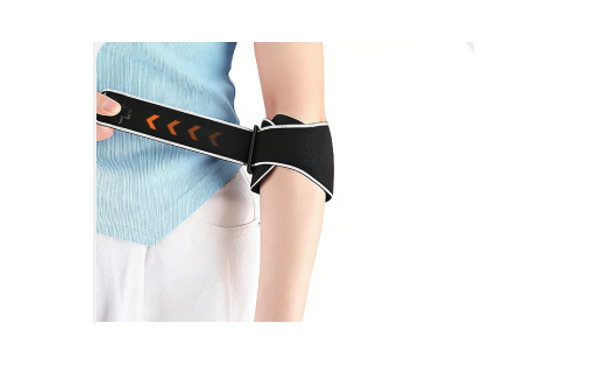
A tennis elbow brace doesn’t immobilize your elbow. This lateral epicondylitis brace is a compression band that wraps around your upper forearm, just below the elbow joint. Its entire job is to redistribute force away from the injury site.
The Mechanism Behind It
Think of it as creating a temporary pressure point. When you grip, lift, or extend your wrist, your forearm extensor muscles bulge outward against the strap. That pressure forms a “new anchor point,” pulling tension away from the damaged tendon at your outer elbow (the lateral epicondyle) and redistributing it across a broader area. The counterforce brace reduces pain during movement by redistributing load, while your tendon heals separately through rest or rehab exercises.
Where Exactly Should It Sit?
When it comes to wearing a tennis elbow brace effectively, position matters. Correct placement is 2-3 cm below the elbow joint, directly over the fullest part of your forearm muscle, where it visibly hardens when you make a fist. Wrong placement is directly over the bony bump on your elbow, which causes pressure pain and fails to offload the tendon properly.
Materials That Matter
Most tennis elbow straps use a neoprene core for cushioned compression, wrapped in nylon or polyester for durability. Hook-and-loop closures let you fine-tune pressure instantly. Higher-end options add gel pads or air bubbles to concentrate pressure precisely on the muscle belly. That precision separates effective braces from ones that just slide around during activity.
Wear it only during triggering activities, like typing, lifting, or racquet sports, then remove it at rest.
Compression Sleeve for Elbow: What It Is and How It Works
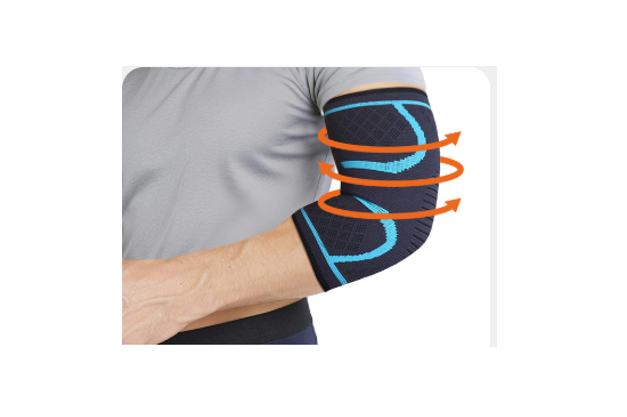
A forearm compression sleeve wraps the entire elbow and forearm in even, low-grade pressure. Think of it as a snug knit tube that gives consistent compression across the whole joint.
The mechanism is different, too.
Made with 4-way stretch fabric, the sleeve distributes force uniformly across your forearm and elbow, cutting down on friction and micro-movement during activity. That stability helps tendons and soft tissue stay put when you’re gripping, lifting, or swinging. It’s useful whether you’re managing tennis elbow treatment options or dealing with elbow support for arthritis.
The compression also supports circulation. External pressure encourages venous and lymphatic return, which is why many sleeves get marketed for mild swelling management. Add in the fabric’s ability to retain warmth against the skin, and you’ve got a product that’s comfortable for daily wear, not just workouts.
Material Breakdown
Most sleeves use polyester/spandex or nylon/spandex blends for stretch and breathability. Copper-infused versions, like Tommie Copper’s Copper Znergy® (86% polyester, 14% spandex), focus on odor control rather than any therapeutic copper healing claim. Other copper blends run 85% copper-infused nylon with 15% nylon, or 88% copper nylon with 12% spandex, depending on the brand.
Built for All-Day Wear
If you need something for 8+ hours, prioritize thin knits, silicone non-slip lining, and moisture-wicking fabric. As a tennis elbow treatment option, sleeves work best for chronic pain management and daily support, not for acute injury, and are often paired with eccentric training and rest.
Tennis Elbow Brace Vs Compression Sleeve: Side-by-Side Comparison
Numbers don’t lie, and neither does the research. Here’s how these two supports stack up when you put them side by side.
Pressure Type and Pain Relief Direction
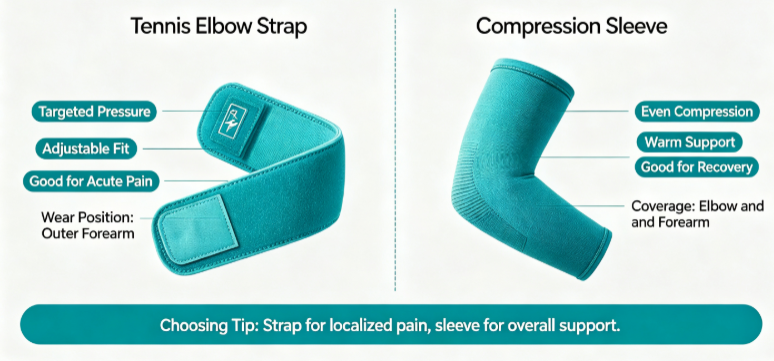
A counterforce brace delivers targeted, adjustable compression right below the lateral epicondyle. That focused pressure makes it the go-to for acute, localized pain—the kind that flares up mid-grip or during a backhand. A forearm compression sleeve spreads pressure evenly across the entire elbow and upper forearm. It is better suited for diffuse soreness or general daily support rather than pinpoint pain.
What the Research Says
A study on lateral epicondylalgia found that counterforce elbow orthoses—both bands and sleeves—improved pain, with similar immediate results between the two. Pain-free grip strength saw a bigger boost, especially with braces designed for that purpose. One review states: “There is an absence of evidence that any particular orthotic design… differs in their effectiveness.” Sleeve-specific research tends to be preliminary, based on repeated measures rather than long-term outcomes. Translation: braces have slightly stronger clinical backing, but sleeves are not far behind for general use.
Activity Restriction and All-Day Comfort
Braces limit movement more during high-intensity actions like swinging, pushing, or lifting—you will feel that compression working. Sleeves restrict less, making them the better pick for extended wear at work or during light recovery sessions.
Circulation Support
Sleeves win here. They are built to promote circulation and reduce that puffy feeling after minor swelling, though they do not offer strong mechanical fixation.
Price
- Brace or strap: $10–$30, with gel-padded or adjustable versions landing mid-range
- Compression sleeve: $15–$40, with medical-grade or gel-supported options pushing higher
Choose the brace for sharp, activity-triggered pain. Choose the sleeve for all-day comfort and circulation support.
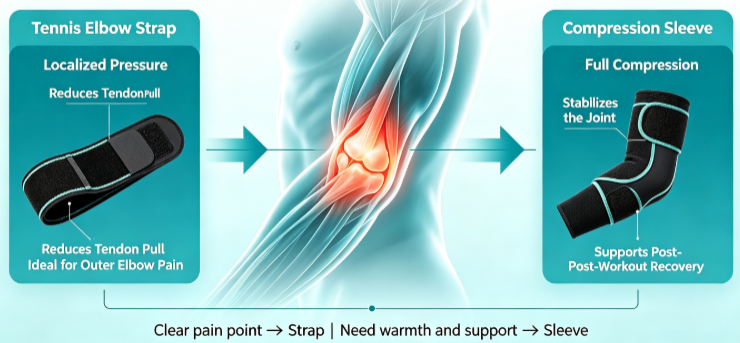
Tennis Elbow Brace Vs Compression Sleeve: Which to choose
Matching Your Pain Pattern to the Right Elbow Support
Pain location tells you almost everything you need to know before you buy. Doctors and physical therapists use this same logic when they recommend a counterforce brace tennis elbow wrap versus a forearm compression sleeve. It comes down to where the pain lives and what triggers it.
Quick Decision Checklist
Pick a brace if pain is sharp, activity-triggered, and centered on one spot near the tendon attachment. Pick a sleeve if pain is dull, spread out, and paired with light swelling or stiffness. Use both if you feel sharp pain during activity but general soreness the rest of the day, sleeve underneath and brace layered on top.
Matching Elbow Support to Your Activity Level: Mid-Workout vs Recovery Days
Timing changes everything here. The same elbow pain that flares up during a tennis serve needs different support than the ache you feel three days into recovery mode.
During Activity: Sports, Lifting, Repetitive Motion
- Tennis, weightlifting, hammering, repeated gripping/twisting → counterforce brace or strap. It concentrates pressure on your forearm extensor muscle belly, pulling load off the lateral epicondyle.
- Activity with a pinpoint pain spot → adjustable strap with a dual pressure pad. You can fine-tune tension and pad position mid-movement.
- Typing, desk work, light repetitive motion → a compression sleeve works if pain is mild. It’s comfort-first support, not aggressive load redistribution.
During Recovery: Daily Wear and Return-to-Sport
Recovery mode flips the priority. An ISRCTN-registered protocol using an ArmLock sleeve had patients wear it just 30 minutes daily for 12 weeks, targeting pain reduction and function improvement over time. That’s a slow-burn approach, not instant protection.
Quick Decision Logic
- Pain flares during activity → brace/strap
- Recently recovered, want to prevent relapse, need all-day wearability → compression sleeve
- Pinpoint pain near the lateral epicondyle → counterforce strap
- Diffuse soreness, general elbow fatigue → compression sleeve
- Need pre-game pain relief → brace, since both orthoses deliver immediate results, but braces offer more targeted control
Frequently Asked Questions (FAQ)
When you’re standing in the aisle trying to decide, straight answers matter.
Which one relieves pain faster?
The counterforce brace wins for speed on sharp, activity-triggered pain. It applies targeted pressure directly below the tendon, cutting tension the moment you grip or lift. The compression sleeve works more gradually, improving comfort through warmth, blood flow, and even pressure rather than instant mechanical offloading.
Which is better for arthritis or chronic tendonitis?
For arthritis and general chronic soreness, lean toward the sleeve. It’s built for widespread aching and stiffness, especially in cold weather. For chronic tendonitis with pinpoint pain (classic tennis elbow or golfer’s elbow), the elbow brace for tendonitis targets the exact tendon attachment point instead of the whole joint.
Can a brace or sleeve replace physical therapy?
No. Both are symptom-management tools. They reduce pain enough to keep functioning, but eccentric loading and rehab exercises address the actual damage. The brace handles pain and physical therapy handles the fix.
How long until I notice results?
Immediate relief from either option is common during activity. Long-term improvement, especially with sleeves, typically takes several weeks of consistent daily wear.
Can You Wear a Tennis Elbow Brace and Compression Sleeve Together?
Most people don’t need both. The brace and sleeve target overlapping issues through different mechanisms, so one is usually enough to manage a single flare-up. Layering makes sense only in specific situations, like sharp activity pain paired with all-day soreness.
Conclusion
Choosing between a tennis elbow brace and a compression sleeve comes down to whether you are managing acute pain or preventing long-term strain. If sharp, activity-specific pain is your issue, a counterforce brace redistributes pressure away from the tendon during movement. If you’re dealing with lingering stiffness, swelling, or general forearm fatigue, a compression sleeve for elbow support offers steady, all-day relief and better circulation.
Don’t guess your way through recovery. Match the tool to your symptoms.
No matter if you’re a clinic center managing chronic pain for patients or a sports brand looking for a low-profile solution for consumers, AOFIT, as your reliable medical brace manufacturer, offers you custom elbow braces with wide options.