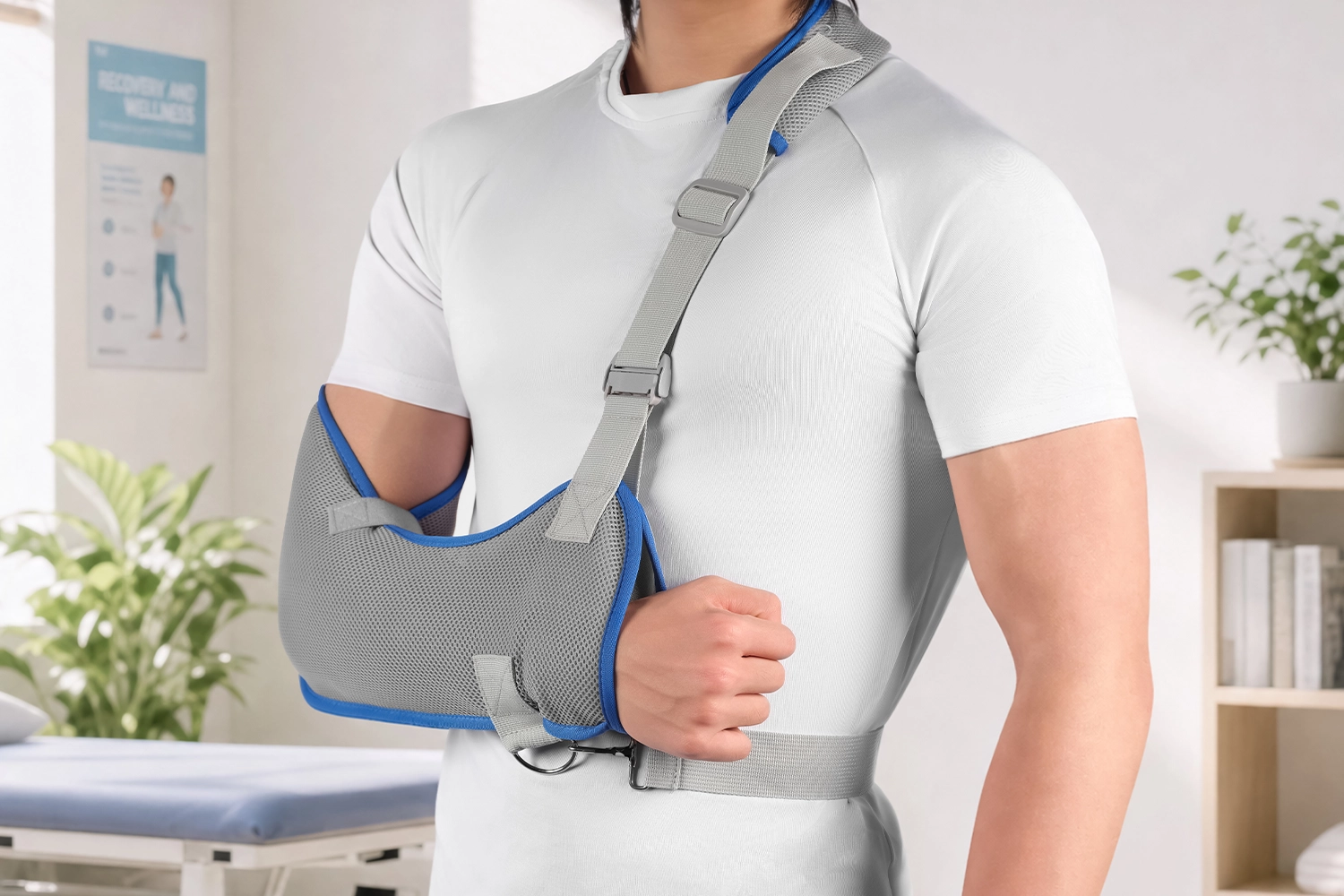
You’re lying in bed, fresh out of surgery or nursing a nasty sprain, staring at that bulky knee brace and wondering: do I actually sleep in this thing, or am I risking a whole new problem by keeping it on? It’s one of those questions nobody really prepares you for—your discharge papers say “wear as directed,” but nobody explains what that means at 11 PM when you’re trying to get comfortable.
Whether you should sleep with a knee brace on depends heavily on why you’re wearing it. Get it wrong, and you’re looking at anything from a restless night to actual nerve damage. This guide breaks down when nighttime bracing is non-negotiable, when it’s optional, and the warning signs that mean it’s time to call your doctor. No guesswork.
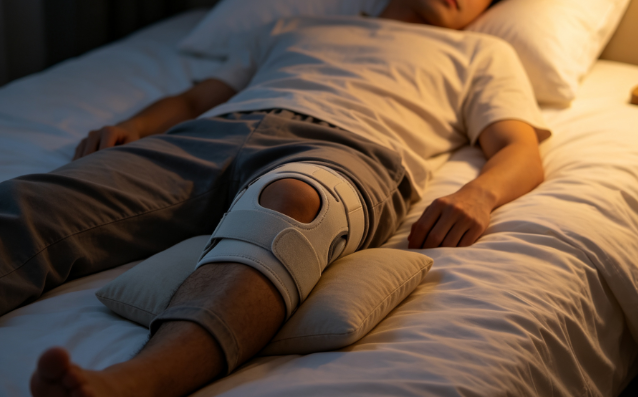
Can You Sleep With A Knee Brace On: The Direct Answer and Bottom Line
You can sleep with a knee brace on, but only if your doctor or PT specifically told you to. If they did, keep it on. If not, take it off before bed.
Post surgery knee brace sleep (think ACL reconstruction or a knee replacement) is a completely different ballgame than wearing a random compression sleeve for a mild sprain. Surgery cases often require overnight bracing to stop involuntary bending while you’re out cold. Everyday support braces are not designed for eight hours of skin contact, sweat, and pressure.
Early Post-Op Recovery: Why Doctors Insist You Wear a Knee Immobilizer All Night
Your body doesn’t know it’s asleep. It still moves, twitches, rolls over—and every one of those unconscious movements can put stress on a knee that’s still healing on the inside. That’s the real reason for those strict orders about wearing a knee brace to sleep after surgery. The brace protects the repair from you, specifically the version of you that has zero control once you’re out cold.
When nighttime bracing is non-negotiable:
- Meniscus or ligament surgery, early recovery: The brace stays on overnight to stop your leg from twisting or bending unexpectedly. Once you’re awake and staying still, some surgeons allow you to remove it temporarily, but only if they’ve said so.
- ACL brace sleep situations: This is where doctors get the most strict. Early on, you’re told to wear it even while resting, because the graft is fragile and any twisting motion can compromise it.
- General fixation-style braces: Some post-op protocols are blunt about it—brace stays on for everything except rehab exercises, full stop.
Typical timelines you might see:
- First month post-op: 24-hour wear often, no exceptions.
- After month one: Nighttime removal sometimes becomes okay.
- Around month three: Many patients are cleared to ditch the brace entirely.
- Some ligament protocols specify 6 weeks of 24-hour wear, with nighttime removal after that. Fracture bracing can stretch to 8 weeks continuously.
Here’s a nuance that matters: ACL reconstruction and total knee replacement aren’t treated the same. ACL recovery leans heavily on nighttime bracing because rotation and bending are the enemy of a healing graft. Knee replacement patients get a case-by-case approach—based on stability, pain levels, and how rehab is progressing, not a blanket overnight rule.
If your surgeon wrote “wear at night” on your discharge instructions, that’s not a suggestion. Follow it to the letter, even when it’s uncomfortable.

Sports Injuries and Ligament Tears: Why Nighttime Knee Stabilizer Matters
Ligament injuries don’t just hurt—they make your knee flat-out unreliable. A torn ACL or meniscus doesn’t heal into “stability” overnight, and that instability is exactly why nighttime bracing matters so much for this specific group of injuries.
Think about how ACL tears actually happen. It’s rarely someone tackling you. Over 70% of ACL injuries happen with zero body contact—a sudden stop, a hard pivot, landing wrong off a jump. Your knee twists in a way it wasn’t built for, and the ligament that’s supposed to stop your shinbone from sliding forward (and keep you from over-rotating) gives out. Meniscus tears follow a similar pattern: sharp pivots, awkward falls, bad landings.
So why does this matter at 2 AM? Because you can’t control your knee position while you’re asleep. If there’s already instability from a torn ligament, every unconscious roll or leg twitch becomes a chance for the joint to buckle or hyperextend again. An orthopedic knee brace holds your alignment so sleep doesn’t undo your recovery.
Ask yourself these questions to know if you still need it at night:
- Is there noticeable swelling, warmth, or fluid buildup?
- Does the knee feel like it’s “giving way” or about to slip?
- Is nighttime rest pain still significant?
- Are you hesitant to put weight on it when walking or turning?
If you’re answering yes to any of these, you’re still in the acute phase—the first one to two weeks—where protection matters more than mobility. Once swelling drops and you can control the joint during the day, you can shift from full-night bracing to as-needed use.
One more practical tip: pair the brace with elevation above heart level. It’s a simple combo that tackles swelling and instability at the same time.

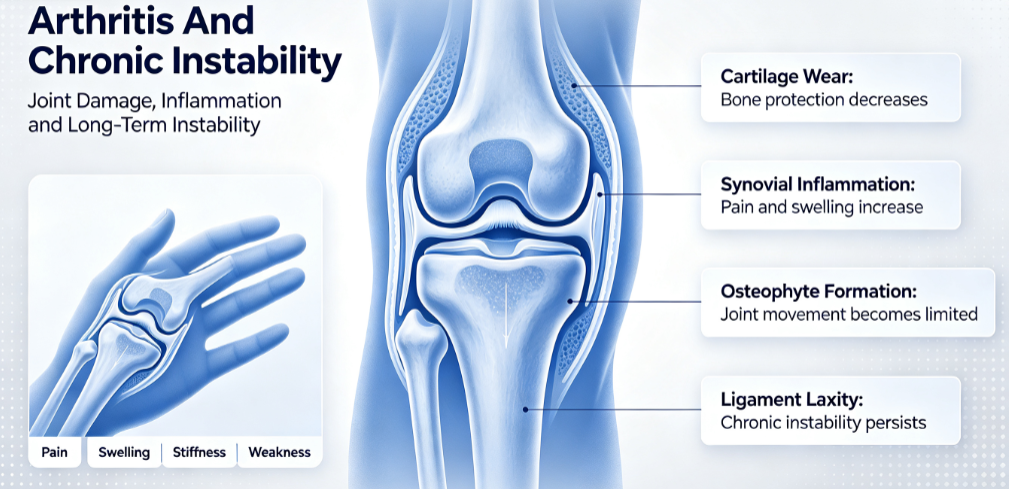
Arthritis And Chronic Instability: When Nighttime Knee Sleeve Makes Sense
Chronic osteoarthritis – that deep morning stiffness, the nagging sense your knee might buckle when you roll over – is a different situation from surgery recovery or a fresh sprain. This is where people get most confused.
A nighttime brace for arthritis or chronic instability keeps your joint in a neutral, protected position to prevent awkward positioning overnight, similar to how hand splints work for arthritic fingers.
Daytime activity braces are built for support with stiffer structure and more compression to stabilize you on stairs or uneven ground. Nighttime alignment braces should be low-pressure and soft, meant for hours of comfortable wear. AOFIT, as your reliable medical brace supplier, can support different kinds of braces with various designs, no matter if it is a knee immobilizer, stabilizer, brace, or a sleeve.
Most guidance keeps overnight continuous wear conservative – 4 to 6 hours max in many cases, with removal once you’re asleep. For acute flares or post-injury swelling, nighttime bracing is often limited to 2-3 days, not an indefinite routine.
Watch for these knee brace side effects overnight: numbness or tingling, skin discoloration or coldness, pressure marks that don’t fade, or worse stiffness the next morning.
If a compression knee sleeve sleeping setup causes any of that, loosen it, switch products, or ask your PT about a softer, low-pressure alternative built for nighttime alignment.
What Situations Call For Taking The Brace Off At Night
Check your treatment plan. Does it say “24-hour wear,” or does it say “wear during activity”? That one line decides whether a knee immobilizer at night is mandatory or optional.
Removal timelines that show up in real recovery plans:
- Ligament fixation: 24-hour wear for the first 6 weeks, then nighttime removal becomes fair game.
- Fracture bracing: Often 8 weeks of round-the-clock wear, with nights off allowed after week 6—though full discontinuation can take up to 2 months.
- Meniscus rehab: Nighttime wear frequently runs through week 4, while walking support continues for 8-12 weeks depending on strength gains.
Signs your brace has no business staying on overnight:
- It’s a sport-style knee support built for running or training, not stillness.
- It’s a lightweight compression sleeve meant for daytime warmth, not sustained pressure.
- Wearing knee support overnight causes numbness, tingling, redness, or noticeably worse swelling by morning.
- The bulk of it is keeping you from falling asleep.
If any of that sounds familiar, take it off. Your recovery doesn’t need the extra fight.
Main Risks and Complications of Wearing a Knee Brace at Night
The brace that’s protecting your knee can also mess with it in a different way. Four risks show up again and again in clinical guidance—skin breakdown, circulation problems, swelling, and stiffness from staying still too long.
Skin irritation tops the list. Redness, rashes, itching, bruising, even actual sores can develop when a rigid brace presses on the same spot all night. You barely shift positions while asleep, so that pressure point never gets a break.
Knee brace circulation issues are the scarier concern. A brace that’s too tight compresses blood vessels directly, cutting off arterial supply and slowing venous return. The tell-tale signs: numbness, tingling, a cold sensation, and puffiness the moment you wake up.
Swelling often follows right behind. Less movement plus compression equals fluid pooling in your leg or ankle—press on it and you’ll notice that lingering dent.
Long-term immobilization brings stiffness, reduced range of motion, and sometimes muscle weakening once the brace finally comes off.
Check immediately if you notice:
- Persistent numbness or a pins-and-needles feeling
- Skin turning pale, purple, or staying red
- Swelling that’s getting worse, not better
- Pain intense enough to disrupt sleep
- Any skin breakdown or drainage
If any of these show up, loosen the brace or take it off, and call your doctor.
If You Must Wear It All Night: A Practical Safety Checklist
Okay, so your doctor said the brace stays on. That’s fine. You can still wear it all night without being miserable or risking your skin. There’s a whole system for doing this safely, and it starts with one simple test.
The Two-Finger Check
Choose the right knee brace size and slide two fingers under the strap. If they slip in easily, you’re good. Can’t get one finger in? Too tight, so loosen it right away. Sliding around loosely? Tighten it up. Do this check every single night, not just the first time.
Skin Checks, Before and After
Look at your skin before you strap in: red spots, swelling, any breakdown. Then check again 15-30 minutes after wearing it. Burning, tingling, or a spot turning white? Adjust now, don’t wait until morning.
Sleep Position Matters
Back sleeping is your best friend here—it keeps pressure even. Side sleeper? Pillow between the knees, always. This stops the brace from twisting or digging in. Skip stomach sleeping entirely, since it creates pressure points you don’t need.
Add a Thin Liner If Needed
A thin, wrinkle-free liner under the brace cuts friction, especially if you’re new to this or move a lot at night.
Elevation Rules
Prop the whole limb above heart level with pillows, not just under the heel. Keep your ankle neutral, not pointed. If toes go pale or numb, the setup’s wrong.
If heat, pain, redness, or numbness shows up mid-night, don’t push through it. Check it and call your doctor.
Conclusion
Whether you can sleep with a knee brace depends on your recovery stage, your doctor’s specific orders, and how your body responds overnight. If you’re fresh out of surgery or nursing a fresh ACL injury, that knee immobilizer at night is doing real protective work, even if it feels annoying at 2 a.m. If you wake up numb, tingly, or swollen, that’s a sign to loosen up, reposition, or call your doctor—no exceptions. Keep a little checklist by your bed, check your skin and circulation before you drift off, and don’t be afraid to advocate for your own comfort while you heal.
Talk to AOFIT now if you are looking for a custom knee brace solution for your patients. We are ready to service you with our full ODM/OEM production line.