
Wrist splints or braces are designed to support an injured area, promoting healing and recovery. To ensure that your brace—whether it supports your thumb pain, tendonitis, or carpal tunnel syndrome —remains effective and durable, proper maintenance is essential, particularly when it comes to regular cleaning. So, How to clean wrist splints? Consistent and correct cleaning of your supports offers several important benefits:
- Helps prevent skin infections and irritation
- Preserves the material’s elasticity and supportive function
- Extends the overall lifespan of the product
- Reduces unpleasant odors, especially after frequent use
Before cleaning, it is important to identify the materials and structures used in your specific support. Wrist splints are typically made from breathable neoprene, fitted with adjustable straps and metal or plastic splints. They are necessary for the ways of cleaning. The following guide provides a safe, step-by-step routine.
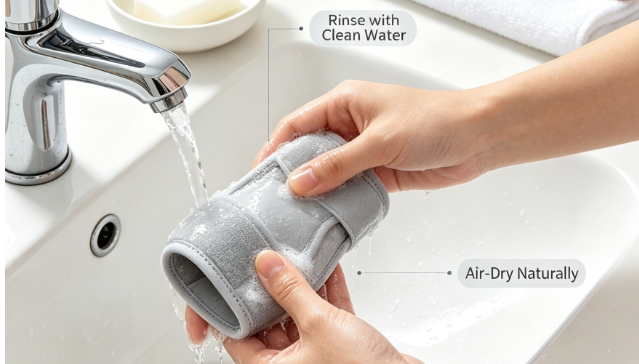
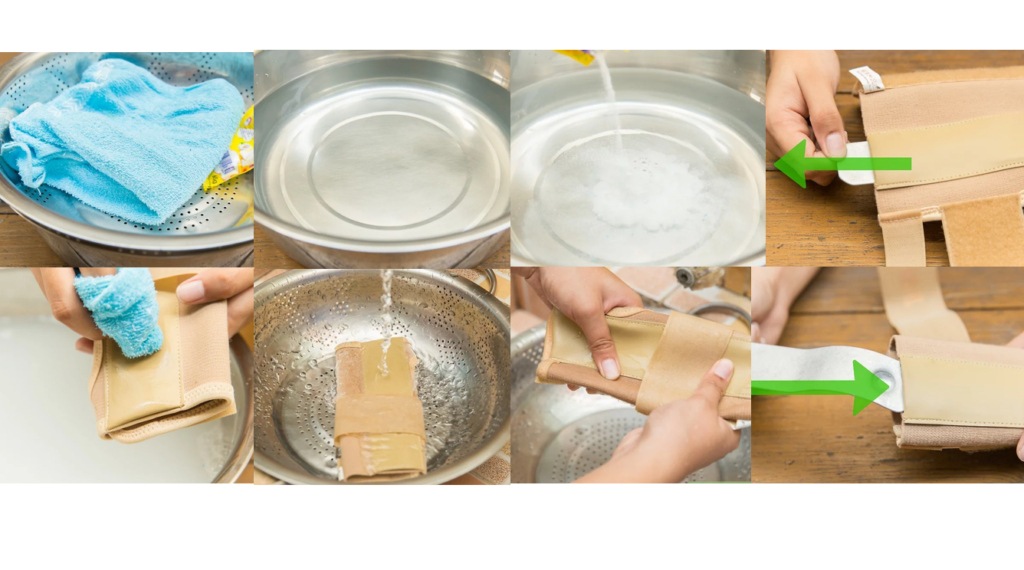
How to clean wrist splint by hand
Your splint should be hand-washed in warm – never hot – soapy water. Avoid machine washing or tumble drying, as these can warp the shape or damage the material, as noted in the wrist brace manufacturer‘s instructions.
Step 1: Prepare Your Supplies
Before you start, gather: mild laundry detergent, a clean cloth, a large bowl, and a colander. Having everything ready will make the process smoother. Use only mild detergent to protect both the synthetic fibers of the brace and your skin. If you don’t have laundry detergent, 1 tablespoon of dish soap works as a substitute.
Step 2: Fill the bowl with warm water.
Warm water is ideal for man-made materials – it effectively removes dirt and stains while reducing the risk of shrinkage compared to hot water. For a more eco-friendly option, you can use a cold-water detergent, as many are just as effective. Stir the detergent thoroughly with a spoon or whisk until fully dissolved to avoid residue that could affect fabric quality or irritate your skin.
Step 3: Check Pockets and Metal Parts
Before washing, remove any metal splints or gel packs from their pockets. Detergent can corrode metal components, and leaving items in pockets may cause damage. Be sure to remember where each metal piece belongs so you can reinsert them correctly later.
Step 4: Scrub Gently
Using a clean, lint-free cloth, apply the soapy solution to the brace. This reduces skin contact with cleaning agents and ensures a more thorough clean. Avoid vigorous scrubbing, which can weaken the fibers. Pay extra attention to small or hidden areas, particularly between the fingers, to remove dirt and bacteria effectively.
Step 5: Rinse Thoroughly
Place the brace in a colander and rinse with a sprayer if available. If not, submerge it in clean water and gently squeeze until the water runs clear. Complete rinsing is important – leftover soap residue can irritate your skin. Avoid using running water directly, as the pressure may stretch the fabric.
Step 6: Remove Excess Water
Gently squeeze out water without wringing or twisting, as these motions can pull fibers apart and weaken the support structure. For extra drying, lay the brace flat on a dry towel, roll the towel and brace together, and press to absorb moisture.
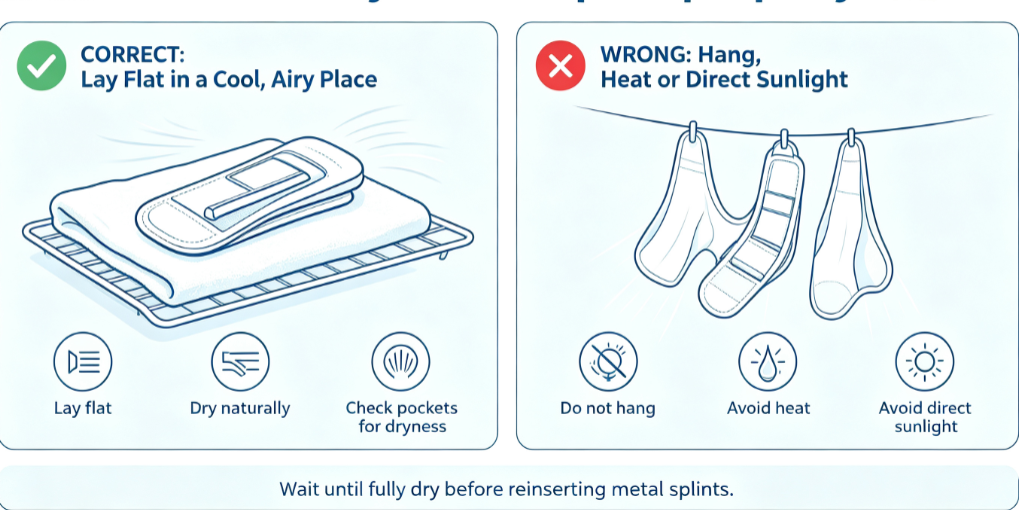
Step 7: Dry Properly
Never hang the brace to dry, as the weight of water can stretch it. Also avoid direct sunlight – UV rays may fade colors, and heat can shrink synthetic materials. Instead, lay it flat or hang it in a well-ventilated area away from heat sources and sunlight.
Step 8: Ensure Complete Dryness Before metal splints inserting
If your brace has metal splints, only reinsert them after the interior pockets are completely dry – dampness can corrode the metal and shorten the brace’s lifespan. Synthetic fabric usually dries within a few hours, but double-check all pockets to be safe.
Why is Machine Washing for wrist splint not suggested?
The suitability of machine washing a wrist splint largely depends on its materials and construction.
Design and Structure Related Shape Loss
Many wrist supports incorporate metal or plastic inserts for added stability. Washing these in a machine can be problematic—the inserts may shift, become bent, or even damage the washing machine drum. A metal splint, for instance, can rattle around during the cycle and scratch the interior. In such cases, spot cleaning is a safer alternative. Simply dampen a cloth with mild soap and water, and gently wipe soiled areas. Hand washing in a sink is also possible, but extra care should be taken to protect any internal inserts.
Material-Related Elastic Degradation
The high-speed spinning of a washing machine can break down elastic fibers over time, causing the brace to lose its snugness and supportive function.
Neoprene Wrist Supports
Neoprene is valued for its flexibility, stretch, and supportive qualities, but it requires careful handling in the wash. Exposure to high-speed agitation and hot water can distort its shape and damage its elasticity, resulting in a less secure fit. If machine washing is unavoidable, use a cold, gentle cycle and place the support in a mesh laundry bag to prevent snagging.
Cotton and Nylon Wrist Supports
Cotton and nylon blends are generally more machine-wash-friendly. A regular cycle with mild detergent is usually acceptable, but temperature still matters—hot water can shrink cotton, while excessive agitation may cause fraying. To preserve the support’s longevity, opt for a moderate cycle and medium-temperature water.
Velcro Wrist Supports
Unfastened or loosely secured Velcro straps can attach to the fabric mesh during spinning, potentially causing pulls, snags, or permanent damage to the material.
When it comes to Thermoplastic Wrist orthoses
To keep your thermoplastic wrist orthosis clean:
- Wash with mild soap and cool water using a damp sponge or cloth.
- Rinse thoroughly and allow to air-dry completely before re-wearing.
- Antibacterial wipes are also safe to use.
- Wipe the interior at least once a day, and increase frequency during warm weather or after exertion.
- Clean straps and padding using the same method.
- Contact the clinic for new padding or Velcro straps if they become worn or lose their grip.
FAQs on how to clean wrist splint
How often should you clean your brace?
That depends on the type of brace and your activity level. For a simple sleeve or soft brace without metal parts, laundering every few days is usually sufficient. For larger braces with metal components—such as ACL or OA braces—it’s best to wipe them down daily with a damp washcloth or baby wipe.
What other maintenance do braces require?
Maintenance needs vary by brace design. For instance, exposed hinged braces may need occasional lubrication. Straps should be checked regularly for signs of wear, and replacement parts are often available from manufacturers.
When is it time to replace your brace?
Replace your brace if straps or seams are tearing, or if rigid parts become loose and cannot be repaired or exchanged. Also consider replacement if the fit changes—whether from wear and tear or physical changes in your body—since an ill-fitting brace can do more harm than good.
Should you remove your splint while washing or showering?
Only remove it if your hand therapist gives the go-ahead. Your therapist will set a specific wearing schedule. If you need to keep the splint on, make sure it stays covered and completely dry.
Conclusion
Your wrist brace is essential to your everyday comfort and mobility, so keeping it clean is key to preserving both its performance and your well-being. The cleaning ways above ensure long-lasting support.
As a trusted manufacturer of medical-grade braces, AOFIT is here to support your branding needs. Every package includes detailed care instructions covering the ideal water temperature, suitable detergents, and safe drying methods. Reach out AOFIT today to discuss your custom solution.