You’ve noticed it too. Standing in the brace aisle or scrolling through Amazon listings, you see the same split: some wrist braces are solid, wrapping your wrist in unbroken fabric. Others are covered in small holes. It looks like a small design choice. It’s not. Whether you’re managing carpal tunnel, recovering from a sprain, or just need something to wear through an eight-hour shift, the solid wrist brace vs. hole wrist brace choice changes how much support you get, how hot your skin gets, and whether you’ll actually keep the brace on.
This guide covers what separates a solid wrist brace from a ventilated one, when the material matters more than the design, and which option fits your situation—so you’re not guessing at checkout.
What Is a Solid Wrist Brace: Features & Best Use Cases
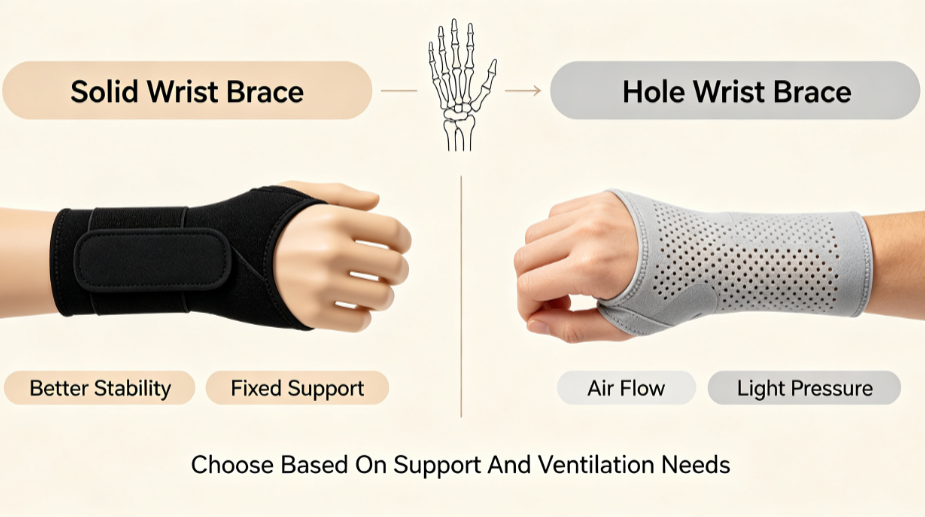
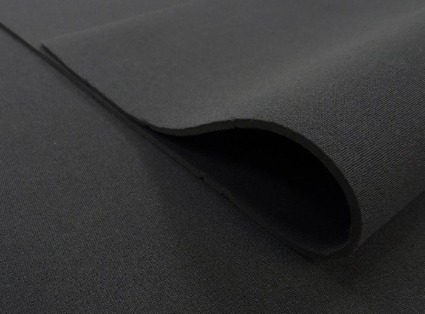
A solid wrist brace is built for stabilization, not airflow. You’re looking at a rigid or semi-rigid support that combines compression with one or more stays—usually aluminum or plastic splints—sewn into a fabric shell. That shell is made from neoprene, elastane, polyester, polyamide, or polyurethane, with neoprene doing most of the work for warmth and compression.
How the support works
The rigid splint insert restricts flexion and extension, which is what you want if you need a wrist stabilizer rather than something for mild soreness. Around that splint, a wraparound strap adds adjustable compression, so you can dial pressure up or down without losing circulation. Many models also use heat-retentive neoprene, which warms the joint and muscles during wear—something ventilated designs can’t replicate.
Where solid braces make sense
- Post-surgery or post-cast recovery: control movement while your fingers stay functional.
- Severe sprains or ligament instability: the rigid stay does the immobilizing work your ligaments can’t.
- Carpal tunnel flare-ups, especially at night: a wrist splint with a rigid palm stay keeps your wrist neutral while you sleep—this is where a wrist brace for sleeping shows up as a night splint with dorsal stays and cushioning beads.
- Daytime tasks like typing, driving, or light weightlifting: an adjustable compression wrist brace gives support without locking you out of hand function entirely.
On price, mass-market neoprene-and-aluminum options sit in the low-cost consumer range on most marketplaces. Night-specific versions with aluminum-alloy palm splints and dorsal stays cost a bit more but deliver stronger stabilization. Most are built as one-size-adjustable, which covers a broad range of wrist sizes and activity levels without much fuss.
What Is a Hole/Perforated Wrist Brace: Features & Best Use Cases
Holes don’t mean less support. A perforated wrist brace still carries a rigid or semi-rigid palmar stay (usually aluminum) that does the actual load-bearing work. The perforations exist for one job: airflow. The support system and the ventilation system are separate, and that’s the whole point of this design.

How the structure holds up
The outer shell is where the holes live. Vented neoprene, spacer fabric, or perforated SBR lets heat escape instead of building up against your skin. Underneath that shell sits the same palmar stay and strap combo you’d find in a solid brace, which is why a well-made ventilated wrist brace can stabilize a wrist as effectively as its solid counterpart. Some models add a moldable dorsal stay alongside the palmar one for extra control. Linings tend toward plush or terry cloth, or a moisture-wicking skin-friendly material, since sweat and prolonged wear are exactly what this design is meant to handle.
Where a perforated wrist brace fits
- Desk work and typing: low-profile, breathable builds let you wear wrist braces all day without that trapped, sweaty feeling.
- Gym sessions and physical labor: perforated SBR or breathable neoprene holds compression while managing heat.
- Hot climates or summer months: lightweight spacer-fabric options are built for warm-weather comfort.
- Carpal tunnel, tendonitis, mild sprains, overuse injuries: models with palmar stays show up repeatedly for these exact indications.
- Post-cast transition: removable, malleable stays allow controlled movement as you ease out of full immobilization.
Sizing tends to run standard. A medium fits roughly 15.9-19.0 cm wrist circumference, with brace lengths around 18-20 cm depending on the model. When shopping, look past cosmetic holes. Check that perforations sit across actual contact zones, confirm the palmar stay is removable or moldable, and prioritize a moisture-wicking liner if you’re wearing it for hours at a stretch.
Solid Wrist Brace Vs Hole Wrist Brace: Key Comparison Dimensions
Numbers settle arguments faster than opinions. Here’s how solid and perforated designs stack up side by side.
| Dimension | Solid Wrist Brace | Perforated/Ventilated Wrist Brace |
| Support level | Moderate to rigid | Light to moderate |
| Breathability | 2/5–3/5 | 4/5–5/5 |
| Best worn | Night, post-surgery | Day, all-day wear |
| Difficulty of cleaning wrist brace | 2/5 (wipes clean) | 3/5–4/5 (dries faster, collects sweat) |
| Comfort | Lower for long stretches | Higher, marketed as “all-day comfort” |
| Stability | Higher | Moderate-high |
| Durability | 3/5–5/5 (thicker material) | 3/5–5/5 (depends on knit quality) |
| Price range (USD) | $18–$60+, up to $80+ branded | $10–$20 entry-level |
Support level is the clearest split. A solid wrist brace—think FUTURO’s Comfort Stabilizing line—sits in the moderate-to-rigid category. A perforated wrist brace, like Neo G Airflow or Bauerfeind’s vented models, leans lighter, prioritizing comfort over maximum immobilization.
Breathability flips the story. Solid designs score 2/5–3/5 on airflow. Ventilated versions hit 4/5–5/5, which is why their listings lean hard on “breathable,” “moisture-wicking,” and “all-day wear.”
Duration of use follows breathability. Daytime tasks favor a ventilated wrist brace. A wrist brace for sleeping stays rigid—you’re not sweating through eight hours the same way you sweat through a workday.
Cleaning favors solid builds. Wipe-clean surfaces beat mesh that traps sweat, even though mesh dries quicker.
Comfort, stability, durability trade off: perforated wins comfort, solid wins stability, and durability is a toss-up depending more on material. Neoprene shells last regardless of ventilation, per Bauerfeind’s own “breathable and durable” claims.
Price signals the real trade-off. Perforated compression wrist brace options run $10–$20 for basic mesh builds. Solid, stabilizing designs run $18–$60+, climbing past $80 with branded, rigid-support carpal tunnel brace models. If the support level is equal, perforating is cheaper. If the price is equal, solid buys more stabilization.
How to Choose Between Solid and Hole Wrist Brace Types Based on Your Needs
Rigid braces restrict 60–100% of wrist flexion. Soft supports barely restrict anything—they’re built for mild pain and swelling. Semi-rigid sits in between, handling functional daytime use without locking you out of your own hand. That range is your real decision-making tool, not the design on the box.
Match the brace to the situation:
- Sleeping or nighttime bending: Go solid/rigid. You need a neutral, near-immobile wrist while unconscious, and rigid braces are the standard recommendation for nighttime carpal tunnel management. Post-cast? Expect near full-time wear for 1–3 weeks, then weaning to night-only.
- Typing and desk work: Go perforated or semi-rigid. You need moderate support without total immobilization. Rigid braces aren’t built for eight-hour desk sessions. Look for moisture-wicking fabric; some models use antimicrobial base sleeves specifically for long wear.
- Gym and lifting: Semi-rigid or perforated wins here too. Save rigid for cases a clinician has cleared for post-op or fracture recovery. Firmer support during high-risk lifts, lighter support otherwise.
- Post-op, fracture, severe sprain: Rigid, full stop. Look for aluminum or steel stays, coverage from palm base to mid-forearm, and multiple adjustable straps.
- Mild swelling or everyday soreness: Perforated or soft compression sleeves handle this without restricting mobility.
- Hot climate or sweaty hands: Perforated/breathable, every time. Heat buildup is the #1 reason people quit wearing braces consistently.
Fast decision path: Severe injury or clinician-directed immobilization? Rigid. Nighttime protection? Rigid. Typing or light gym? Perforated/semi-rigid. Mild pain only? Soft/perforated. Sweaty or hot conditions? Breathable.
Frequently Asked Questions About Wrist Brace Design and Support
Two questions come up again and again in reviews, forums, and clinic notes. Here’s what the evidence actually says.
Do holes reduce support?
Not by themselves. Support comes from the rigid insert and the angle it locks your wrist into. Perforations are fine as long as they don’t weaken that stiffening element. Some clinical guidance discourages braces with a palmar spine (a stay running under the palm) because they can increase median nerve pressure. Dorsal or lateral support is the safer pick.
Is breathable always better?
No. Comfort improves, but only if immobilization holds up alongside it. Most wrist brace manufacturers cap continuous wear at 2–3 hours, with a daily ceiling of 6–8 hours, regardless of how much mesh is involved. Big cutouts that loosen strap anchoring can quietly cost you support even as comfort goes up.
Conclusion
The solid vs. perforated wrist brace debate comes down to what your wrist needs. If you’re recovering from surgery or need maximum rigidity for a bad carpal tunnel flare-up, a solid brace gives you superior stabilization. If you’re wearing one for eight hours at a desk or through a sweaty workout, the perforated design is what keeps you actually wearing it instead of pulling it off by lunchtime. Splint quality and fit matter more than whether there are holes in the fabric.
Ready to update your product line to support your patients’ needs? Contact AOFIT now for your custom wrist brace solution.