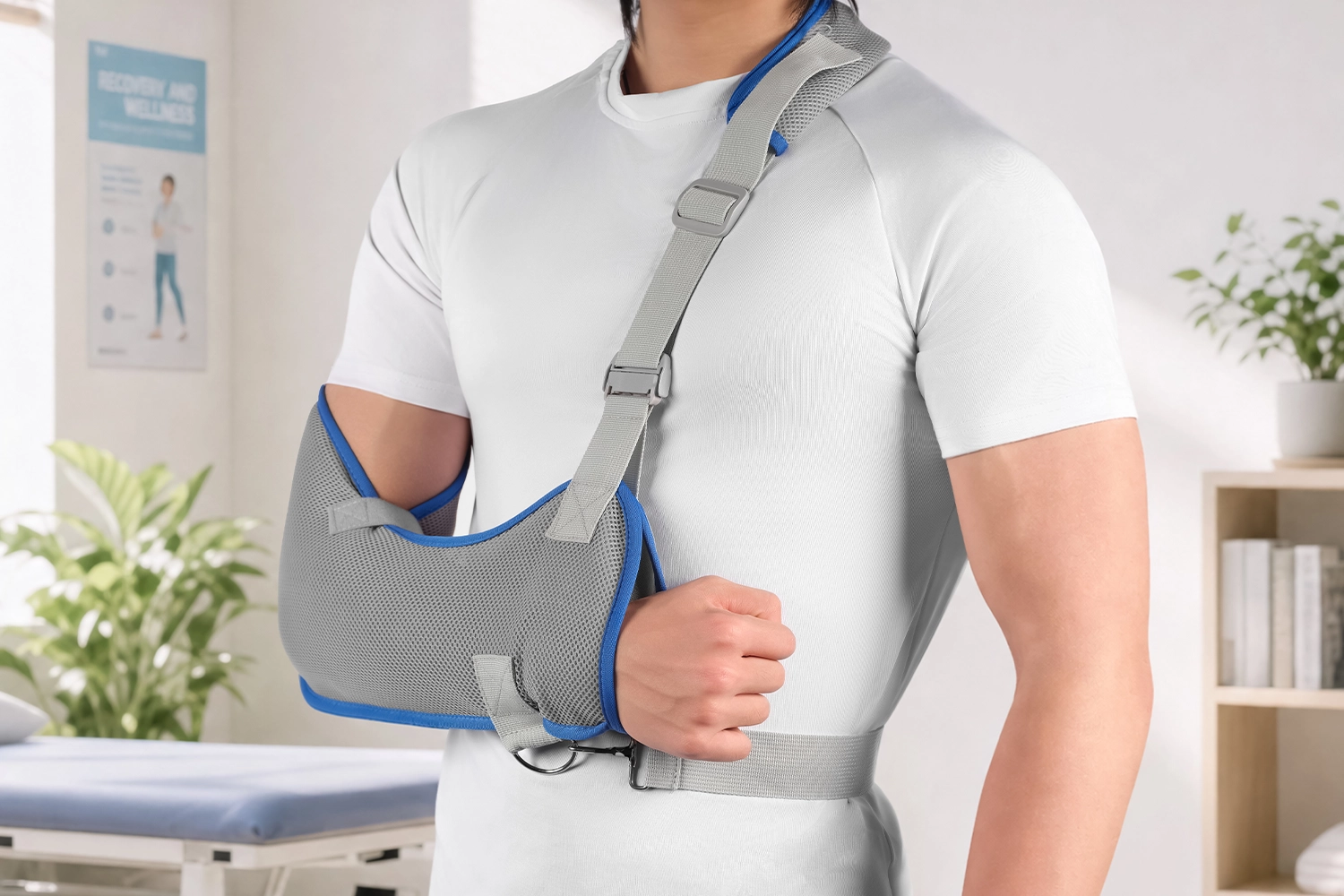
A spinal compression fracture diagnosis raises an immediate practical question: which back brace actually fits your situation? A rigid TLSO works wonders for some fractures but does nothing, or worse, for others, while a soft corset might be exactly what a mild case needs. Get the wrong type and you’re either wasting money on unnecessary rigidity or risking poor healing with insufficient support. This guide explains the best kind of back brace for compression fracture, based on your severity and location. It also walks you through the real differences between TLSO, hyperextension, and soft brace options, and covers the fitting details and usage tips your doctor may not have time to mention.
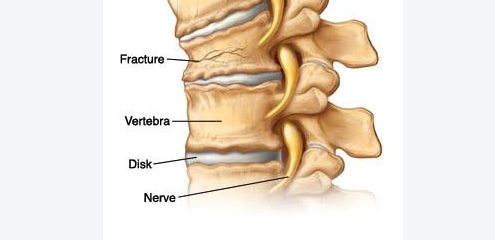
Understanding Spinal Compression Fractures: Severity & Location Matter
Doctors don’t pick a brace at random. They look at two things first: how badly the vertebra collapsed, and where it sits on your spine. Both factors drive the recommendation.
The Genant grading scale measures severity
– Grade 1 (mild): 20–25% height loss
– Grade 2 (moderate): 25–40% height loss
– Grade 3 (severe): more than 40% height loss
Most clinicians diagnose a compression fracture when the vertebra loses 20% or more of its height, or drops 4mm from baseline. When anterior height loss exceeds 50% or the local kyphosis angle passes 30–35°, that’s a red flag. Those numbers usually push the case toward surgical evaluation instead of brace-only management.
Location changes the brace type
Fractures in the thoracic spine (T6–T12) or the thoracolumbar junction (T12–L2) typically call for a thoracolumbosacral orthosis (TLSO). That makes mechanical sense: the junction absorbs the most stress during forward bending, so a TLSO limits flexion and rotation right where it’s needed. Lower lumbar fractures (L3–L5) usually respond better to an LSO (lumbosacral orthosis), since a standard TLSO doesn’t grip the lower spine as effectively.
Cause matters too
Osteoporotic fractures call for a symptom-focused approach: brace for pain control and posture support while healing progresses, paired with physical therapy and bone-strengthening treatment. For traumatic fractures, doctors focus on stability first, checking for posterior wall involvement, ligament damage, or neurological symptoms before deciding on bracing.
Wear time for conservative treatment typically runs 4–12 weeks, sometimes stretching to 2–3 months depending on healing progress.
Rigid TLSO Brace: When It’s the Right Choice
Think of a rigid TLSO as the heavy machinery of back braces. When a fracture sits between T6 and L1 — some clinicians extend that range to T8–L4 — and remains stable enough to skip surgery, this is the brace doctors reach for first.
What makes it “rigid”
Custom-molded back brace from thermoplastic material are built to grip the thoracic, lumbar, and sacral regions at once. Classic designs like the Knight-Taylor braces fall into this category. Their job is to restrict flexion primarily, though stiffer models also cut down on extension, rotation, and side bending.
Why doctors pick it
Among non-surgical options, rigid TLSO offers the most trunk motion control available. That matters for thoracic and upper lumbar burst-pattern or wedge-compression fractures where you need to lock down flexion, extension, and rotation together. For osteoporotic vertebral compression fractures, a rigid TLSO buys time — it supports healing and limits further vertebral collapse while a patient waits for procedures like kyphoplasty or vertebroplasty.
The trade-off is real
Strong stabilization comes with baggage. These braces are bulky, and older adults often struggle to tolerate them for long stretches. Extended wear has been linked to paraspinal muscle atrophy, skin breakdown, reduced lung capacity, balance problems, and higher energy expenditure just to move around. And even with the tightest fit, no rigid brace eliminates spinal motion entirely — it reduces it.
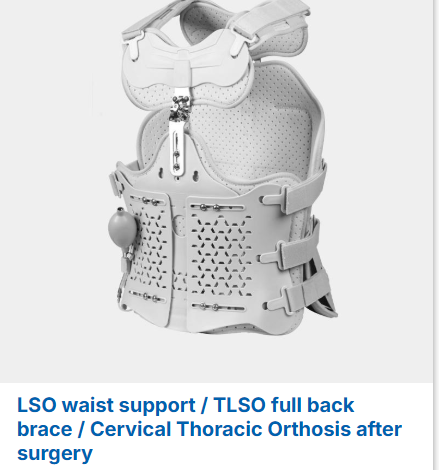
Bottom line: rigid TLSO makes sense when the fracture is stable but still needs firm motion restriction. If the patient is frail or has breathing issues, that calculus changes fast, and a lighter option deserves a second look.
Hyperextension Brace (Jewett/CASH): Best for Anterior Fractures
Not every compression fracture needs the bulk of a full TLSO. When the break sits in the anterior column of the thoracolumbar spine, a hyperextension brace does the job with far less hardware.
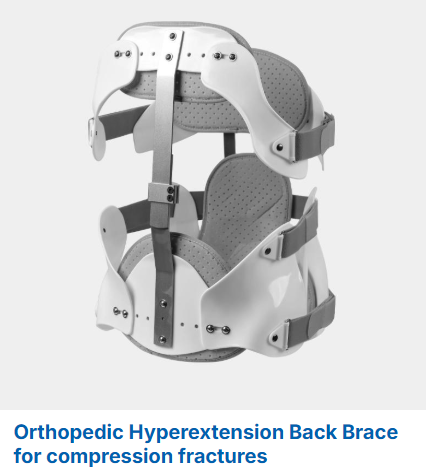
It uses three pressure points: a sternal pad, a pad above the pubic bone, and a posterior pad at the thoracolumbar junction. These hold the trunk in slight extension. That increases lumbar lordosis and locks the spine into a position that shifts load away from the fractured anterior vertebral body. The mechanism is straightforward: block flexion, cut axial force on the front of the spine, let the bone heal.
This works for stable compression fractures between T6 and L1, with the thoracolumbar junction as the sweet spot. AOFoundation research points to T10–L2 as the biomechanically ideal range for preventing further collapse or kyphosis progression. Osteoporotic kyphosis correction sometimes falls under this brace’s use too, though here it works more as a pain-reduction tool than a rigid stabilizer.
It does not fit unstable fractures, three-column injuries, or burst fractures. Fractures above T6 also don’t respond well; there’s not enough control over the upper thoracic segments. And if extension itself aggravates posterior spinal structures, this brace becomes a liability instead of a fix.
Jewett vs. CASH: What Actually Differs
The Jewett brace uses a sternal pad, suprapubic pad, and single posterior pad with a rigid metal frame. It gives you stronger lateral support, mainly in the sagittal plane. The CASH brace uses a cruciform frame connecting the same pad points. It’s lighter and simpler than Jewett but offers less lateral stability.
Pick Jewett for stronger structural and side-to-side control. Pick CASH when the priority is limiting flexion without added bulk.
Wear it while standing, walking, or sitting, and remove it when lying down or bathing. Typical duration runs 6–12 weeks, adjusted based on standing X-ray follow-ups.
Soft Brace/Corset: Limitations & Appropriate Use Cases
A soft corset is a comfort tool. Made from elastic or foam, it delivers mild-to-moderate compression and posture feedback, not the rigid immobilization a real spinal support brace provides. It still allows partial spinal movement, which is the whole point for some patients and a dealbreaker for others.
Research on vertebral compression fracture management shows no significant difference between rigid and soft braces for pain control, quality of life, or preventing spinal deformity. That’s made soft braces an “acceptable alternative” in some thoracolumbar cases, but only specific ones.
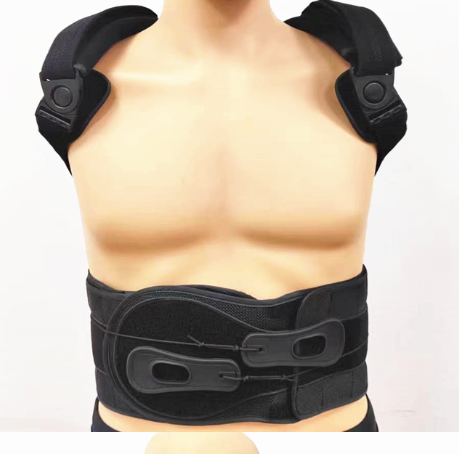
Where soft braces work
– Mild, stable compression fractures with kyphotic angle ≤30°
– Osteoporotic fractures in frail, elderly patients (often paired with a walker to offload axial stress)
– Transitional use as patients wean off a rigid TLSO
– Minor back pain, muscle strain, or mild disc-related discomfort
Where they fall short
Anything requiring true fracture stabilization, post-surgical fixation, or control over flexion/rotation. Using a soft brace as a substitute here risks inadequate stability and delayed healing. Long-term reliance also brings its own problems: muscle atrophy, weak postural muscles, skin irritation, the same complications seen with prolonged rigid brace for osteoporosis use, but usually milder. And if there’s progressive pain or neurological symptoms, a soft brace can mask a problem that needs medical reevaluation.
How to Choose a Back Brace For Compression Fracture: Rigid TLSO vs Hyperextension vs Soft Brace
Stronger support does not guarantee better outcomes. Systematic reviews on acute osteoporotic vertebral fractures found no consistent advantage for rigid TLSO over soft brace on pain, function, or ODI scores. Sometimes neither beat no brace at all. Support strength ranks TLSO > hyperextension > soft; comfort ranks the exact opposite.
| Factor | Rigid TLSO | Hyperextension Brace | Soft Brace |
| Motion control | Highest – restricts flexion, extension, rotation, side bending | Moderate-high – strong on flexion/extension, weaker on rotation | Lowest – mild stabilization only |
| Comfort | Lowest – bulky, hot, compliance issues common | Moderate – three-point support, less bulk than full TLSO | Highest – lightweight, easiest to accept |
| Best fracture type | Deformity-prone or stable burst fractures, T6–L4 | A2/A3 fractures at T10–L2 junction | Stable fractures, pain control, brace-intolerant patients |
| Ease of wear a back brace and Typical duration | Hardest – complex fitting, disrupts daily activity8–12 weeks | Moderate – needs accurate pad placement8–12 weeks (sometimes 4–8 if healing fast) | Easiest – good for low-compliance patients12 weeks, or 4–8 as transition |
Proper Brace Fitting & Usage Tips for Optimal Healing
A brace that’s fitted wrong won’t protect anything. Here’s what matters once you’re strapped in.
Put it on lying down. Apply a rigid back brace or TLSO while flat in bed, before you sit up. This keeps your spine in neutral alignment and stops the fracture from taking extra load while you’re putting the brace on.
Check the pad placement daily. For hyperextension braces, the sternal and pubic pads need consistent positioning. If they shift even slightly, pressure moves to the wrong spots. For TLSO users, the posterior pad should sit directly over the fracture level. Get an in-brace X-ray to confirm it’s in the right spot when you first get the brace.
Watch the skin. Inspect pressure points every time the brace comes off. Redness that doesn’t fade within 20 minutes means the brace doesn’t fit properly.
Layer clothing underneath. A thin cotton shirt reduces friction and doesn’t add bulk, so it won’t throw off the fit of a spine stabilization brace.
Avoid over-tightening. Too tight restricts breathing and circulation; too loose defeats the purpose. You should be able to slide two fingers under the brace comfortably.
Recheck fit after weight change. Elderly patients on a back brace for osteoporosis often lose weight during recovery. Refit accordingly.
Conclusion
Choosing a back brace for compression fracture recovery depends on the fracture’s severity, its location, and the kind of support your spine needs. A rigid TLSO brace limits motion in multi-level or unstable fractures, while a hyperextension brace corrects forward flexion in anterior wedge fractures. For mild, stable cases, a soft brace offers gentle reminders. Match the brace to your specific diagnosis and your doctor’s imaging results.
Don’t choose a spinal support brace from online reviews alone. Bring this comparison to your orthopedist or physiatrist, ask which category fits your fracture pattern, and get properly fitted before wearing it daily.
Even the best back brace won’t do its job if wearing it in the wrong type. Now choose AOFIT as your medical brace manufacturer who can give you a complete custom back brace solution no matter if it is a back brace with design like the Knight-Taylor or Jewett vs. CASH.