
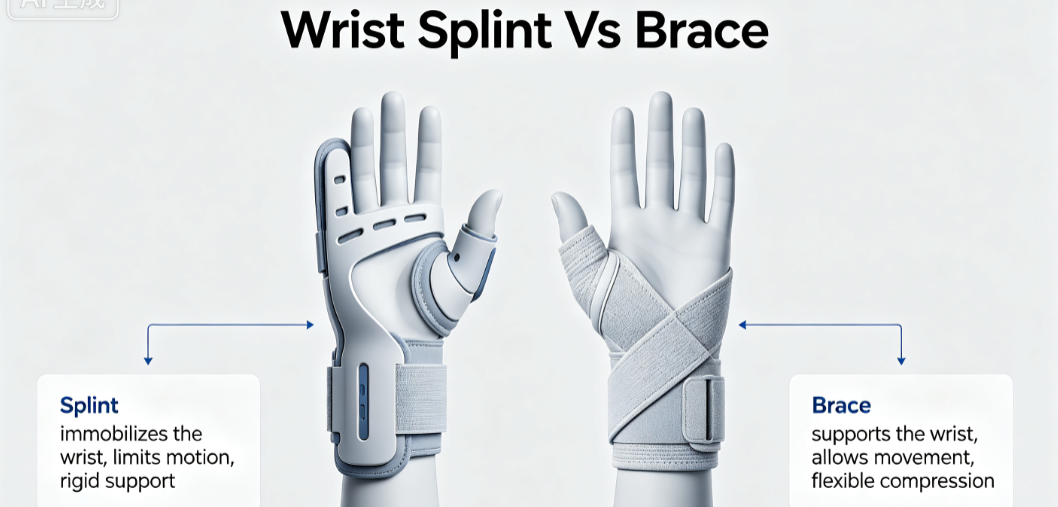
Your wrist hurts, and now you’re staring at a wall of options online—half of them called “splints,” the other half “braces,” with no clear explanation of why it matters. It matters a lot. Grab the wrong one, and you could be immobilizing a joint that actually needs to move, or worse, letting an unstable fracture flex when it should be locked down tight.
This guide breaks down the secret of wrist splint vs brace, how each device works, what conditions they’re built for, and how long you should actually wear one. Whether you’re managing carpal tunnel syndrome, recovering from a sprain, or dealing with arthritis flare-ups, you’ll know which wrist support fits your situation—no guesswork required.
What Is a Wrist Splint?
A wrist splint locks your joint in place. That’s its entire job. Unlike flexible supports, a splint uses a rigid shell or metal or plastic stays to keep your wrist from bending forward or backward.
Most splints position the wrist in neutral to slight extension, typically 0–5°, though some wrist brace designs allow up to 15°. This isn’t arbitrary. In blind clinical trials, neutral positioning delivered better symptom relief than 20° extension. Bend the wrist into flexion, and carpal tunnel pressure spikes—which is exactly why splints avoid that position.
Structure and Coverage
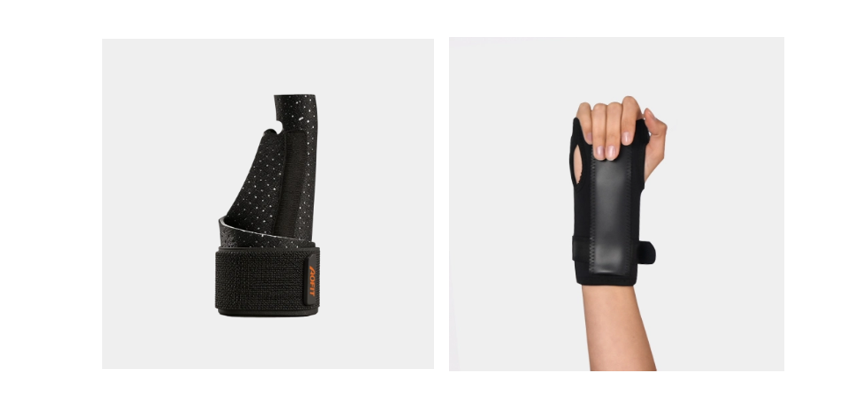
Most rigid splints, often called cock-up splints, cover either the palm or dorsal side of the wrist and extend toward the mid-forearm for added leverage. Your fingers stay relatively free while the wrist joint itself is fully immobilized.
When Rigid Immobilization Makes Sense
Wrist splints are the go-to choice for:
- Carpal tunnel syndrome, especially as a night splint to counteract sleep-induced flexion
- Acute injuries that need strict motion restriction
- Post-surgical recovery, protecting tissue during early healing
- Persistent daytime symptoms, where wearing the splint continuously works better than wearing it only at night
Fitting It Right
Set the splint straight or very slightly extended—never flexed forward. Snug, not tight. If your fingers tingle or turn pale, loosen it. Proper positioning directly affects your carpal tunnel treatment results.
What Is a Wrist Brace?
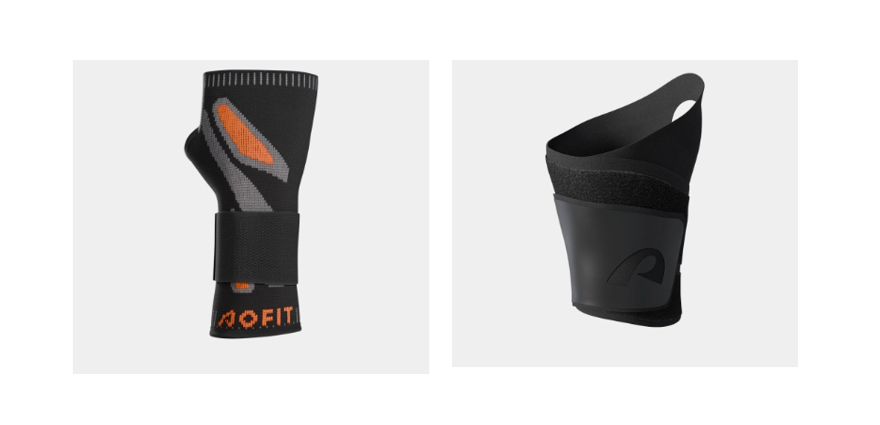
A wrist brace sits between doing nothing and full immobilization. It’s built from stretchy, lightweight materials like elastic polyester and neoprene, with adjustable straps or Velcro so you control the fit. It’s one job: keep your joint stable while letting you still use your hand.
Structure and Coverage
Coverage runs from the top of your palm down about a quarter of the way toward your elbow—shorter and less rigid than a splint’s forearm extension. No hard shell here. Just flexible material that compresses the joint and nudges it toward neutral positioning.
Brace vs. Sleeve
A wrist compression sleeve gives gentle compression and minimal support, good for mild pain or swelling. A wrist brace provides more stabilization, holding neutral posture during activity. Pick a sleeve when mobility matters most. Pick a brace when you need real motion control without full lockdown.
When Flexible Support Makes Sense
Braces work well for tendonitis during repetitive typing or mouse work, arthritis when you need all-day comfort without losing hand function, chronic overuse pain with stiff, weak, or achy wrists, and mild carpal tunnel or swelling where full immobilization isn’t necessary yet.
Products like the 3M FUTURO Comfort Fit deliver customizable compression for these scenarios. Support without the restriction.
Wrist Splint vs Brace: Key Differences at a Glance
Wrist splints block 60–100% of flexion and extension, while braces only clamp down on the extreme ranges.
A splint trades comfort for control. Metal or thermoplastic stays lock the joint down, which means less pain relief flexibility but maximum stability for wrist fracture support or post-op recovery. A brace flips that tradeoff. Neoprene and elastic straps let you type, grip, and lift while still catching your wrist before it hits a painful range.
Splints get stiff after hours of wear, so they are built for short bursts like overnight, post-injury, and early recovery. Braces stay comfortable through an eight-hour shift, making them the default wrist stabilizer during work or workouts.
| Dimension | Wrist Splint | Wrist Brace |
| Structure | Rigid stays (metal/plastic) | Flexible fabric/neoprene |
| Motion control | 60–100% restriction | Partial, limits extremes only |
| Best fit | Fracture, post-op, severe sprain | Tendonitis, RSI, mild sprain, arthritis |
| Wear duration | Short-term, night, acute phase | Daytime, ongoing, activity-based |
If you need total rest, get a splint. If you need support that doesn’t sideline your hand, get a brace.
Which One Should You Choose Based on Your Condition?
The research settles most of the guesswork. Different wrist conditions need different levels of support, and clinical data now points to specific products for each one.
Match Your Diagnosis to the Right Device
| Condition | Recommended Product | Why It Works |
| Carpal tunnel syndrome | Night-time neutral wrist splint | Neutral positioning improved symptoms and function over 3 months in CTS patients, and a randomized trial showed those gains still measurable at 6 months. |
| CTS with night-only symptoms | Neutral splint, worn only at night | A 3-month study found pain dropped more in people with night-only symptoms than in those with daytime symptoms too. |
| Acute wrist sprain | Splint or high-rigidity brace | Immobilizing the wrist in a neutral position protects healing ligaments during the early recovery window. |
| Wrist fracture or post-surgery | Rigid splint | Splints provide more stabilization than soft supports, which is what fracture and post-op healing need. |
| Arthritis or chronic strain | Wrist brace | Braces balance support with function, making them practical for all-day wear once acute immobilization isn’t needed. |
Three Rules That Cut Through the Confusion
Need immobilization first? Choose a splint. That’s your default for CTS night positioning, acute sprains, fractures, and post-op protection.
Need daytime function alongside support? Choose a brace. Arthritis and repetitive strain injuries respond better to flexible stabilization than to rigid lockdown.
Managing carpal tunnel specifically? Neutral positioning matters more than the product label. Cochrane data found night splinting increased overall improvement compared to no treatment. The relative risk was 3.86 and the number needed to treat was just 2. For every two patients splinted, one saw a meaningful benefit they wouldn’t have gotten otherwise.
That’s a strong enough signal to justify wearing one consistently, especially overnight when your wrist naturally curls into flexion and pressure on the median nerve climbs.
The 60-Second Self-Check
Run through this before you buy anything:
- Broken bone or fresh out of a cast? Splint. Rigid immobilization is non-negotiable here. No brace matches that level of restriction.
- Tendonitis or a De Quervain-type flare? Splint during the acute phase, when limiting motion is the whole point. Once the flare calms down, switch to a brace for daytime support while you’re still active.
- Repetitive strain from typing, lifting, or gripping tools? Brace. You need stability without losing hand function.
- Wrist swelling that fluctuates day to day? An adjustable wrist compression sleeve or brace wins. You can loosen or tighten it as swelling changes. A rigid splint can’t do that.
Wear-Time Guidance: When to Wear Splint vs Brace
Timing changes everything. Wear a splint 24 hours a day after surgery, and you’re protecting fragile tissue exactly when it needs protection. Wear that same rigid splint non-stop for chronic tendonitis, and you’re just stiffening a joint that needs movement to heal.
Splint Wear Windows
- Night and sleep: This is the standard for carpal tunnel syndrome treatment, because flexion during sleep spikes nerve pressure.
- Acute or high-symptom periods: Wear the splint during daytime tasks that trigger pain, or during heavy activity.
- Post-op / early recovery: Some protocols require 24-hour wear, removed only for prescribed exercises.
- Therapy-driven schedules: In certain rehab plans, you wear it for 30-minute intervals, 5–6 times daily.
- Long-term rheumatology protocol: All-day wear for 2 weeks, then night-only for the following 6 months.
Brace Wear Windows
- Daytime and activity support: Start with short daily periods, then progress to full-day wear as you tolerate it.
- Work and routine tasks: Build up gradually from brief sessions to all-day use.
- Heavy-load activities: The brace gives extra protection during lifting, gripping, or repetitive strain.
- Overnight cases: Some conditions still start with overnight brace use before you expand to daytime hours.
A Practical Combination: Night Splint and Day Brace
Most people don’t need maximum rigidity 24 hours a day. Pair a rigid or semi-rigid neutral splint for sleep with a lighter, low-profile brace during waking hours—especially for typing, gripping tools, cycling, or lifting.
If you can only commit to one product, prioritize a night-only neutral splint. It’s the option best supported by evidence for mild-to-moderate carpal tunnel syndrome treatment, particularly when nighttime numbness and tingling are your dominant symptoms.
Break-In Schedules That Prevent Skin Damage
Jumping straight to all-day wear backfires. Here are common ramp-up patterns:
- 30 minutes on, then 45 minutes off on Day 1; 2 hours on Day 2; double daily until you reach 6–8 hours/day within 1–2 weeks.
- 1 hour (Days 1–2), 2 hours (Days 3–4), 3 hours (Days 5–6), then full-time wear.
- 1 hour on Day 1, 2–3 hours on Days 2–4, up to 5 hours on Days 5–7, 8–12 hours from Day 8 onward.
Watch for: redness that doesn’t fade, morning soreness (take a 30-minute break before reapplying), and sweat buildup. A stockinette glove liner helps with that. Adaptation typically takes a couple of weeks, so don’t rush the escalation.
Conclusion
Rigidity matters when choosing between a wrist splint and a brace. Splints lock your joint completely still. They are ideal for fractures, post-surgery recovery, or acute carpal tunnel syndrome treatment when full wrist immobilization is required. Braces flex with you, offering compression and light support for tendonitis, arthritis, or everyday strain without sacrificing mobility.
Match the device to your diagnosis and wear a wrist splint or brace at the right time.
If you’re still unsure which product meets your business needs, talk to AOFIT now. We are ready to serve you with our wholesale wrist braces in bulk.